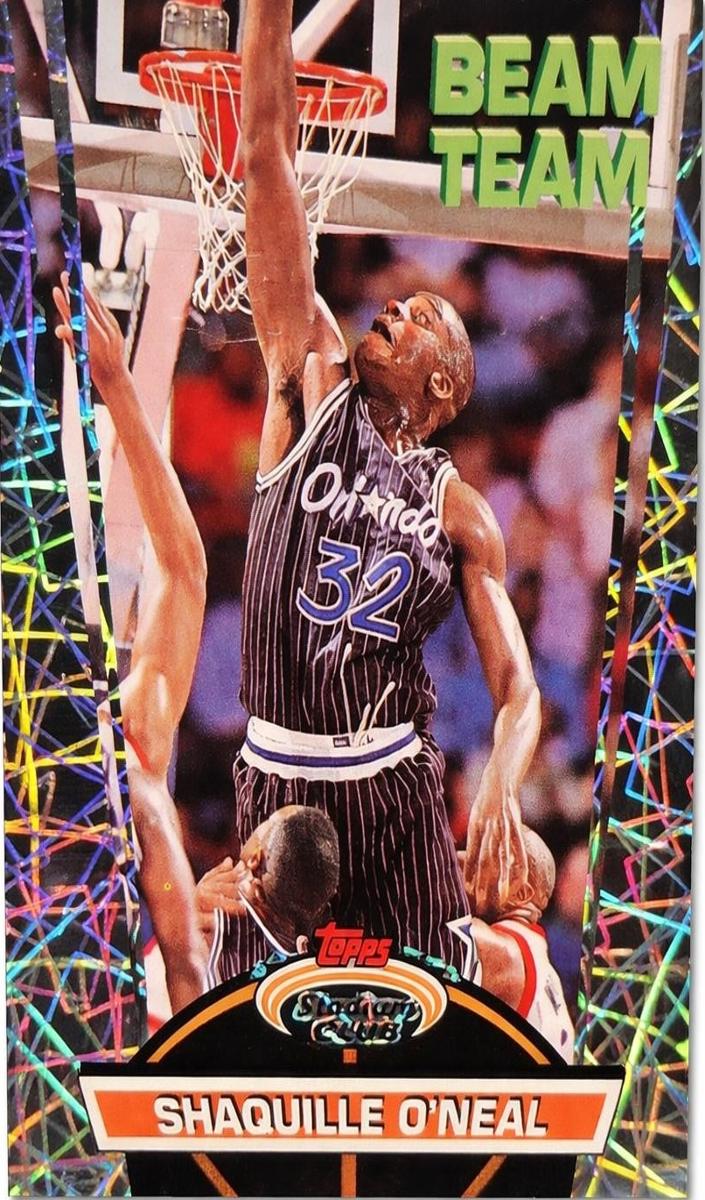
Shaq's Market Doubled. The Reason Has Nothing to Do With Shaq.
Three signals converged in 48 hours last week. The one that actually moved prices wasn't about Shaquille O'Neal at all.
Three things happened inside 48 hours last week. A podcast named Shaquille O'Neal as a potential breakout. Market velocity data showed his 1992 Topps Stadium Club base rookie selling at 3.1 times its prior 23-day baseline, with prices up 10.7% in seven days. And Heritage Auctions closed the largest sports auction in its history at $62.9 million. Nobody connected all three out loud. The Shaq move was already in motion before anyone wrote a word about it.
The podcast read was straightforward enough: Shaq's market has doubled since mid-July, and there are still cards under $525 that may have room. That is a real observation. What it does not answer is the question that actually determines whether the move holds: why mid-July, and why now?
The Heritage Effect Nobody Named
The two most credible explanations for the timing sit right next to each other in the auction record books. Heritage's Summer Platinum Night closed August 25 at $62.9 million, a new record for a sports auction. In the same August window, a complete 1997-98 Michael Jordan PMG Red set sold for $1.47 million. Both results landed in the hobby's consciousness simultaneously, and both sent the same signal: vintage basketball is where serious money is moving.
Shaq's role in that story is structural, not personal. He is the most liquid vintage basketball name that does not carry Jordan's price tag. When auction records reset the ceiling on what vintage basketball can command, collectors and speculators who cannot or will not play at Jordan's tier need somewhere to park conviction. Shaq, sitting at a 0.176 market weight in current leader data with genuine Hall of Fame credentials and a globally recognizable name, is the obvious landing spot. He did not earn this move by doing anything. He earned it by being the best available proxy for the thesis one tier down.
That is a meaningfully different thing from a Shaq-specific catalyst, and it changes the risk calculus entirely.
The exit condition is not 'Shaq stays popular.' It is 'Heritage-level auction demand continues.' Those are very different clocks.
What the Velocity Data Actually Says
A 3.1x velocity ratio with a simultaneous 10.7% price increase is a durable signal, not a speculative flash. When volume spikes without price following, you are looking at panic selling or forced liquidation. When price spikes without volume, you are looking at a single transaction setting a new comp that may not hold. Volume and price moving together means buyers are arriving faster than sellers are adjusting their asks, which is the signature of genuine demand rather than manufactured momentum.
The question the data cannot yet answer is where that demand is concentrated. If the velocity is almost entirely in the Stadium Club rookie — the most recognizable Shaq entry point, the one the podcast would naturally name, the one a speculator parking capital would reach for first: then this is a thinner thesis than it looks. One card absorbing speculative inflow is not the same as a name catching broad vintage basketball demand. If velocity is spread across Shaq's key issues, that is a different story: it means the rising tide is actually lifting the whole name rather than flooding one obvious harbor.
The Bet You Are Actually Making
A collector buying Shaq's Stadium Club rookie this week is not making a bet on Shaquille O'Neal. They are making a bet that the auction market for vintage basketball, freshly reset by a $62.9 million Heritage record and a $1.47 million Jordan PMG sale, sustains its heat through the next major auction cycle. Shaq is just the vehicle.
That is not necessarily a bad bet. Records at that scale do not typically reverse overnight, and the structural appetite for vintage basketball from serious collectors and institutional money has only deepened over the past several years. But it is a different bet than most of the commentary around this move implies, and it carries a different failure mode. If the next Heritage sports auction underperforms: if the record proves to be a single extraordinary cycle rather than a new floor: vintage basketball at the tier just below Jordan reprices first and fastest. Shaq, as the most liquid name in that category, would lead the correction just as he is leading the run-up.
The durable version of this trade requires the auction market to keep performing. That is the variable worth tracking, and it has nothing to do with anything Shaq does or does not do between now and then.
What to Watch
Two data points will clarify the picture as more sales clear. First, whether the velocity distributes across Shaq's broader key issues or remains concentrated in the Stadium Club rookie. Broad distribution is the macro vintage basketball signal; concentration is the speculative-parking signal, and the two demand very different holding strategies. Second, whether any Shaq-specific catalyst surfaces that could independently explain the mid-July inflection point. A media appearance, a significant anniversary, or an endorsement that landed quietly would change the thesis meaningfully. It would mean the move has two legs rather than one.
Until one of those clarifications arrives, the honest read is this: the Heritage record is the variable that matters, the Jordan PMG sale is the confirmation, and Shaq is the most liquid way to hold a vintage basketball thesis without paying Jordan prices. That is a real trade. Just know what you own.
Follow the hobby in the app
Track the products and players you collect and get told the moment anything moves.
Open Collector Nation