Drew Allar's Mojo Is Down 29%. Fernando Mendoza's Is Down 51%. That Gap Is the Only Question That Matters Before Week 0.
Three 2026 Topps Flagship Football rookies, three different points on the same decay curve. Caleb Downs is in the middle. Mendoza is nearly priced. Allar's Mojo is either the market making a real statement about NFL upside, or a spike that started later and has more room to fall.
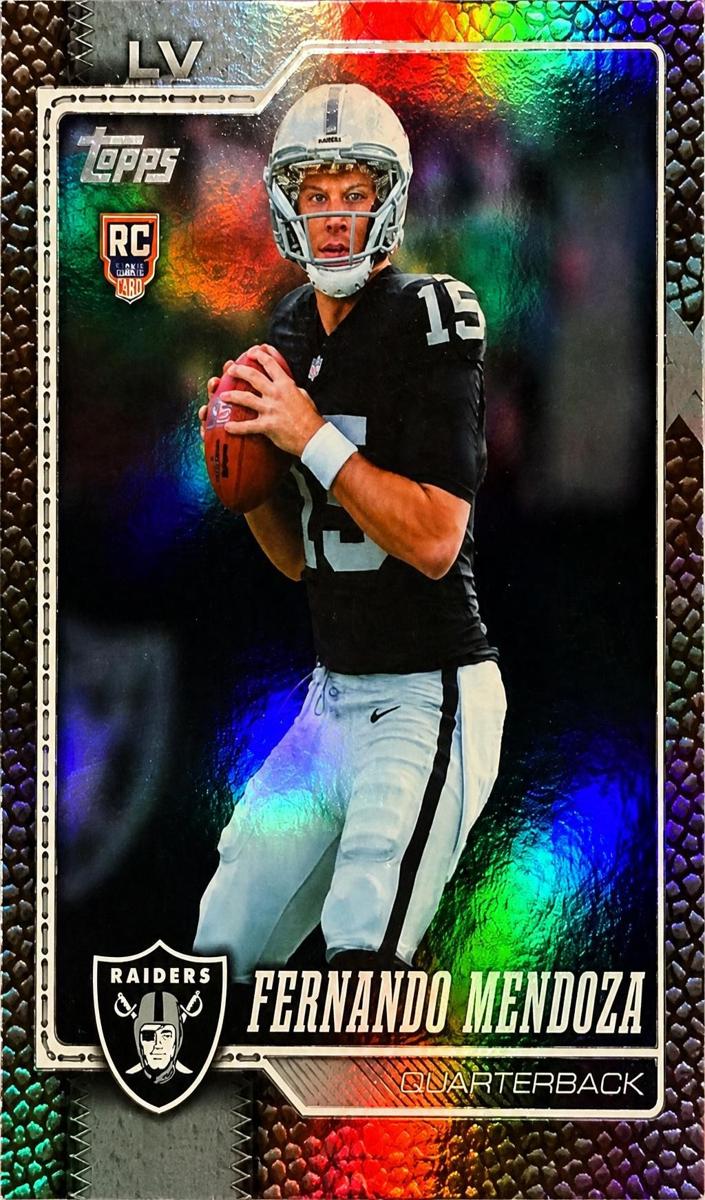
Fernando Mendoza's 2026 Topps Flagship base card has logged 618 sales in seven days against zero in the prior 23. That is a 2,030x velocity ratio. The average sale price is $6.96, which is 71% below where it was when that volume started. The market is not confused about Mendoza. The question is what it knows about Drew Allar that it hasn't said out loud yet.
The Mendoza story is essentially told. His Silver Pack Mojo Refractor is running at 588x its prior baseline with 179 sales, and the average price has compressed 51% from its launch-week high to $58.16. High volume, falling price: that is the textbook debut-spike decay pattern, and it is playing out exactly as the pattern says it should. The market absorbed the excitement, found sellers willing to move at lower prices, and is now settling toward a level that reflects who Mendoza actually is rather than who he was in the first 48 hours of being a Flagship card.
Caleb Downs is one step behind. His base card is at 312x velocity with 95 sales, down 41% to $2.39. He is further along the curve than where Mendoza started but not as far along as where Mendoza is now. The compression is happening; it just has more room to run.
Then there is Drew Allar. His base card, #304 in the set, is at 309x velocity with 94 sales and an average price of $3.34, down 57%. That is broadly consistent with where Mendoza and Downs are on base. But his Mojo Refractor tells a different story. At 345x velocity with 105 sales, Allar's Mojo is down only 29% from its high, averaging $12.54. Mendoza's Mojo is down 51%. That 22-percentage-point gap is the only number in this data set that is not already explained by the standard decay model.
Two Explanations for the Same Number
There are exactly two reads on why Allar's Mojo has held better than Mendoza's, and they lead to opposite conclusions for a collector sitting on the decision right now.
The first read: the market genuinely prefers Allar's NFL upside. Mendoza is a college star whose professional path is less certain; Allar has NFL draft positioning that the market is pricing in at the Mojo tier even as his base card decays at roughly the same rate as Mendoza's. Under this read, the 29% decline is a floor, not a way station, and the Allar Mojo at $12.54 is the cheapest it will be before Week 0 performance data arrives.
The second read: Allar's spike simply started later. If his Mojo volume inflected a day or two after Mendoza's, it is still earlier in the same decay cycle. The 51% compression on Mendoza's Mojo is not a destination Allar has already avoided. It is a destination Allar hasn't reached yet. Under this read, waiting is not being late; it is being patient while the data finishes its work.
The market data alone cannot resolve which read is correct. What it can do is tell you when the answer arrives: Week 0 kicks off August 29, and the first on-field performance from any of these three names will reprice the class faster than any sales volume trend.
Velocity without price support is the market finding a floor, not building one. The collector who waits for volume to normalize before buying is waiting for the most useful signal in the data, not being late.
What to Actually Do Before August 29
The base cards for all three rookies are easy: don't buy them ahead of Week 0. Mendoza at $6.96, Allar at $3.34, Downs at $2.39: none of these prices are obviously at floor when the set is still running 300x-plus velocity across the board. Price discovery is still active. The collector who buys a base card today because it 'feels cheap' is buying into a process that hasn't finished, and performance data in a few days is a more reliable pricing catalyst than intuition about where a $3 card bottoms.
The Allar Mojo is the only card in this class that warrants a closer look before the whistle blows. Watch whether his $12.54 average holds through the next 48 hours while Mendoza and Downs continue compressing. If it does, that is the market making a deliberate statement: not just absorbing launch-week excess, but actively defending a price level on Allar specifically. If Allar's Mojo starts closing the gap toward Mendoza's decay rate, the relative resilience was timing, not conviction, and the entry point improves further without any action required.
The worst outcome here is buying the Allar Mojo at $12.54 because the 29% decline looks modest compared to Mendoza's 51%, and then watching it compress to $8 after a Week 0 performance that doesn't move the needle. The best outcome is watching it hold $12 while Mendoza's Mojo settles at $55, and recognizing that the market just told you something real about how it values these two names relative to each other. The data to make that distinction is three days away. That is not a long time to wait for a signal this clean.
Follow the hobby in the app
Track the products and players you collect and get told the moment anything moves.
Open Collector Nation