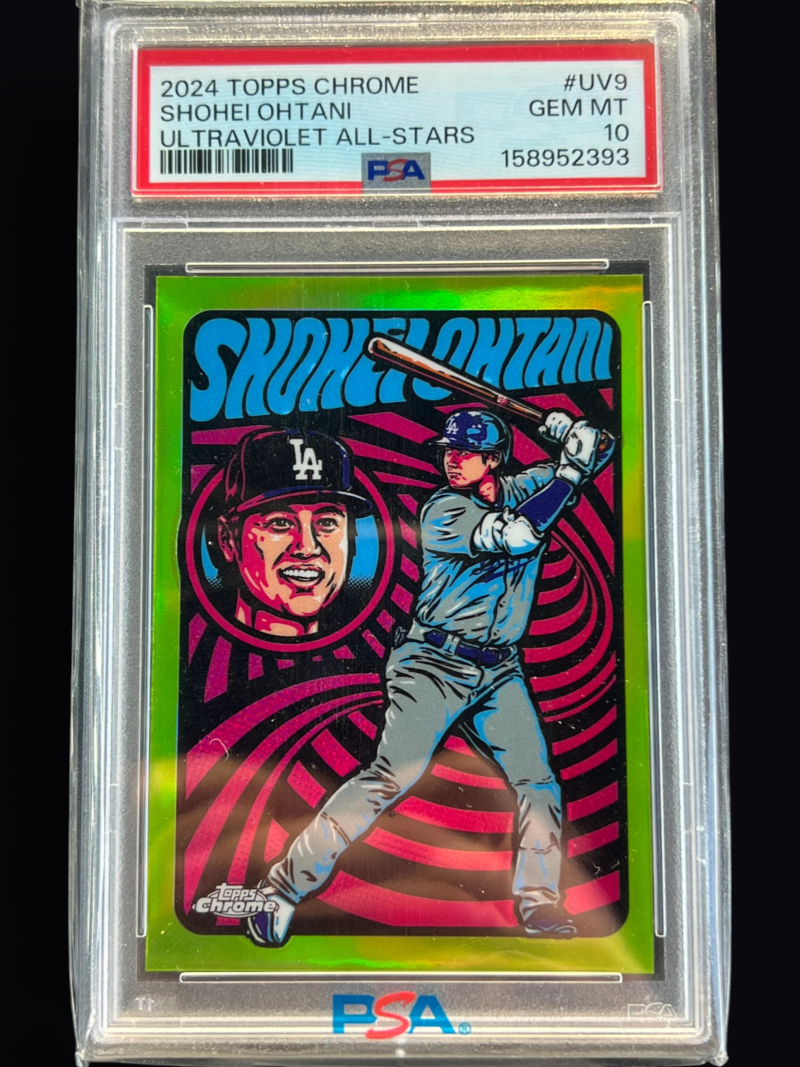
Ohtani Is Activated: Which of His Cards Have Already Repriced and Which Haven't
Low-pop graded RCs and numbered autos move within hours of activation news. Raw copies and high-population slabs lag. Here is how to read the sequencing before the window closes.
Josue De Paula clears his locker and heads to the minors. Shohei Ohtani is activated. Two card markets move in opposite directions on the same transaction, and most holders are only watching one of them.
Ohtani's return from the 15-day injured list is confirmed. The roster move that made it happen, De Paula's optioning, is the underreported half of this story, and in a thinner, faster-moving market, it matters more per dollar than anything happening in Ohtani's own.
The Ohtani Repricing Is Already Underway, But Not Everywhere
Activation news does not lift all Ohtani cards at the same time. The sequencing is consistent: low-population graded rookie cards and short-printed numbered autos are the first to reflect the news, typically within hours of the transaction posting. Institutional holders and high-volume flippers had Ohtani's activation partially priced in from the moment the IL stint began, so the graded, scarce end of the market was already moving before the official announcement.
Raw copies and high-population slabs are where the lag still exists. Those take a day or more to catch up, partly because the buyer pool is broader and slower to react, and partly because casual holders list into strength rather than ahead of it. If the graded low-pop tier has already moved in your position, the window on that tier is closing. The remaining edge is in raw copies and common-pop slabs that have not yet reflected the activation.
The CN piece on Ohtani's multi-million-dollar rookie card value is the anchor for understanding what the ceiling looks like on his most significant cardboard. That ceiling, though, has a counterweight: the THWC episode calling for an Ohtani price crash is a read every holder needs to weigh before deciding whether to sell into the activation pop or hold through the postseason.
De Paula's Market Is Thinner and Faster, and It Just Compressed
De Paula's optioning to the minors is not a burial. The New York Times reported he remains in the mix for the Dodgers' postseason roster, which means his card market is not pricing in a dead end. It is pricing in uncertainty. That is a different and more volatile condition than either a confirmed call-up or a confirmed demotion.
Prospect markets are thinner than Ohtani's by orders of magnitude. Fewer active listings, fewer competing buyers, and less institutional money means a single roster announcement moves the needle further and faster. A holder sitting on De Paula cards right now is holding a position whose next catalyst is a postseason roster decision, not a box score. The 40-man and postseason roster announcements are the data points that matter, not De Paula's stat line in Triple-A.
Two card markets moved in opposite directions on the same transaction. Most holders are only watching one of them.
What a Holder Should Do Before the Market Catches Up
Check your Ohtani position by card tier before listing or buying. Graded low-pop RCs and numbered autos: assess whether the activation pop has already been absorbed. If comparable sales in the last 12 hours show a step up, that tier has moved. Raw copies and high-population slabs: this is where lag still exists, and where a buyer can still get in ahead of the broader market catching up.
On the De Paula side, the next roster move is the one that determines whether his market gets a second catalyst or fades into the offseason. Holding through the postseason roster announcement is a defined-risk position with a clear resolution date. Selling now means accepting the compressed price that comes with uncertainty. Neither is wrong: the decision depends on your cost basis and your read on whether the Dodgers carry him.
The variable that sets the ceiling on Ohtani's own near-term recovery is role management. A full two-way return through the postseason is a different price environment than a conservatively handled DH-only stretch. That determination shapes how much of the activation pop is a floor versus a ceiling, and it is the question worth tracking as the Dodgers manage their October depth.
Follow the hobby in the app
Track the products and players you collect and get told the moment anything moves.
Get the Collector Nation App