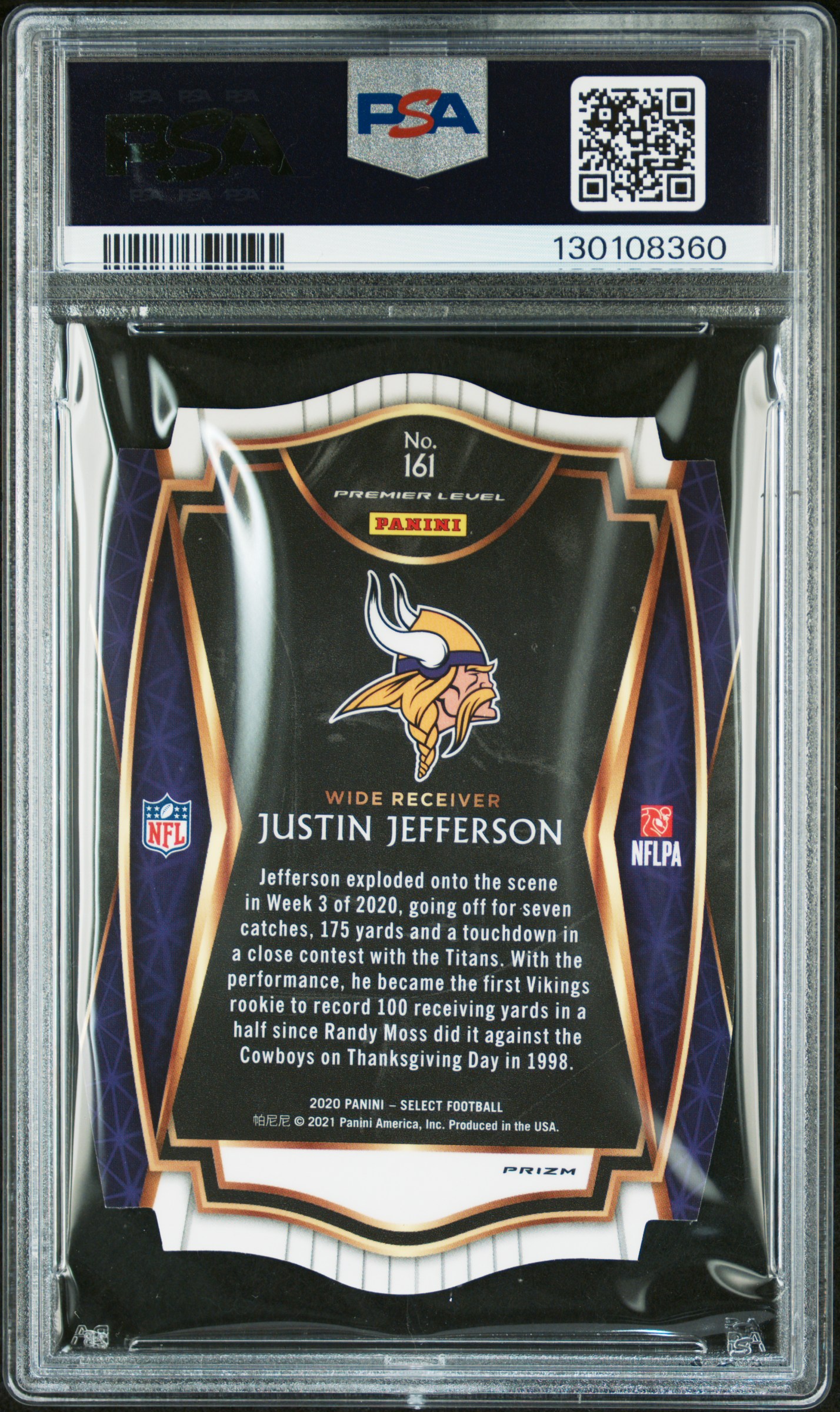
Justin Jefferson Ruled Out Sunday: Which of His Cards to Hold and Which to Move Before the Market Reprices
The ruling landed Saturday. Most holders are still treating this as a fantasy football problem. It is a card market event, and the window to act is measured in hours.
Justin Jefferson was active on every Vikings depth chart through Friday. By Saturday, he was ruled out for Sunday's game against the Buccaneers. The ruling is confirmed across multiple outlets, and the market is open. Most holders are still treating this as a fantasy football problem. It is not.
The Injury Framing Is Inconsistent, and That Matters
RotoBaller, NBC Sports, FOX Sports, and LancasterOnline all reported the injury as an ankle. CBS Sports reported it as a knee. That is not a trivial discrepancy. An ankle injury and a knee injury carry very different recovery timelines and very different implications for how long the card market prices Jefferson as unavailable. Until the injury site is confirmed consistently, treat this as at minimum a one-game absence and price your urgency accordingly.
The severity framing being loose is itself a signal: the market has not fully priced in a multi-week absence because the sourcing does not support one yet. That gap is where the holder's decision lives.
Which Cards Are Most Exposed Right Now
Raw Jefferson parallels and mid-grade slabs take the first hit and the hardest hit when a star goes inactive. The sellers moving those cards are not card market participants making a measured decision — they are fantasy-adjacent holders who see a zero on the injury report and list immediately, often below recent sale comps. That panic creates the price distortion.
Jefferson's PSA 10 Prizm rookie slabs sit in a different tier. They are liquid enough that a single-game absence does not structurally reprice them. Buyers for those cards are not making a week-to-week fantasy call; they are making a long-term hold on one of the best receivers in the league. One missed game does not change that thesis, and the bid side for high-grade Prizm rookies does not evaporate over a weekend.
High-end 1/1s and low-numbered autos occupy the same protected tier. The collector base for those cards is small, deliberate, and not reactive to a single injury report. Hold those.
The decision is not whether to sell. It is which format to move before Sunday's box score confirms the absence to the broader market.
What to Do Before Sunday
If you are holding raw Jefferson parallels or lower-grade slabs and you were already planning to move them, move now. The sell window is today. Sunday's zero-stat line will confirm the absence to a much wider audience and trigger a second wave of listings on Monday, which is the worst time to be adding supply to a market that is already softening.
Do not list into a falling market on Monday. The sellers who move on Monday are competing with every other holder who waited, and they are doing it after the price signal has already been broadcast to the entire fantasy-adjacent audience.
On the back end, this creates a brief buy opportunity for patient holders. When raw parallels get dumped below comp by sellers who are not distinguishing between card formats, the discount is real and temporary. A one-game absence from a receiver of Jefferson's caliber does not change his long-term card market. The cards will recover when he returns. The question is whether you want to be the one selling into the panic or buying out of it.
The 48-Hour Window vs. the Two-Week Slide
The injury site inconsistency is the key variable. If this is a one-game ankle absence, the market reprices for 48 hours and recovers when Jefferson is back on the injury report as a full participant. If the knee report from CBS Sports reflects the actual diagnosis and the timeline extends to multiple weeks, the market dynamic shifts: raw parallels stay soft, mid-grade slabs see sustained pressure, and even PSA 10 Prizm rookies could see some bid-side softening as the absence gets priced in more broadly.
Right now, the weight of reporting points to ankle. Treat this as a 48-hour window until the diagnosis is clarified further. If the timeline extends, reassess. But the holders who wait for that clarification before deciding what to move will be listing after the market has already moved.
Follow the hobby in the app
Track the products and players you collect and get told the moment anything moves.
Get the Collector Nation App