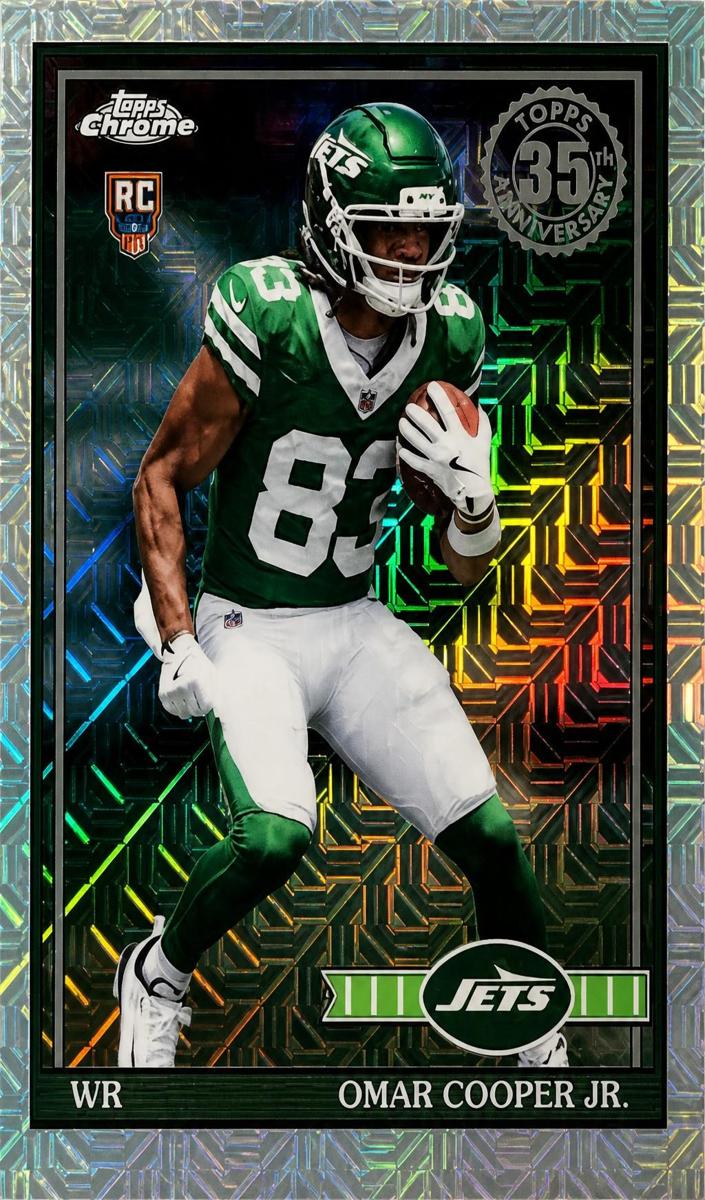
Omar Cooper Jr. Is on IR With an Ankle Injury: What Holders Need to Do Before the Market Finishes Moving
The ruled-out news moved the market once. The IR designation moves it again, harder. Holders who are still waiting have already missed the best exit.
Cooper was ruled out for one game Friday morning. By Saturday, the Jets placed him on injured reserve with an ankle injury, extending the minimum absence to four games. Those are two different market events, and the gap between them is where holders lost the most value.
Why IR Hits Differently Than Ruled Out
A ruled-out designation reprices one game. IR reprices a minimum of four, and the psychology shifts with it. One missed game is a blip; four missed games in a 17-game season is 23 percent of the year gone before a rookie has established anything on the field. The collectors who moved on Friday's ruled-out news got out at better prices. The collectors who held for confirmation are now selling into a fully informed market.
Cooper is a 2026 rookie wide receiver, which means his cards carry projection pricing. There are no established comps, no proven role, no track record to anchor value. That kind of pricing is the most sensitive to exactly this scenario: an extended absence that removes the weekly performance catalyst. Without stat lines, there is no organic reason for new buyers to enter the market, and existing holders have every reason to lighten up.
The Slow Bleed Ahead
The sharpest price movement happens in the 24 to 48 hours after a designation like this lands. After that, the market does not recover — it drifts. Four weeks of no highlights, no box score mentions, and no reason for casual buyers to search his name means the bid side thins out gradually. Sellers who act in the immediate window after IR confirmation are selling into whatever liquidity remains. Sellers who wait a week are selling into less of it.
There is also a secondary question that the market has not fully priced: how the Jets' wide receiver depth chart looks when Cooper is eligible to return. If other receivers establish roles during his absence, Cooper's opportunity upon return is not guaranteed to be what it was when he went out. That ceiling compression matters for anyone holding cards at current projection prices.
Four games of absence in a 17-game season is not a blip. It is a quarter of the year gone before he has established anything.
What Holders Should Do
If you are holding Cooper rookie paper, the optimal exit was before the IR designation was public. That window is closed. The next-best exit is now, while there is still a bid side in the market. The slow bleed that follows four weeks of market silence on a projection-priced rookie is not dramatic. It is just steady erosion with no catalyst to reverse it.
Buyers looking to accumulate have time and should use it. There is no floor-setting event until Cooper returns to practice and the Jets signal what his role looks like. Waiting costs nothing on the buy side here. The range of outcomes within the IR window is wide: he could return at the four-game minimum in reasonable health, or the ankle could prove more serious and extend the absence further. Either way, the market will tell you more in four weeks than it can tell you today, and the price will almost certainly be lower.
Follow the hobby in the app
Track the products and players you collect and get told the moment anything moves.
Get the Collector Nation App