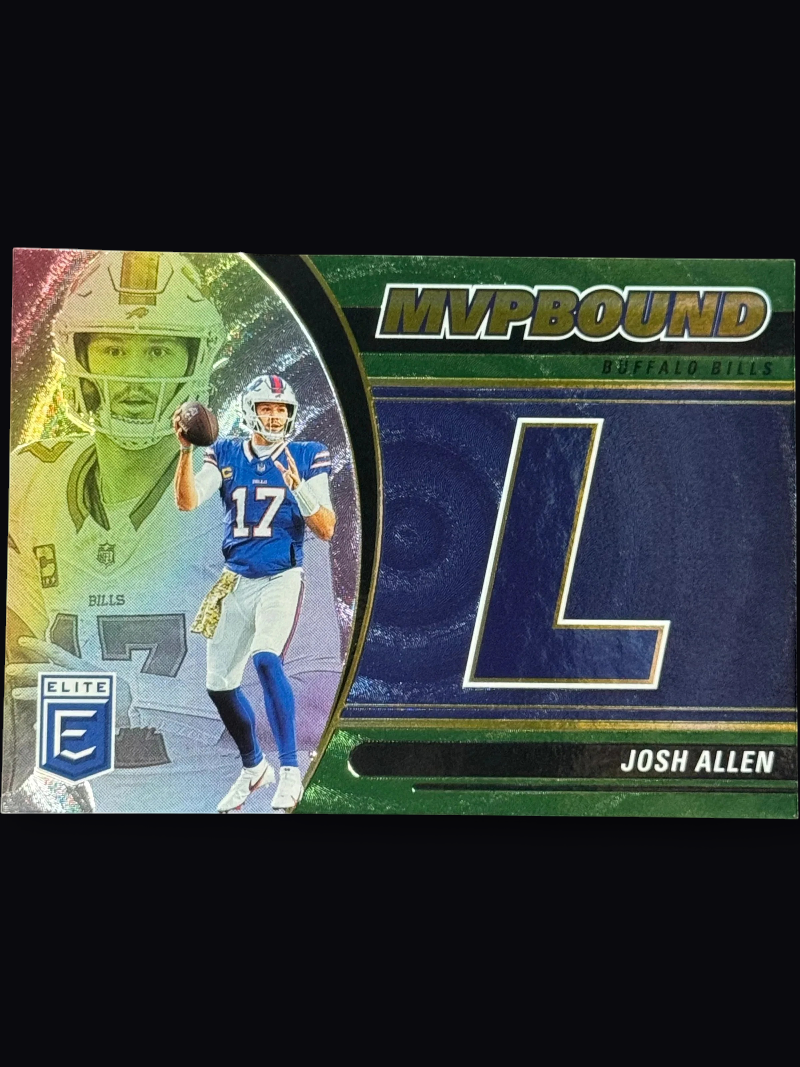
Josh Allen Scored Four Touchdowns in Houston. Which of His Cards Are Still Mispriced?
A four-TD road win reprices a player's cards fast: but not all of them at the same speed. Here is where the lag lives, and how long holders have to use it.
Four touchdowns. Two through the air, two on the ground. Josh Allen's line from Houston on September 13, 20 of 29, 334 yards passing, six carries for 23 yards, is the kind of stat sheet that reads as its own argument. The problem for anyone holding his cards and waiting for 'the market to catch up' is that every other holder read the same box score at the exact same moment, and the liquid end of Allen's card market does not wait for stragglers.
That simultaneity is the thing most sellers underestimate. A performance like this does not create a rising tide that lifts all Allen cards equally and on the same schedule. It creates two distinct markets operating on two distinct clocks, and confusing one for the other is where money gets left on the table.
The Cards That Already Moved
Base rookie cards and the more widely printed parallels: your standard Prizm base RCs, your non-numbered color parallels with print runs in the hundreds: are the first to absorb post-game demand. The mechanism is simple: these are the cards most people hold, most people list, and most people search for immediately after a big performance. Volume is high, friction is low, and the repricing happens fast. By the time Sunday night turns into Monday morning, the sold comps on those cards are already reflecting the game.
For holders of that material, the actionable window is measured in hours from the final whistle, not days. If you have not already checked recent sold comps against your cost basis, do it now. The risk is not that the market will not reprice. It already has. The risk is that you wait for a ceiling that passed while you were sleeping, and then midweek listings from other holders set the new floor below where you could have sold.
Where the Lag Actually Lives
High-end Allen material operates differently. True 1/1s, low-numbered superfractors, certified on-card autos with print runs in the single digits or teens: buyers in that tier do not impulse-buy off a Sunday night box score. They confirm the narrative. They watch for the follow-up game, check injury reports, consider the schedule, and often wait for another sale to establish a new comp before they move. That deliberateness is what creates the lag, and the lag is real: somewhere between 24 and 72 hours after a performance like this, high-end buyers reach the conclusion that yes, this was the real thing, and they start bidding accordingly.
That window is where patient sellers have historically captured peak post-performance value on scarce material. If you hold a low-numbered Allen auto or a serial-numbered superfractor, you are not in the same situation as the base RC holder. The demand is coming, but it is coming from a smaller, slower-moving pool of buyers who need a day or two to get there. Listing aggressively on Monday morning into thin high-end liquidity can actually leave value behind. You may be selling before the real bidders have arrived.
The practical read: on scarce Allen material, the 48-hour mark from the final whistle is worth targeting as a listing window. Not because the market is guaranteed to be higher, but because that is when deliberate high-end buyers are most likely to be actively confirming and committing.
A crowded exit is the real risk on common material. Every holder read the same box score at the same moment.
The Dual-Threat Question
Two of Allen's four touchdowns came on the ground. That is worth a separate thought, because the card market does not always treat rushing production the same way it treats passing production for a quarterback, even when the touchdown totals are identical. Allen has always carried dual-threat premium on cards that specifically feature rushing stats or action imagery, and a two-rushing-TD performance in a road win is exactly the kind of game that reinforces that dimension of his profile.
Whether the market actually prices those two rushing scores as a distinct premium on relevant cards, or simply folds all four TDs into a general performance pop, is genuinely unclear. The honest answer is that the market tends to treat TDs as TDs at the aggregate level, but collectors who specifically target Allen's dual-threat narrative may see more sustained demand than the one-game-pop crowd expects. A performance that confirms the rushing element of his game has a slightly longer shelf life in terms of collector narrative than a pure pocket-passer stat line.
The Bigger Question No One Is Asking
Allen is already priced as a generational talent. That matters for how you interpret this performance's effect on his price floor. A four-TD road win for a player already commanding top-tier prices is not a discovery event: the market knew who Allen was before kickoff. What a game like this does is validate the existing thesis and potentially compress the discount that some buyers were demanding before the season started. Whether that validation shifts his long-term price floor upward, or simply represents a one-game pop that normalizes by next week, depends almost entirely on what comes next.
The speculative layer underneath this is also worth naming. Some of the post-game demand on Allen's cards is not coming from collectors building long-term holdings. It is coming from flippers who entered positions ahead of the season and are now looking for a performance-driven exit. That selling pressure will hit the liquid end of the market hard and fast, which is another reason the base RC window closes so quickly. Organic collector demand and speculative exit demand look identical in the sold comps, and they are not the same thing.
Follow the hobby in the app
Track the products and players you collect and get told the moment anything moves.
Open Collector Nation