EP 17·Jun 5, 2025
2025 MLB Prospecting Feature
Gary breaks down the terms and systems used for ranking mlb prospects and reveals key prospects to be on the lookout for as they may be on the verge of a call up. Watch full episodes on youtube @theballcardshow
ListenWatchunavailable
CALL IN TO THIS MOMENT
2M
0:00
-0:00
Searchable
Full Transcript
Every word from this episode, transcribed in full — search the page (Cmd/Ctrl+F) or let Google find the exact moment you’re looking for.
Hello, hello, and welcome back to another episode of the Ball Card Show, the sports podcast for The Sports Collector. I'm Gary, and as you can see, I'm here by myself this week because Jason decided he needed a vacation. Some of us have to work all the time, some of us go sit on the beach for a week, whatever. Going to kind of jump straight into things this week. There's not a lot of news happening in the hobby this week. Maybe something will pop up after this is recorded and we'll catch it next week, but as of now, nothing new to report to you outside of the things we've talked about the last couple of weeks. Want to give another reminder, tonight, 7 p.m. Eastern Time, whatnot, be there or be square, I will be running the show by myself. Jason had a solo show a few weeks ago, and I've got one this week, Vacations. We'll see how that goes. We've got some really cool stuff for you, though. If you were at our show last Thursday, you saw a ton of game-used late-90s to mid-2000s stuff. There's going to be a decent amount more of that kind of stuff tonight, so we really appreciate all of your support and coming out and hanging out with us on Thursday nights on whatnot. Let's dive in. Value Box. Jason told you last week that this week was going to be all about prospecting. We figured this would be a great time for me to geek out over the part of the hobby that I enjoy the most, since Jason isn't here to be a bummer on it when I do. With the Value Box this week, a lot of questions we get when it comes to prospecting are split into two categories. Category one is, who should I buy? Pretty normal question to ask, and I try to answer that question when I can, but as I tell people, prospecting is a lot like crypto. If you're hearing about the name from somebody else, you're probably a little late to the party. So I think the more important things to talk about when it comes to prospecting are what are the things that you need to look for? What are the stats that you need to eyeball when it comes to looking at minor league statistics? What's going to translate? What isn't? So I just want to do a prospecting terms 101, both for hitters and for pitchers. This isn't going to be a breakdown of hitting mechanics or pitching mechanics or anything like that. That's something that would just be way too long and way too in-depth that you can't cram 30 years worth of experience and knowledge into a 30-minute video. But what we can do is talk about a lot of terms that you may see that you might get a little bit confused about. So first things first, let's talk about the grading scale that is used when you're talking about prospects and you're talking about baseball players. Major league scouts for years and years, decades, have used a scale of 20 to 80. 20 being the lowest possible grade you can give somebody on one of their tools and 80 being the highest. If you're researching prospects and you see somebody handing out a lot of 80 grades, my advice would be to ignore that person because they really don't know what they're doing. 50 is the average. So if you see a tool graded at 50, say somebody has a 50-hit tool, that means that they are average at putting the barrel of the bat onto a baseball. It doesn't mean that those hits are going to go out of the park. It doesn't mean there are going to be extra base hits. But when the ball is swung at, they're pretty good at putting the bat on the ball. If you see 60, that's considered a plus tool. They're above average. 70 would be plus plus and 80 would be top of the scale. There's not a lot of 80-hit tool guys out there. Luis Arias is one. One of the rookies this year appears to be one. That's Jacob Wilson in Oakland. But it's very rare to see an 80, a true 80 grade on anything. If you see that, a bunch from a prospect evaluator, then they're just fluffing things. So that's how the scale works. The things that are graded on the scale, if you're a hitter, there's five tools that are usually graded. There's a sixth tool that some evaluators use called plate discipline. A lot of times that's just baked into the hit tool, though, and that's how I do it. So the tools that you're looking at for a hitter are hit, which is your contact ability. Power, which is exactly what it sounds like, how hard can you hit a baseball. Doesn't have anything to do with how far you can hit a baseball. It has to do with how hard you can hit a baseball. Throw, which is arm strength. And then speed and fielding. So those are your things that you're looking at. If somebody is a five tool player, you'll hear that reference sometimes. That's somebody who's above average in all five tools. Pretty rare. Pitching, pitchers are graded by pitch. So each pitch that they have in their arsenal is graded on the same scale, 20 to 80. And then they're also graded on command. So they really have two categories, but one of the categories, the pitches, is broken down into their pitches. If a pitcher only throws two pitches, he's going to have three grades. If he throws five pitches, he's going to have six grades. If he's Hugh Darvish, he has 800 grades. If you're a baseball guy, you got that joke. If you're not, then you didn't. No big deal. Hugh Darvish throws a lot of pitches. So hopefully that helps from just an understanding of how prospects are graded and even how major league players are graded. Now once we get out of that, let's look at some of the terms that you're going to hear. Some of you guys are going to hear me talk about these and think, why is he talking about this? But I promise there's a lot of people that are listening to this and watching this that don't know what some of these things are. And prospecting becomes a lot easier once you know what these things are. So first things first, in hitting, growing up you probably heard people talk about batting average a lot. Batting average is still somewhat important, but it's not something that is really looked at as a main factor of whether you're contributing to your team or not anymore. Which is weird to those of us who grew up in the 70s and 80s and 90s, but nowadays the number that everybody looks at is OPS. And that is on-base percentage plus slugging percentage. It's a measure of how often you're getting on base and how well you're impacting the baseball when you're hitting more than singles. So that's what OPS is. Another term that you will hear is ISO, which is isolated power. That is your batting average on hits that are more than a single. So if you have 100 at-bats and you have 50 hits and 30 of those are for extra bases, you're going to have a 300 ISO. That would make you the elite of the elite when it comes to hitting for impact and hitting for power. Anything over 200 in ISO is considered really, really good. EVs, exit velocity. Exit velocity is exactly what it says it is. How fast is the bat hitting the ball? How fast is the ball when it leaves the bat? And the number you'll hear people talk about a lot with EVs is 90th percentile exit velocities. It's a lot like we talked about comps last week. Sometimes people are going to have a one-off. Somebody's going to hit a ball 113 miles an hour. It was just the perfect swing. But their 90th percentile EV is like 93. That's a more indicative number of what the top of their power range is. So when you see some of these guys who have a 100, O'Neill Cruz hit a ball 123 miles an hour earlier this week. The fastest ball that's ever been hit off of a wood bat in a major league game, 123 miles an hour. Technically it was 122.9, 123 miles an hour. His 90th percentile EVs are like 104, which is still super elite, but you can't count on him to hit 123 miles an hour every time. Pay rate is exactly what it sounds like. What percentage of the time is a prospect striking out in his at-bats? Anything under 20% is pretty good. Under 15% is elite. And if you have under 15% with a lot of power, you're talking about a super high-end prospect. Chase rate is another really important term that is indicative of major league success. And again, it's what it sounds like. How often is a prospect swinging at a pitch that is outside the zone? How often are they chasing a pitch? That comes into play in accordance with these next two terms, and then we'll be done with hitting. In-zone contact rate. So when a pitch is in the zone, it's a strike. How often is the player making contact with the ball? That doesn't mean it's a hit. It can foul balls count too. How often is the bat making contact with a ball when it's in the zone? Over 80%? Really good. Over 90%? Elite of the elite. Out-of-zone contact is what it sounds like as well. When a player chases the ball, how often is he hitting it? Last week on The Lookout, we talked about Jack Cagliannone. Jack Cagliannone does chase a lot. However, he puts the bat on the ball 60% of the time when it's outside of the zone, which alleviates that chase rate to an extent. If you're only contacting 20% or 25% on your out-of-zone swings and you're chasing at a 40% or 50% clip, that's a problem. It's not going to be indicative of major league success. So those are the main terms when it comes to hitters that you need to understand and know. Now, let's talk about pitching terms. These get weird, and a couple of them are going to be confusing. I will do my best to explain them as well as I can, and if I don't do a good enough job, comment, we'll try to answer it and get a little bit more in-depth. First one is VELO, which is just what it sounds like, velocity. How fast is a ball being thrown? And that applies to all your pitches. And the difference between your fastball and your changeup, especially if they tunnel well and look good together, is a huge indicator of success down the road. This is the one that I think really messes with people's heads. And it's a relatively new terminology since Pitching Ninja and StatCast became a big thing. It's called IVB. IVB stands for Induced Vertical Break. Now that does not mean that as I throw a pitch, it actually goes up. What it means is compared to a pitch without any spin, a pitch without any spin at a certain mile an hour is going to drop an expected amount from the time it leaves the pitcher's hand until it hits the catcher's hand. That might be 2 inches, it might be 9 inches, it might be 1 inch, whatever that is. Induced Vertical Break is the difference between that expected movement on the pitch and the actual movement on the pitch. So for example, if I'm throwing a four-seam fastball and the expected drop on that fastball is 2 inches from the time it leaves my hand until it hits the catcher's glove, but my actual break on that is 17 inches, then I have an Induced Vertical Break on that pitch of 15 inches. That's really good. What that means is the batter's brain is expecting 2 inches of drop, but the pitch drops 15. You'll see guys with IVBs on their fastballs at 17, 18, 19 inches. That is elite stuff if it can be controlled. So that's Induced Vertical Break. I know it's kind of a weird one and it's in the weeds a little bit, but it's a big one evaluating pitchers. Spin Rate. How many RPMs are on the ball on a given pitch? A knuckleball in a perfect world has zero spin rate. A forkball like Roki Sasaki or Yoshinobu Yamamoto throw might have 3,200 RPMs. The spin rate is exactly what it sounds like. The more spin, the more movement. Again, when combined with good control and good command, you've got special stuff. You also see guys that have crazy spin rate and crazy Induced Break and they can't find the strike zone. So they all come into play together. Arm Slot. You'll hear guys talk about Arm Slot. That's just what the angle of the arm is as the ball is being released compared to other pitches. The best pitchers are going to be able to throw the same pitches from the same arm slot and then they're going to be able to throw their secondaries from the same arm slot so that it messes with the hitter's head. If my arm looks the same, my hand looks the same until the ball releases, I don't have very much time to make a decision on what that pitch is doing. So the better a pitcher is at maintaining their slot, the better the end result is going to be. Last but not least is Release Point. I'm a big believer that Release Point is a way more important statistic than a lot of people think it is. And here's why. We're going to actually talk about a guy later in the Lookout that this applies to. If I'm a pitcher and I don't throw 100 miles an hour, which not a lot of guys do. A lot of guys throw 95 plus, but not a lot of guys throw 100. If I don't throw 100, let's say my fastball sits at 93. If my fastball sits at 93, but I release the ball further down the mound than the guy who throws 96, that extra two feet that I'm releasing the ball down the mound is going to make that 93 look like 95 or 96 to the hitter. That makes sense. So for me, when I'm looking and evaluating pitchers, how far down the mound are they coming at that Release Point? How high is the Release Point? Doesn't apply as much to the submarine guys. They're not a lot of those guys anymore, although you get a few every year. But in general, that Release Point and how far down the mound you are matters. So those are the big things when it comes to pitching. At this point, I'm assuming you know what terms like whip mean. So if you don't, comment that and we'll answer that. So that's the Value Box for this week. Relatively quick, but it hit the high points so that you kind of know what we're talking about on the rest of this. So now, let's go ahead and jump into the extended version of the Lookout. If you're a loyal watcher. and listener to the podcast you know every week during baseball season we do a segment where I highlight a player that I think is going to get called up very soon. That's called the lookout. This week we're doing it a little bit differently. This week I wanted to take the approach of the last two releases of Bowman. So 2024 draft and 2025 Bowman baseball and I wanted to talk about guys who are the chase guys in those products and then a secondary guy from each team that might be worth chasing. I did this with Anthony Volpe in 2020 when Jason Dominguez was the big chase for the Yankees. Everybody was getting into breaks. Everybody wanted Jason Dominguez and people kept hitting Anthony Volpe's and they were giving away Anthony Volpe's because they just wanted Jason Dominguez. I bought I can't tell you how many base Anthony Volpe autos that I bought for 20 to 30 bucks that two years later I sold for four to six hundred bucks. I'm not promising that any of the guys that I highlight today are going to do that but what I'm trying to do is show you that there are value in these teams outside of the chase and if you just follow breaks this was really easy back in the day with Facebook breaks but even on TikTok breaks and things like that if you see somebody buy a team reach out to them and say hey you know you bought the Reds in 2024 Bowman draft I see are you chasing Chase Burns yeah well hey I'm actually looking for this other guy if you hit any of him and you want to sell him hit me up he's not big but I just like him you will be shocked at how many people will sell you this stuff at a reasonable price so without further ado let's jump in to this version of the lookout and we are going to start with the episode with the example that I just talked about and that's the Cincinnati Reds so 2024 Bowman draft we're going to talk about four players really eight but four players and we'll do the same thing for 2025 Bowman so Chase Burns was the big chase for the Reds really good player will probably be up later this year at some point he's a pitcher however the guy who's worth chasing is a guy named Mike Sirota now Sirota is no longer with the Reds he's with the Dodgers he was traded in the Gavin Lux trade from the Reds he was a third round pick for the Reds in 2024 now outfielder let's just talk about what he's doing okay he should be in double way within the next week or two is my guess but he's hitting 374 with nine home runs 33 RBIs and an 11.59 OPS so far this year really fast has legitimate power there was questions about the bat to ball there don't seem to be very many questions there I've currently got him graded out at a 45 hit tool I think he can get to a 50 to 55 hit tool 55 power and that's in-game power 60 speed 50 arm 50 field so he projects as an everyday outfielder and I do think he can stick in center he's fast enough to do that his base autos right now are going for 30 to 35 bucks uh his color it kind of goes all over the place but his base autos are 30 to 35 bucks in 2024 Bowman draft so the chase for the Reds was Chase Burns worth chasing Mike Sirota next we're going to talk about Oakland another guy who we talked about in the lookout who's gotten called up and is doing really well main chase was Nick Kurtz first round pick guy worth chasing from the product though is Joshua Krota-Grower now I promise you unless you're a deep processing person prospecting person you've probably never heard that name he was a third round pick again in 2024 he was fast-tracked from low A to triple A he got four or five games at triple A at the end of the season and completely skipped double A so he went from low A to high A to triple now he started this year in high A again and has gotten bumped to double A long term he's likely a second baseman he's one of those guys that the tools are still kind of coming together but they're all there and if it all clicks you've got a guy who is a major league second baseman whose first autos are really really cheap I've currently got him graded at 50 hit tool 40 power I think he can maybe get to like a tick under average hit 10 to 12 but there's a world where he's under 10 home runs 60 speed 50 arm 55 field and his base autos you can get for five bucks that's a pretty good lottery ticket on a guy who can be an everyday second baseman and steal a lot of bases next we talked about him last week Jack Cagliano for Kansas City main chase from 2024 draft um worth chasing though is a guy by the name of AJ Causey he's a fifth round pick 2025 now he's a weird one because he's a pitcher and I don't normally hype pitchers too much but I've got a soft spot in my heart for an old school junk baller and that's what Causey is his fastball sits like 89 to 91 tops out at about 93 he doesn't get destroyed with it though like he's got good command he rides down the mound I think it probably the fastball looks more like 93 to 95 to batters um his change up is ridiculous he's got about a 13 mile an hour spread between his fastball and his change up and he slots it perfectly um it just absolutely annihilates right-handed hitters and it keeps left-handed and it keeps left-handed hitters on their toes he's a three pitch guy so I've got him with a 40 grade on his fastball 55 on the slider he can backfoot it a little bit I'd like to see him play with it outside the zone a little bit more than he does but he does get good swing and miss on it and then that change up I have at a 65 grade and his command I have at 60 which is above league average um he does not have autos however his true color is super cheap um and if you can buy true color for less than like I saw a red a true red sell for like 40 bucks uh if you can buy stuff like that on the cheap of a guy who I think probably projects as a number three or number four guy uh that's not a not a bad not a bad way to to go let's see I gotta move my notes around I had to go bigger on the text because I'm old and I don't have my glasses on um now let's get to the White Sox this is one of my favorite ones Higgins Smith was the first round pick for the White Sox um he's everything that you want in a first round pick as a pitcher you probably know who he is however the White Sox second round pick it's a high school shortstop by the name of Caleb Bonamer overslotted uh there were real questions about anything outside of power with this kid but at 19 playing in low a probably be at high a soon uh he is slashing 297 428 503 with a 931 OPS now here's the part about this that's really impressive to me um his 90th percentile EVs are in the low hundreds like 101 ish he hits the ball on the ground way more than he should if he can get that ground ball rate down into the 35 to 37 range instead of the 50 range where it sits right now the ball is gonna start flying out of the park he's hit four home runs his strikeout percentage is under 30 it's like 26.8 but his walk percentage is also really high he's got a 20% walk rate um and he's only 19 years old his base autos do 20 to 25 bucks on a good day you can get them a little bit cheaper uh i don't know how long they're gonna be that cheap because the kids looks like he's the real deal uh my grades on him right now are 45 hit i do think that future i'm still kind of baking in a little bit of the concern there but future value there could be 50 uh 55 to 60 power 50 speed 55 arm 50 field um i think long term he probably ends up at third base where he will be an above average defender and like i said his base autos are 20 to 25 bucks last one for 2024 draft uh is kind of a weird one because both of these guys were hot at different times uh the main chase currently for bowman draft for the red socks is christian campbell christian campbell made the bigs this year out of spring training and uh signed an eight-year deal right off the rip he was their minor league player of the year last year he might have been the minor league play of the player of the year period last year don't quote me on that but i think that's the case however there's another guy that boston drafted and then traded away uh in the garrett crochet trade along with kyle teal um and chase madrith and that's brayden montgomery brayden montgomery first round pick um switch hitter with pop from both sides um good field for the barrel he was a two-way player in college really live arm but he didn't have enough of an arm to consistently be a major league pitcher or to try to go two ways so they just made him a hitter uh but he's got a absolute hose for an arm so long term he's gonna be a really good corner outfielder um doesn't have the speed to play center but he's gonna be a really good corner outfielder defensively he should climb really fast in 2025 so far this year he's hitting 280 ish i didn't write down all of his numbers just because i think people are somewhat familiar with him but it was really interesting to me to note that his base autos are down to about 30 percent of what they were at release my current grades on brayden montgomery are 50 hit 60 power and and those are pretty identical from both sides of the plate uh 55 speed 70 arm and 55 field his base autos right now are doing 50 to 55 bucks i've seen sales as low as 40 and as high as 70 in the last 30 days but those are outliers in general 50 to 55 bucks will get you a base auto of a guy who when the product released at the end of last year that auto was doing 150 to 160 bucks and as he climbs and continues to perform uh there's every chance that it gets back to those numbers so that's the four i wanted to talk about in 2024 bowman draft now let's talk about the newest release product and this one you're not going to see as wide of a spread on the numbers but you want to definitely be aware uh that some of these numbers are going to drop even further as bowman chrome comes out later but keep an eye on these names so let's talk about the red socks again we just talked about the red socks let's talk about them again uh the main chase for the red socks right now is uh joss nixon garcia now i'm not even going to try to spell his name verbally here you'll see it on the screen uh his nickname though is the password and that's because that name is so insane uh really good player expensive and he's really making a show so far this year but the guy worth chasing is franklin arias arias is 19 years old he's playing two and a half years under the average age at high a really smooth defender with a feel for the bat and he's projectable enough and young enough to envision like legitimate power as he develops but right now he's slashing 349 401 459 um he has an 860 ops without much in the home run uh category here's the thing and this is where he becomes elite in my mind he's striking out 12 of the time it's actually like 11.8 uh which is insane for a 19 year old playing at high a like he just doesn't chase the ball at all and if it's in the zone he's going to make contact with it i saw several at bats where he struck out looking on pitches that were eight inches outside the zone as a coach as somebody who's looking at a prospect you you'll look at that and i'll take that that's fine he's not supposed to swing at that umpire makes a bad call on him um current grades i i do think oh one last thing before i get into his grades he's a short stop right now he's not going to be long term i think he ends up at second base uh where he'll be slightly above average uh defensively he's not going to be a gold glove second baseman but he's not going to hurt you there either but he's going to be a spark plug at the top of the order uh in a couple of years uh current grades i have him at 55 hit 55 power 45 speed 55 arm and 55 field i think that uh long term he is a above average major league player his base autos have quite a bit of a range uh right now they're doing anywhere from 40 to 60 bucks i would say that within the next month that'll probably be down to more like 25 to 35 bucks if you want to wait a little while but this is not a guy you're going to flip fast anyway this is a guy you're going to buy and hold for a year um let's go on to the colorado rockies and the main chase being charlie condon uh condom was first round pick last year and broke his wrist early this year but the tools are intriguing with charlie condon but everybody knows about him let's talk about a guy who's way out and this is a deep deep cut but he's in the product and i like him long term and you talk about something that's cheap and is a really good lottery ticket this is him name is ashley and dehar he's 17 years old and he's off the complex he's not in the dsl he's not in the complex he's playing in the atlantic coast league um that's a feat in and of itself if you haven't even turned 18 and you are off the complex you are doing something right he's also just a really skinny lanky kid he's very physically underdeveloped but the hit tool is really good and when i see a player that's long and lanky that is physically underdeveloped it's really easy for me to dream on power as his body continues to you know adapt and grow and change with with his age and exposure to strength programs at the major league and even minor league level um he does have a long way to go but man he doesn't chase has a good eye for the zone Puts the bat on the ball and is going to be, I think, a solid player. And again, lotto ticket. I've got current grades on him of 50 hit, 40 power. I don't think we get anything above 45 power-wise, but I think he can hit 10 to 15 home runs eventually. 55 speed, 55 arm, and 55 field. Here's the fun part. Position player, base autos are 5 to 7 bucks. I'm going to be scooping some. I don't think it's a terrible play. Drop 20 or 25 bucks on four or five of these things, hold them for a year, and hopefully quintuple your money. That's what I'm going to try to do. Detroit Tigers up next. This is another fun one. Kevin McGonigal is the main chase, as he should be. If you're not familiar with Kevin McGonigal, do a dive. A dude rose fast last year. And I understand the appeal. However, from a hobby standpoint, I don't understand the appeal. Here's why. McGonigal is going to be a really good defensive player. He's going to be a really good bat-to-ball hitter. He doesn't have much in the way of impact power. The guy it's worth chasing for the Tigers right now, and his autos are doing 20 to 25% of what McGonigal's autos are doing, is Jose Briseño. Jose Briseño is 20 years old, has a much higher ceiling. There's more risk, but a much higher ceiling than McGonigal. He's slashing .244, .366, .513 with an .879 OPS. That batting average is a little skewed. He's a career .275 hitter in the minors. He's had a really bad luck on batting average on balls hit in play this year. He's just had some bad hit ball luck. I do think that the average will go closer to the mean. I think he can be a .250 to .260 hitter at the big league level. Massive raw power. The Tigers need to lift the ball a little bit more, but there is legitimate 30 to 35 home run power at the big league level in the tank with this guy. He's listed as a catcher in first baseman. I think that realistically he's a first baseman. I don't think he's good enough behind the dish to be a full-time catcher. He could be a back half of a platoon at catcher and then DH on his off days if they wanted to do that, but I think he ends up being the back half of a platoon at first base and DHs. Top grades on Josue Briseño, 55 hit, 65 power, 40 speed, 55 arm, 40 field. That 40 field is what's going to make it tough for him to stick behind the plate. However, his base autos are doing 20 to 25 bucks. That's criminally low for a guy with his profile and his potential. So if you see guys getting to the breaks with the Tigers chasing McGonigal, don't be afraid to ask about Briseño. Last but not least on our list is probably the chase in the entire product. That's the Milwaukee Brewers. If you've gotten any breaks, you see the Brewers going for crazy high. That's because of a young man by the name of Jesus Made. There's another guy named Luis Pena who's pretty good too, but Jesus Made, or as I like to call him, Jesus Made, that's how he plays too. He's a beast, but he's really expensive and he's driven the price of that team really high. You might be able to reach out to some guys and help them get some of their money back by asking if they're selling any of their Joffre Rodriguez. Again, a guy who's no longer with the team. He was traded to the Red Sox for Quinn Priester. He's 19, real, real potential here to be a 5-tool player. He flashes all 5-tools, it just hasn't all come together yet, but I've got him currently graded as a 50-hit, 50-power, 55-speed, 55-arm, 50-field player. It's a little bit of a struggle at low A, but again, at that level, it's a lot more about the inputs than the outputs. I'm looking a lot more at what's happening than what the result is. Minuscule chase rate, like sub-10% chase rate. Great eye for the zone. Things are going to serve him well as he climbs and as he continues to develop physically. He's 6'1", 174-175 pounds. I think realistically, that body ends up being closer to 190-200 pounds, and if that happens, the power could jump to 55, and if the hit tool gets to 55 as well, you're talking about a guy who is a really, really solid, above-average major league player. His base autos in 2025 Bowman baseball are doing 10-15 bucks. Those are the guys I wanted to talk about. Hopefully, you kind of see the strategy here, which is find a chase team, find a player that isn't the chase, who has really good long-term potential, and try to scoop that guy up. A lot of times, you can do that just by reaching out to the guys who are paying $1,000 for the Brewers in a case break, and they need to recoup because they didn't hit Pena or Mata. So, you can try to buy their Joffrey Rodriguez. Hopefully, that makes sense, and feel free to comment, ask any questions. I geek out over this prospecting stuff. If you have questions about prospects, ask them here, shoot us a DM. I will do my best to answer anything that I can. If I don't know anything about a prospect, I will tell you that, but I will try to go find information for you and tell you what I think. Don't forget, yet again, one more reminder, tonight, 7 p.m. Eastern Time, what not, come hang out with me by myself. Don't let me be lonely. As always, we're going to have lots of great giveaways. We'll have 22 giveaways, as always, and be running lots of really, really cool stuff. We appreciate you. If you haven't yet, like, subscribe, follow us at The Ball Card Show on all our socials, wherever you get your podcasts. We appreciate you. This has been The Ball Card Show, the sports podcast for The Sports Collector. Peace.
Episode summary
Gary breaks down the terms and systems used for ranking mlb prospects and reveals key prospects to be on the lookout for as they may be on the verge of a call up.
Watch full episodes on youtube @theballcardshow
Sponsored·From eBay
Cards mentioned in this conversation
 eBay
eBayMLB Ted Williams+ Prospects Mejia, Bateman Auto/Relics /RC/ Numbered 12 Set
$18.95
New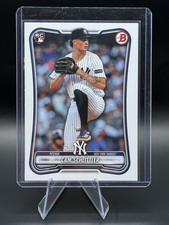 eBay
eBayTopps 2025 Bowman Chrome Prospects RC Cam Schlittler Yankees #53 MLB
$5.00
Ungraded eBay
eBay2025 Bowman - Chrome Prospects Konnor Griffin #BCP-86 Pirates MLB #1 Prospect
$15.99
Ungraded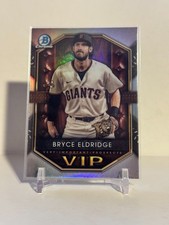 eBay
eBay2025 Bowman Baseball - VIPs Very Important Prospects Insert - PICK YOUR CARD
$1.25
Ungraded eBay
eBay2025 Leaf Metal Baseball Jumbo Box Factory Sealed New 25LEBM-J
$349.99
New/Factory Sealed eBay
eBay2025 Leaf Metal Baseball Factory Sealed Hobby Box 5 AUTOS | 7ct
$159.99
New/Factory Sealed