Jul 17, 2026
"Sharing Grading Expertise" with Mike Baker of MBA E397
Most will agree Mike Baker is one of the most experienced people when it comes to the grading space. He was PSA's 1st employee and now is the force behind MBA. He joins us for the 1st time. Talking Points may include: *How it all started *How...
ListenWatchunavailable
CALL IN TO THIS MOMENT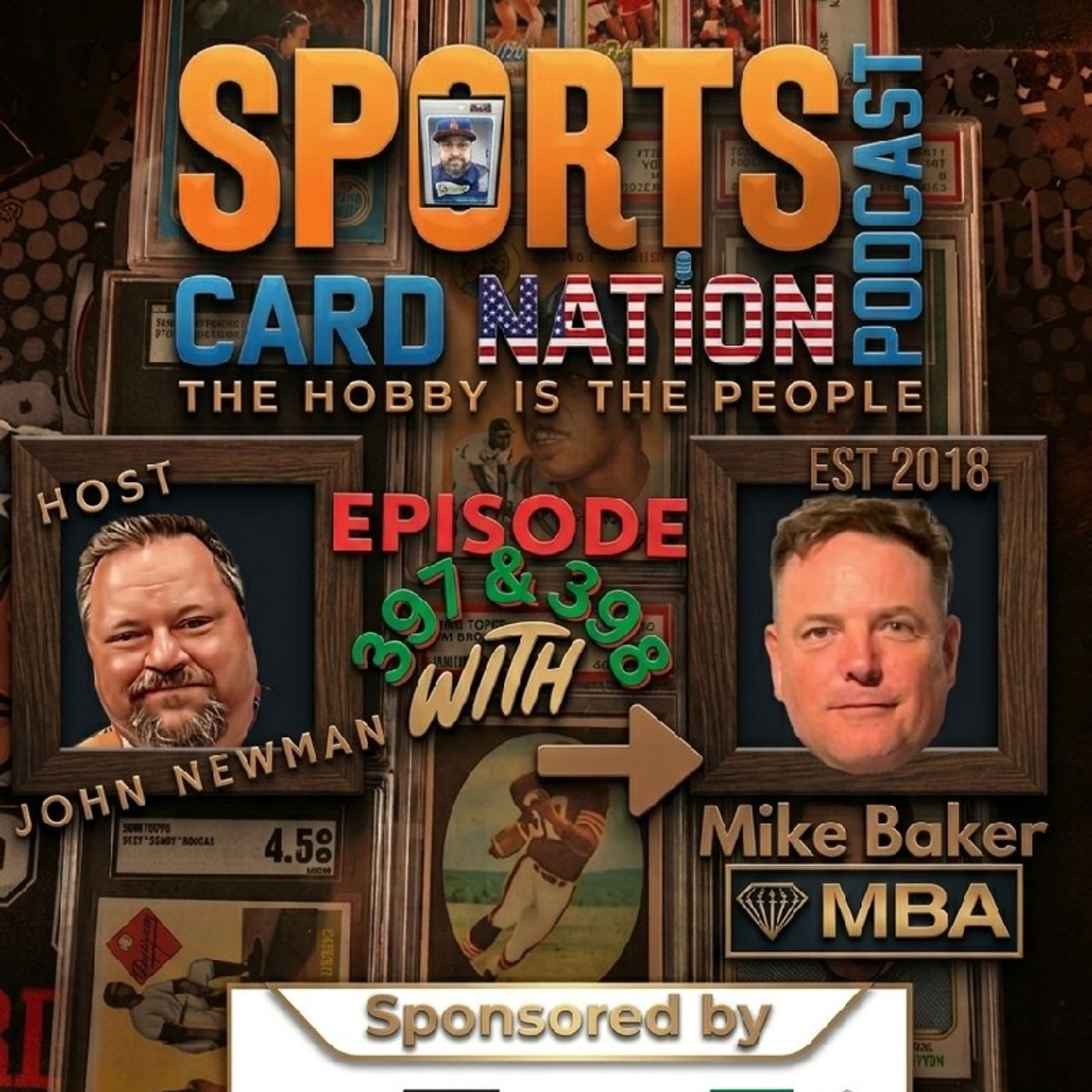
0:00
-0:00
Chapters
/ tap to jump
Searchable
Full Transcript
Every word from this episode, transcribed in full — search the page (Cmd/Ctrl+F) or let Google find the exact moment you’re looking for.
We have the tech to get food delivered in 15 minutes, but we all have horror stories about buying tickets. The GameTime app gives fans the advantage. Get amazing tickets in just a few taps. Fees are included, so what you see is what you pay. And the gametime guarantee means authentic tickets at the best price every time. Take the guesswork out of buying tickets to concerts, sports, comedy and more with GameTime. Download the GameTime app and create an account for $20 off your first purchase term supply. When you're a maintenance engineer in a beverage manufacturing plant, you keep production lines moving and quality on track because there is no room for slowdowns. With Grainger's vast selection of high quality motors, sensors, belts and hard to find parts, you can get what you need fast and all in one place. So nothing gets in the way of getting the job done. Call 1-800-GRAINGER clickranger.com or just stop by Granger for the ones who get it done. Sports Carnation the Hobby is the people. Weekly news and interviews. It's your number one source. Sports Carnation the hobby is the people. Sports Car Nation what is up everybody? Welcome to another episode of Sports Card Nation. Always happy to be back with you and let's thank our sponsors. Get that house clean out of the way. No particular order. As I always say, SGC Iron Sports Card, Sports Collectors Digest, Hobby Hotline, Upper Deck Card Ladder and the Certified Trading Card association which I serve on the advisory board for. Thank you to those folks. Check them out and, and all the great things they're doing in the hobby and for the hobby and the guest on today's show is a long time hobbyist and PSA's first employee, employee number one. He's not there anymore but he was there for quite some time. He does his own thing now for Mike Beck Baker authenticated and as the name implies that who that's our guest on the next two episodes this week and next episode and and that's Mike Baker. And you know I, I knew of him, I didn't know him personally. So through talking with him I've gotten to know him better and really nice guy. You know one of the first things he said when he agreed to come on and chat with us, he's like John, ask me anything you want to. Right? And you know, that's always refreshing to hear. And I asked a couple, you know, I don't want to say tough questions but pointed questions if you will. But you know, we, we talked about the hobby, current state of affairs, grading what he does, why he feels It's a necessary part what it, what it enhances and brings to the grading niche. And, and he is also NBA is now grading cards as well. So they enter that arena. So great interesting conversation I had. I enjoyed it and I hope you enjoy the next two episodes as much as I enjoyed recording them. So, uh, part one with Mike Baker today and part two with Mike Baker next week. Enjoy. When you're a maintenance engineer in a beverage manufacturing plant, you keep production lines moving and quality on track because there is no room for slowdowns. With Grainger's vast selection of high quality motors, sensors, belts and hard to find parts, you can get what you need fast and all in one place. So nothing gets in the way of getting the job done. Call 1-800-GRAINGER Click grainger.com or just stop by Grainger for the ones who get it done. Grainger knows when you're a procurement manager for an office park, you're not managing one building, you're managing all of them. And to stay ahead, you need to see through walls and around corners. Lights about to fail, filters ready to clog H Vac on its last leg. If you wait until something breaks, you're already behind. Count on Grainger for quality products, easy reordering and 24. 7 support. Call 1-800-Grainger click granger.com or just stop by Granger for the ones who get it done. Five, four, three, two, one, zero. All right. Real happy to have the next gentleman on the Sports Card Nation guest line. We were just joking around off there. It's been an interview long in the making, but glad he's a busy gentleman. Glad to finally get him on and generous to make some time for us as well. So without further ado, I'm glad to welcome Mike Baker, uh, of NBA Mike Baker Authentication. Mike, welcome. Thanks for having me, John. Good to be here finally. Yeah, yeah. Nope, no problem. Listen, like, you know, when we obviously grading is a hot butt button topic in the hobby and when you take a grade and I'm not fluffing you up, I'm just being honest, right? You're one of the names that come to mind because of your experience in that niche. Still doing it in your own way as well. Now, am I correct that I read that you were the first employee of PSA or first grader? Yes, both. First. First employee. Actually it's 35 years this month that PSA started. So dating myself there. But you know, it can't get past the father time in the facts. So yeah, I'm with. I'M with you. Talk about like a little bit before that. Like, how did that even start? You just applied. Did you, did you know, did you get recruited? Like, how did your career at PSA start? Start? It's basically just being at the right place at the right time. I had already been with the sister company, professional coin grading Service CGS for two years prior to PSA's inception. And just by being there while they were developing the processes and everything else, I'm just like, wow, I gotta, this is where I want to go. And so I just kind of made myself available for any conversation that, you know, I find myself to be in to get into the conversation of who might be the, the guy to take it over or basically be the first guy there and by defacto made myself that guy. With their approval, of course. So you're, you're the answer to that trivia question, which is, is pretty cool. You, you were there a decade plus. I mean when you think back it to like grading in its infancy, if you will, and where we are today here in 2026, I mean it's, it's kind of a loaded question. But like, what's the, like how has it changed in your opinion through the decade? Well, when PSA first started, there was no half point system. So right there, you know, working with a high end 7, a low in 8 type thing was kind of, it was difficult to kind of have the delineation that you have today with the half points. So and that moved on. It was, I think for 14 plus years they didn't have it. So they didn't change until the early 2000s. So that change was a big one that we didn't have. I didn't have the change with the Internet, ebay coming on in 98, that was a major one, you know, QVC and doing big bulk submissions for modern stuff to try to narrow the gap in the brand awareness of what PSA was representing, what they were actually doing that helped big time. So there was a lot of things that kind of coalesced, you know, the 98 Home Run Derby with McGuire and Bond. So there's a lot of couple little things that really helped juice up the, no pun intended, the entire, the entire entire market as a whole. So those were some of the transformative things that I saw happen at that time. You can look back now and say, you know, what were really the kind of the markers that kind of really pushed things over the edge. Dealer support. At the beginning of PSA's inception, there was very little Dealer support. There's a lot of collector support that kind of made the dealers kind of, I'll buy that car from you for this price if you get it graded by psa. And then we had PSA authorized dealers and, you know, things kind of went a much better direction in terms of brand awareness and submissions and all those good things. You know, I'll pick your brain here, Mike. A lot of people complain. You know, obviously most people know what's going on now. A lot of backlog, especially you say they've paused their lower levels. Some people are complaining that people are sending in, you know, air quotes, you know, lesser cards that shouldn't be graded or why are you grading that? It's a. A $5 base card. Again, it's. It's the individual's card if they want a great. Might have a sentimental reason. Right. There's all sorts of what I've heard people. You know, it's been called, like, the junk slab error. I mean, someone who's been in it that long, was this always the case? And maybe we're just more noticeable now because there's more people sending cards or. Or is this sort of a new phenomenon? How do you see it as someone that was there on. In the early trenches to. To where we are? Well, in the early days, you know, just to get people to carry the product and start this kind of transactionality. So you got consistent with what people were buying and selling. And it just. Because forever it's been a raw product and now it's encapsulated. And now, you know, there's more trust when you send an encapsulated product across the, you know, across state lines or whatever it was. There's all this kind of, you know, bugaboos and whatever that came with it. What really has transformed it, in my opinion, is repacking and. And, you know, when you just brought up, you know, a $5 card to get graded, well, the repackers need that $5 so that they can put that in the product. And so that's really what is, in my opinion, has been the kind of major driver for cards. I will say, though, because the brand awareness is so big, people will come up to shows and, you know, my booth, I can speak for what we're getting, and they just want it encapsulated, you know, and they're willing to pay the price. I mean, you know, there's stories and you could get a lot of dealers on here. They remember the early days with PSA when $6 bulk deals and you know, basically getting cards graded for under $10 without any uptick charges, that was the norm. And now, you know, it's just a different, different era 35 years later. Ish. You know, that's, you know, who knew that repackers are going to be such a big deal and digital repacks, you know, physical, it's just, it's just gone places where the market's hum. And I never thought having a conversation with where a grading company, the biggest grading company in the business, PSA would have to shut down because they're getting too many cards, you know, and, and then to boot have a eight figure backlog. That's, I can't, that's crazy. You know, and yeah, things have changed. Yeah. And great point by you too, Mike. I, I, that kind of slipped, slipped through my five zero with the repacker role in this as well. You for, I forgot about, I didn't forget about them, but I, you don't, you know, you forget the impact they're having because they need those graded cards. Whether it's like you said, digital opening, a digital pack, there's got to be a real card behind that that that person has the option to either take possession or have them hold in whatever their holding facility of all. But I, that you know, we, we, I think sometimes a lot of us probably don't even realize that impact of it. It's not just, you know, Joe Smith from Sheboygan and again, it's not really, you know, when people complain that about that to me, even at my tables, I'm like, listen, you know, people want to pay the grading fee to have a car graded. That's, that's their prerogative. That's just, this is America, right? Yeah. You know what I mean? So, so like you can get mad but, but you know, when you think of the grading niche too, Mike, like it's a weird business model because like if a restaurant is really too busy, they just hire more staff, maybe build an addition with more seating and, and, but grading is different because obviously you don't want just any, you know, you say, well just hire more graders. Right. That's easily said. Right. But you want to, they need to be put through the paces, apprentice, be trained, you know, you know, and I think anyone that's getting their cards graded don't want just anyone to do it. If you have a choice between someone who's experienced, who knows what they're doing or doesn't, I, I think the choice is easy. So you know, I know it gets grading gets compared to a lot of, you know, normal businesses, if you will. And I think it's sometimes hard to do that because it's just such a different kind of industry. It's not a restaurant where you can train a, a wait staff or, you know, even a cook or, or whatnot in a week's time, maybe, or less. Right. It's, it's not as easy as that. So, I mean, you know, kind of your thoughts on that? Well, you just nailed it. I mean, this is, you know, grading isn't three letters. It's graders. Human beings are doing this. And, you know, I'll give AI and machine learning a little bit of props to help with the centering identification and sizing identification. But ultimately it's the guy that's looking at the card look, you know, and then having his experience on what he's looking at and interpreting that to a standard and then applying that consistently. It's not something you just grab off the street. If it was that easy, we wouldn't have, you know, 10 million car backlogs. You know, do you think, you know, PSA or any other grading service wants to shut down their business and not take revenue? I mean, you know, you can conspiratorial think, oh, they're just trying to drive, you know, prices so they get higher, more money for higher charge services. You know, no one's, in my opinion, I don't believe that. You know, there are cards that, like you said, they're worth five bucks. And, you know, there's, there's a service option to service those types of cards valued at that level. But if they could get, if any grading service can, you know, get 10 million cards out, they would try to do that. And I think like you said, it's gated by the person's experience. You can't take them off the street. They have to go through the, the litmus test, so to speak, to get into the chair, know what you're doing, and then, you know, effectively grade, you know, and that's a, that's a, it's a, it's a talent, really. Is. Do you think, do you think this will be more the norm? Like, even when let's, you know, in PSA's case, they unpause these lower levels, these bulk levels. Do you think this is going to be sort of like we're going to see this every so often, or you think there ever be a point where they can stay ahead of it or, or not really because of the, the growth of the hobby? Well, that, that's the balance, right? It's how much growth are we talking about? You know, what's the future look like? You know, I think after Covid, I would have thought, I would have thought that that wouldn't happen, you know, but the market, the market's. It's dynamic. It's going to do what it's going to do, you know, And I will say, like any market, there will be ups, and there's hyperbolic ups right now within the market, and there, there'll be a downturn at some point, just how it goes. It's Murphy's Law, whatever law you want to apply to what goes up must come down type thing. I think it's. To what degree does it continue to go up and to what degree when it does correct, will it go down? And I think that's the kind of the debate of, you know, what, where should you be, the timing of the market. Just like stocks or real estate, you know, you, you hold something for a while, you really like it. Especially, you know, trading cards in particular. You know, we all have a passion for them. And, you know, I always say, you know, if your house is on fire and you've got cards, your dog and your wife, what order are you grabbing? Which one? You know, it's. Cards usually falls on top, you know, and I'm not going to answer that. Just, just to stay married. We're all. We have a lot of, you know, oath behavior in us. To what degree is debatable. But, you know, when you're spending your discretionary income on. On things like this, and now it's not even a baseball card anymore, now it's an alternate class asset and all these other, you know, big, big league terms, so to speak, you know, and they're coming in. I'd like to believe that's going to continue to roar. I know it feels like we're. The market's cool. You know, it's got a wow factor now. It before was like, oh, I got back from college and my mom threw away everything that I had in the attic and stuff. And. Or those are just baseball cards. Who really cares about that? And now it's like, what do you mean? You have Pokemon cards and, you know, trading cards. That's the greatest thing ever. You could be sitting on a fortune. So the whole narrative is switched. So to what degree that holds the line in terms of it going forward. Forward on a 4 or 5x or whatever x you want to apply, I don't know, but I want to put my finger on it. And say, I think it's got some shelf life left to go still. So, yeah, no doubt. I, I tend to lean towards what you're saying. I think it's going to get bigger. You know, how much I. I guess the question is how much bigger right now? Not the f, it's just how people. Quantity. I gotta ask you this question, Mike. You know, we've Collectors Universe, the parent company of psa, obviously they acquired SGC a few years back. We then read more recently. They've acquired Beckett Grading as well. A lot of people up in arms saying it's a monopoly. They own 3 of what most people would agree is the big four. Know, people want the government or the, the Federal Trade Commission to look into it, get involved. As someone who's worked for PSA and now doesn't, has his own grading company in a sense, like kind of where do you fall on, you know, what people are with the monopoly word and antitrust and all, all that stuff that that comes with it? Politically speaking, it's, it's easy, you know, for me, it's from MBA's perspective, my personal perspective, it's great because we're an independent. And if you're tired of not wanting to deal with what is perceived as a monopoly or whatever the perception is, then there's options. There's cgc, there's tag, there's others that are out there that are trying their hardest to win the hearts and minds of the community at large and whatnot. And I know we're doing the best that we can. Ultimately it's going to be dependent upon, you know, how they conduct the overall operations. Independent. I've been in interviews in the past where I've commented on, you know, there's something good that could come from this by consolidating. I know that's kind of like the opposite world of what most people on the street would agree with, but if it's done right, they could pull it. If it's not, it'll go. The market will again. The market will dictate what's going to happen. If that means oversight or whatever may come from it or not, I don't know. All I can tell you is, you know, nobody wants to have a 10 million card backlog and not get those out. And until people that have submitted that their cars aren't coming back, until that I can tell you. So I know no one's sitting around going, how much longer can we hold on to these cards before we send them out without them get pissed off. I don't no one's. I don't believe that anyone's. I think everyone's trying to do their best, get the cards in and out and then it just comes down to service and, you know, are you sticking to the line? I think those are the two things that people mostly should be concerned with or, or considerate of is service and consistency. That's, that's where it sits. That's what's going to win out. Yeah. One more question kind of pertaining to those groups. You know, it's. I'm asking you to put your like fortune teller hat on. Looking into the future five years from now, does Collectors Universe or Collectives holding, do they still own all three grading companies? Do they own, do they sell one, two? Like that's a good question. You're not gonna get be penalized being wrong. I think they're going to be public and I think they're probably going to have all and or more under their umbrella. So within five years, they're public. They're a big juggernaut. They're moving and shaking. They're escalating the 10x factor. I know Michael Rubin said that's what he would like to accomplish at Fanatics and, you know, who knows that he said that a few years ago and they just got the license just what, this year. So, you know, that 10x factor could be much. There might be another multiplier on top of that. So PSA just opened an office in Frankfurt, Germany. We're talking about opening up internationally at some point in the future. Right now we're trying to get our system scaled up to handle what we get right now. But the international thing, it just shows you the growth of the hobby overall. We're going to attend the Macau show in October. So we're going to Macau, China to go talk to collectors. We get a lot of interest from, you know, Singapore and Taiwan and far. It's, it's unbelievable how much reach now is out there and how people are, are, you know, collecting and transacting all around the world right now. And that's really the unknown factor. And how long does that heat up and continue to churn, you know? Yeah, it's, it's, it's, it's a, you know, it used to be kind of America's hobby. Right. And now it's, it's a worldwide phenomenon. You are listening to the Sports Card Nation podcast. We'll be right back after this break. If you care about the future of the hobby, it's time to know the name CTCA The Certified Trading Card Association CTCA is the first and only non profit trade association dedicated to making the trading card hobby safer, smarter and stronger for everyone. From collectors and local card shops to breakers grading companies and hobby businesses. Through initiatives like the Trusted Retail Retailer Program, the Certified Breaker Program, the Healthy Hobby Initiative and the Global Trading Card Registry, CTCA is helping bring more trust, transparency, accountability and protection to the hobby we all love. Whether you're a shop owner, breaker dealer, content creator or passionate collector, now is the time to help shape the future of the hobby. Become a member today and join the movement at the CTC. That's the ctca.org because a better hobby starts with all of us. CTCA building a safer, smarter and stronger hobby. We are back. You know, we're seeing shows like you just said in China, in Germany and other countries have never had card shows into London and the list goes on and on. And you know, I like to see that. I'm, I'm, you know, as someone who started in 1979 as a seven year old kid, I like the fact that I, I don't want to think that someone won't, can't enjoy the hobby because of, of where they live. Right. And that's a, a disqualifier. So I enjoy, I, I enjoy seeing the growth. If it's good growth. Right. We, there's, you know, that's a double edged sword. You know, we won't go down that rabbit hole. But I do enjoy seeing the growth. But it's interesting to hear you say like, in your opinion, like you, you think they still, not only do you think they still hold those companies and you've even mentioned maybe even acquire another one, that would surprise me with some of the, to answer my own question, Mike, I don't know, like they're already getting heat for what they owe now to, to add another one, whoever that may be. Like I'm, I'd be surprised if they did that. But you know, not, nothing really should surprise us anymore what we've seen in, in the last decade in the hobby. Well, you keep pushing until you find out where you can't push anymore, right? Yeah. So, you know, if they were, if they were to do something like that and some said no. Okay, well we know the oven's hot now. We won't touch it. So. But if someone says the oven open for business and then what? Why not, you know. No, it's a great point. And listen, I do that, you know, when I, I still play men's competitive softball and I coach vars varsity high school baseball and football and I would put, you know, I push the umps or the refs right until they tell me like none, you know, I don't want to hear another word out of you. You're gone and I know that. All right, I gotta, I gotta keep my mouth quiet now so it makes sense. So yeah, maybe that's what it'll be right. Where until they're told like hey, you have to sell at least one or you can't do that. But yeah, it'll be interesting to see, you know, my big fear. And I'll just like close this segment with, you know, my big fear. You know, people ask me because I was bulk subbing as an SGC bulk suburb at the time of the acquisition. A lot of people were asking me hey what does this mean? What is this going to look like? And honestly I, I can only give an opinion. I'm not in those meetings or those outlook plans. So you know, I gave my opinion. But one thing I was glad about my big fear. And I'll get your take on this too, Mike. My big fear was that Fanatics was going to buy a Grady card company and I don't want to see that. And, and again I think it's a conflict of interest when you're producing cards and grading them and not only grading your own cards per se but, but you're also in a sense will be cards for all reports. Very well. And you know, I don't think they need a grading card company. As someone who's again very experienced in the Gricks, let's say acquired SGC or even someone else and became got into the grading space. You broke up there a little bit, John. So I'll just grab what I could make out of the stuff with the Internet connection. I don't know what happened there, but give me a quick snapshot of what you. You were talking about Fanatics owning a grading company. Yeah, I'm at like yeah, I'm. Yeah, I'm glad Fanatics didn't. And again everything can still happen but at this point Fanatics, you know there was rumors they tried to acquire SGC and others grading companies. I don't want to see, I don't want to see Fanatics own a grading company. I just think it's a conflict of interest. Yep. With grading their own cards but grading competitors cards I think just said it's a bad sort of precedent. As someone again of your expertise in the space. Yeah. Do you agree, disagree something you're glad it's not the case now. Well, ideally there would be guardrails up for companies that have access to production, sales and everything else. But, you know, in, in this market over the last couple years, we've seen a lot of change. We've seen what you mentioned, mentioned about, you know, PSA doing or collectors, you know, other things that have kind of gone on that I would have thought, you know, years ago would have absolutely not happened. And now they are and there hasn't been. There's an uproar. But it seems like our news cycle is so. The velocity is so fast that there's no like traction of something. It just like everyone kind of gets up in arms about it, whatever it may be, and then it kind of burns its shelf life off in 48 to 48 hours to a week, and then it's on to the next, you know, butterfly to catch. And so however it works out with fanatics doing anything or whatever other company, it'll be what it'll be. And people, again, the market's gonna go back and decide what they want to do business with or not. I mean, ultimately, if, if the, if the prevailing thought is that fanatics shouldn't do that, then the only way to counter it, if they were to do it, is for people to not do business with them, to make it so they get. But ultimately there's ways to gamify everything and kind of make the friction not be so frictional bowl or whatever the word is to use them as a service, hypothetically. So I don't know, we could go on and on about the debate of the what ifs and stuff. They're going to do what they're going to do and PSA did what they were going to do and they left it like, hey, we did it. Now what? And everyone's still submitting to the point where they had to shut down services. So know, if it was that big of a deal, I think it would, you would notice it more in submissions because, you know, even if you can't stand what, whatever you hate about a service or the service, you know, ultimately the three letters command a lot of liquidity. And people are entrenched in certain brands for that liquidity. And, and they're, and some of them, you know, are so ocd, they can't fathom using another grading service to, you know, kind of mess up their ecosystem within their collectible. So they want all the same holders, they want everything to look this way. You know, everything's got to be this color or that color. So, you know, I Don't know. I think it's up for each individual to figure out. Look, we, if you have a hundred dollar bill right now and you could spend it on anything, why, why this market, why that grading service, why whatever, right? So ultimately it's going to be up to you and the other people in the world to, to sort where, where they want to spend their money. And for whatever reason even if it's putting your nose up in the air saying, you know I hate to do this but I'm, I have to, my client won't only buy it if it's in this greeting services holder, you're going to look the other way. Most people do, you know, conviction in, in our world, in the business world, you know, you can't put your personal opinion, you have to do business and business is. Business is business. It's cliche for a reason. Yeah, no, you're right, you're right. All right, let's enough talking about other three letters. Let's talk about mba. Right. We gave them some them free pub. Not that they need it but we gave it to them anyway. Let's talk about your company NBA Mike Bet Baker up then kind of like what, you know, how you, you know why you started it, how you started it where you are today and all that. Good. Yeah, the, the why was it's there's a, you know, just heard PSA celebrated or the celebration of 150 millionth cert before being bought out on the market 35 years. So let's say the number is 150 ish. With PSA overall market you've got to probably talk of the 200 million plus range, you know of units of plastic that are out there over 20, 30 plus years. Green Services have changed their standards. They've included new things within their standard, they've tightened up their standard with centering. There's a lot of little here and there and everywhere where I thought a sticker could be a good, a good idea. It was proven to be a good idea in coins with John Albanese doing the CAC sticker much so to the everyone's opinion that PCGS actually included this, their sticker into their weighting of the ECGS coin register. So it included a lot more gamification. So a sticker had a higher weight or has a higher weight than a non sticker coin. So it has a track record of highlighting better copies. So I did not invent that wheel. PWCC was doing their sticker well before NBA came up with, with one for the trading card Industry. There are other stickers that auction houses use. Four shop corners has theirs, heritage has one. You know there's been others here and there. That was the, the neat is, you know, you've got all these great cards out there that are in the same grade but some cards are just better with within the grade. I always use this example for nines in particular. PSA doesn't have a 9.5. So between a 9.0 and a 9.9 there's just better cards. It's just a fact. They don't have a pristine, they don't have a flawless or a black label type thing. So our sticker helps with that. And overall we'll be celebrating our six year anniversary coming up here in August. And we finally got some really great. I think we had our, our moment in time, our tipping point last national in Chicago and some great sales happened. Heritage got some great sales, golden got some great sales rea fanatics. And it just like was like this perfect moment where they started advertising NBA within the catalog, describing it properly. There's more search, there's just more information. Also when we first started a lot of the cards that we sticker were in personal collection, you know, so it was. No one wanted, no one wants to sell PC cards. Right. But this hyperbolic market has, has drawn out a lot of colorful cards that are stickered great cards and they're selling for stratospheric prices and it just keeps turning. So another log gets thrown on the fire and it's still roaring and ripping and it's been, it's been great. You know, I've, it's been a hard road, but getting out there Covid was a big non starter for people wanting to send their cards. We've been labeled grading the graders and all the other, you know, fun terms and whatnot, you know, old. Ultimately it's a crossover. The sticker means something to what we do for our NBA graded product. So if it's a silver sticker, it's going to get the exact same grade but you're going to get a silver sticker on our holder because it's denoting superior IP for that card in that grade. A gold sticker represents something that's a half point or higher. Yeah, I'm, I'm a little stubborn, I'm a little old. And so I always felt it was like you're paying twice to have one card. So I've never done it again. It's. But again it's a free country. It's America. Right. And obviously Enough people want it done. I guess my question to you is not so much why, you know, but like when a. When a card gets a silver stick and like it's a great point by you. Right. With cac. They. I know they were called the green bean. Yeah. In the coin. And, and the track record shows us. Right. I'm not a coin guy, but I did enough research to know and I have a coin guy friend who said, hey John, when those with that green bean sticker, those coins bring more money on the second like it or not, those bring more money on the secondary market. Right. So I guess my question to you is between the silver and the gold and like I've heard it worded like this is bet, you know, in the 10% of the top of. Of that grade. How do you know that? I guess would be my. I know it's sort of a simple, maybe too simplified. But how do you know that it is other than you feel like it's sort of like. I mean, grading is subjective to begin with. You know what I mean to say that. How do we know? Well, I think, you know, if I showed you 10 copies, I think it would be pretty easy for you and I to agree that the copy that's getting a sticker is in within the percentage that's being, you know, marketed. Ultimately though, you know, we started our graded product holder hit the market in January of 25. Now, you know, it shifted from it being that conversation of, you know, if you had 10 or 15 cards in front of you, which ones would you. What could we all agree that that is the superior copy within that grade in that sample. And now it's literally a crossover. So, you know, we look at it like it's got to adhere to NBA standards, NBA grading standards. And, and the sticker goes to that. If there's ever, you know, a wobbler, you know, then maybe the conversation kick into the 10%. But by the national or shortly thereafter, we'll have our bronze sticker that's going to come out and that's going to be the grade equivalent. So it's basically going to note bronze sticker will denote the exact same grade going into an NBA holder. A silver will denote superior. I appeal for that grade. So you'd have a silver gold half point or higher and black strictly for tens for denoting a flawless. So that's how you know. Yeah, you know, I hear black label and we. That makes me think about the whole Becket controversy. That's a whole show in itself. But that's Again, that's them and not you. So what for those that are listening, like what's the difference between this. So is there going to be no more gold? Is there a gold label? Yeah, basically third party, third party graded cards, PSA, SGCGs, CD tag are the ones that we do right now. Any, any gold represents a higher grade. Any, any silver represents the same grade with superior eye appeal. When we do launch bronze, it will reflect the exact same grade going into an NBA graded holder. Yeah. So if a card gets a gold sticker from, from NBA, you're basically saying it was undergraded. That's right. In your opinion? Yes. Do you ever. Not that you care. Do you like, do you, do you ever get any pushback or feedback from a grading card company that like hey, why do you do that? Or you're wrong or you know, that doesn't make sense. No, no, there's not. I think it's. I, I joked about it last week and it's kind of like anchorman. The grading services are kind of like news stations and, and it seems like there's not a lot of, you know, you know, cohesion now. I, I know, you know, Scott at a great guy, knows his stuff. No doubt about it. Can I call him up and ask him about a cards nuances or if there's a question about something? Absolutely. Are we having, you know, a philosophical discussion about what NBA is doing relative to a sticker? No. And I bet if we did he'd think it'd be great. Same with some of the guys that I hired and trained that are still at psa, you know, leading the entire grading department. I think they say that they're great, they're happy that I'm, I found a lane to, you know, that I'm happy with. And I think the market for the most part is, has been accepted of. I know there's the naysayers out there but like you said about the coin, the cac, the green bean sticker, it. Whether you like me or you don't like me, it's not a personality thing. It's. It's the data that, that, that comes from the sales and that builds the business case. That's what triggers should, that's where this decision should lie from not on all the other superfluous stuff that you can get caught up in, in this, you know, cause and effect mentality that a lot of people have in, in our hobby. Yeah, no, it's, it's a good point. There you have it. Part one with Mike Baker of Mike Baker authenticated or mba. And hopefully you enjoyed that as much as I did, you know, recording it and talking with Mike and, and that's only half of the conversation. Part two next week as we've, you know, went to two part episodes probably almost a year ago now and probably one of the best decisions I made for the podcast. So next week, Mike Baker returns and as always, as we gear up for the national, uh, hope to see a lot of you there. Uh, if you see me and you know, happen to know who I am, uh, you know, I'm very personable guy, stop me, poke me in the back, tap me on the shoulder, say, yo, Newman. And you know, I like to meet you, shake your hand and talk some hobby in person as well. So that's going to do it for this episode. We're going to hear from our hobbies, the People Announcer of the Week, and wrap it up. And Mike Baker will be back next week. Grainger knows when you're a procurement manager for an office park, you're not managing one building, you're managing all of them. And to stay ahead, you need to see through walls and around corners. Lights about to fail, filters ready to clog. H Vac on its last leg. If you wait until something breaks, you're already behind. Count on Grainger for quality products, easy reordering and 24. 7 support. Call 1-800-GRAINGER click grainger.com or just stop by Grainger for the ones who get it done. When you're a maintenance engineer in a beverage manufacturing plant, you keep production lines moving and quality on track because there is no room for slowdowns. With Grainger's vast selection of high quality motors, sensors, belts and hard to find parts, you can get what you need fast and all in one place. So nothing gets in the way of getting the job done. Call 1-800-granger clickranger.com or just stop by Granger for the ones who get it done. Time for our Hobby is the People Announcer of the Week. What's up, Sports Card Nation? This is Brett McGrath with stacking slabs podcast. Remember, the hobby is the people. If you'd like to be the HobbyIsThePle Announcer of the Week, do a WAV or MP3 file and send it to sportscardonationpcmail.com hey John, you want to have a catch? Granger knows when you're a procurement manager for an office park, you're not managing one building, you're managing all of them. And to stay ahead, you need to see through walls and around corners. Lights about to fail. Filters ready to clog H Vac on its last leg. If you wait until something breaks, you're already behind. Count on Grainger for quality products, easy reordering and 24. 7 support. Call 1-800-GRAINGER click grainger.com or just stop by Grainger for the ones who get it done. When you're a maintenance engineer in a beverage manufacturing plant, you keep production lines moving and quality on track because there is no room for slowdowns. With Grainger's vast selection of high quality motors, sensors, belts and hard to find parts, you can get what you need fast and all in one place, so nothing gets in the way of getting the job done. Call 1-800-GRAINGER clickranger.com or just stop by Grainger for the ones who get it done.
Episode summary
Most will agree Mike Baker is one of the most experienced people when it comes to the grading space. He was PSA's 1st employee and now is the force behind MBA. He joins us for the 1st time.<br /><br /><br /> Talking Points may include:<br /><br /> *How it all started<br /><br /> *How grading has changed through the decades.<br /><br /><br /> *Junk Slab era?<br /><br /> *Future of SGC<br /><br /> *What's the deal with MBA<br /><br /> *Thoughts on altering and cleaning <br /><br /> *Do the diamonds make a difference <br /><br /> *The subjectiveness of grading <br /><br /><br /><br /><br /> Follow us on Social Media: <br /><br /><br /> Website:<br /><br /><br /><a href="https://www.sportscardnationpodcast" target="_blank" rel="noreferrer noopener">https://www.sportscardnationpo...</a>.com <br /><br /><br /><a href="https://linktr.ee/Sportscardnation" target="_blank" rel="noreferrer noopener">https://linktr.ee/Sportscardna...</a><br /><br /><br /> Merch shop:<br /><br /><br /><a href="https://sports-card-nation.printify.me/products" target="_blank" rel="noreferrer noopener">https://sports-card-nation.pri...</a><br /><br /><br /> <br /><br /><br /> To eliminate pre & post-roll ads<br /><br /><br /><a href="https://www.spreaker.com/podcast/sports-card-nation-podcast--4761791/support" target="_blank" rel="noreferrer noopener">https://www.spreaker.com/podca...</a>
From the original show
This episode is published by Sports Card Nation Podcast.