Aug 3, 2026
Joe Hollywood: Beyond the Breaks | Sports Cards Live
ListenWatchunavailable
CALL IN TO THIS MOMENT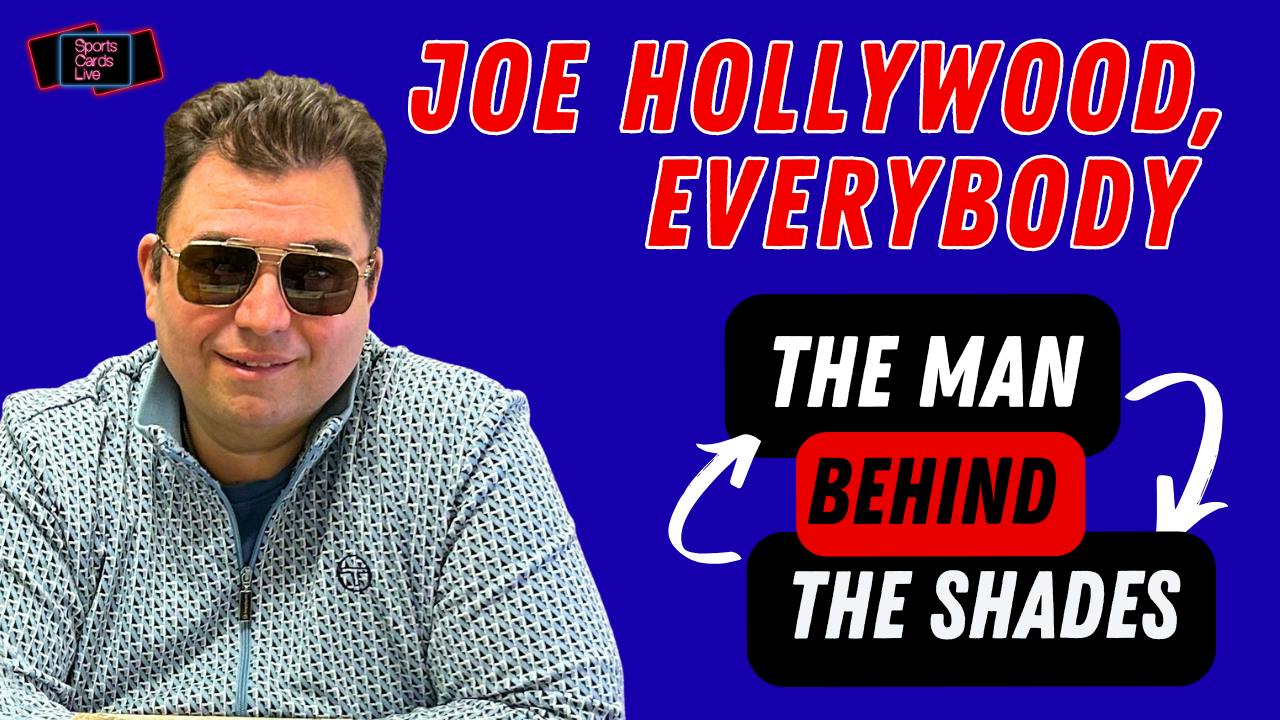
0:00
-0:00
Chapters
/ tap to jump
Searchable
Full Transcript
Every word from this episode, transcribed in full — search the page (Cmd/Ctrl+F) or let Google find the exact moment you’re looking for.
Michael Jordan. Sports cards is a lifestyle Sports cards and we live now. Jeremy Lee in the building and every guest that you ever needed. Sports cards after hours. Keep the hobby heated updates hobby talk like you never seen it Sports Cards live and I could ever beat it Sports cards is a lifestyle Sports cards and we live now. Welcome to another episode of Sports Cards Live with your host, Jeremy Lee. All right everybody. Welcome to an episode of Sports Cards Live recorded because we are not live, we are recording. And I am happy to have here in the studio Mr. Joe Hollywood of the Joe Hollywood live stream breaking brand and brands on Whatnot as well as other social selling platforms. Joe Hollywood, welcome to Sports Sports Cards Live. How are you doing today? I'm doing amazing and it's great to be here, Jeremy. Thank you so much for allowing me the opportunity to get on the show. And Yu-Gi-Oh we're recording, but we are recording live so this is gonna be a lot of fun and I, I can't wait, you know, to do this. You know, I've met you a few times, especially up in Toronto and this is long overdue. So always excited when I get a chance to see you, but really excited about doing, about doing this sportscast. It's gonna be awesome. Yu-Gi-Oh man, I appreciate it's been, we have met a few times up in Toronto. It's always, it's always been very nice. You're always very cordial, friendly, jovial, if I might go that far. You bring a great energy to the hobby and really to, even wherever you are, there's always people around and you always have a smile on your face. Joe. Which I think is a quality that is, is, you know, it's a great quality for what you do in, in the hobby, in the industry. But I want to start some exciting news out and it's not necessarily new news, but literally a week ago or so a new feature film called Signed, Sealed and Delivered Inside the billion dollar sports memorabilia business was released on Amazon prime and Apple tv and you are one of the featured personalities in that film. What's the reaction been to that so far for you? Have you, have you heard from anybody that you haven't, that you didn't maybe expect to hear from since it was released? Well, no, because I've been working the whole time since it's been released. Right. So I gotta check my messages. I mean, I'm not even kidding you. Like we, we just, I just did a, a 28 hour live stream that ended, it started Tuesday night, ended this morning and then the night before we did One. So I literally have to go back on the text, but for it was. Been awesome. So after we went there, we saw the premiere, we flew to Montreal, which is a great experience. We do that. We do the Rick Harpet experience. We see the film and I was blown away. Like, I thought they did a very, very good job. I thought that the incorporation of how they started it off and I don't want to blow all the. I don't blow the show for everyone, but the way that they put the pieces of the puzzle together I thought was very, very good. So if you haven't seen it, I implore you not just because I'm a part of the film. If you, if you have any interest in sports cards, go check it out because it gives you some almost like a bird's Yu-Gi-Oh view of really what's happening behind the scenes. And everyone wants to always know, like what really does happen behind the scenes. They do a great job of capturing it. From grading to running a sports card business, to streaming, to seeing how it all envelopes. Yu-Gi-Oh it's very cool. So I invite everyone go patch auto It's pretty awesome. And you know, trans. Full transparency. I have not been able to patch auto yet, but I'm going to be watching it very soon. I look forward to that. You talk about behind the scenes. It's a great theme. I want to get behind the scenes on Joe Hollywood. The person, the man, the brand. But before we do, I have a question for you. Do you have any. Do you know what does Joe Hollywood, Larry David and William H. Macy all have in common? Well, I have no idea. No idea. I was gonna say, are we all from New York? I don't know. I mean, let me know that. This one. I don't know. I'm stumped. I'm literally stumped on this one. William H. Macy is definitely a horseshoe on that one. I have no idea. What is it? Back in 1987, there was a film by Woody Allen called Radio Days. And all three of you, all three of you were uncredited actors or extras in that film. And I thought that was a pretty cool little tidbit there that you can say that you rubbing shoulders with William H. Macy and Larry David, among some other big names. It was a Woody Allen film, of course, in 87. Do you. You must remember that. Tell us a little bit about that experience. I remember vividly. I remember being on set with Seth Green and I loved cards and I love sports cards and Seth Green at the time, if you, if you know who Seth Green is, Seth green, of course, Dr. Evil Son. Right. And Powers, I mean, amongst many other things that he's on and where I'm on set and we're filming Radio Days together and he was into Garbage Pail Kids. And so I remember going to like we were filming, we filmed it in New York. And I remember going to like the convenient, well, we call them bodegas or their convenient new convenience stores and going in there and buying actual garbage cards and actually trading them with him, because that's what he was into. And I remember the people I was with that brought me to the movie, they're like, hey, he's really into it. We know you're into sports, but hey, could you trade these Garbage Pail Kids cards with him? And now I look back and he was actually a pretty big genius. He goes, those Garbage Pail Kids Season 1 cards are actually incredibly valuable. A lot more valuable than, than a lot of the 85 and 86 cards that I was collecting back when we were filming the movie. Right. Because that movie came out in 87. And so we filmed it obviously the year before, year and a half before. And so they were selling the 86 cards at Topps. Quite possibly the worst rookie set of all time. I mean, I'm not talking about tops traded. I love the top traded set. Bo Jackson, right? Will Clark, Barry Bonds, great set. But the actual 1986 top set. Find me one, rookie. Find me one. I'm waiting on it. Not non existent. So yes, even he actually had me Beckett for that. But Yu-Gi-Oh I had no idea William H. Macy was. Was uncredited in that. And Larry David now, now I'm, I'm literally racking my brain because I've seen the movie so many times. I have a screenshot of myself in the movie. So thank you for bringing that to my attention. I actually put a bigger smile on my face, actually. That's great. I wasn't sure if I was gonna. If you would know the answer to that at all. I'm glad that you didn't. Here we are now. Literally, it's, it's 40, 39 years later and you're, you're back in show business. You're. You're back in, you know, mainstream show business. I would say with this film that's on again, Amazon and Apple. Did you ever plan for that to happen? What were your aspirations when you kind of moved through life and went. Got into the breaking business, the live streaming business? Did you ever, did you ever think it would lead to being back in like mainstream show business? Not. And not that you're in it now permanently, but you've. You've had a taste of it again. Did you see it coming? No, because I never even thought I was going to be into this business. Like, I got into this by. It was more than happenstance. So that would actually have. Actually have had to have had a plan for that. And that was never in. There was never part of any plan. So what happened was, is we moved. Oh, my God. In 2022, we moved into our. Our dream home, and we were. We were moving the stuff out of a storage unit back into, you know, into our house that we had. And part of that was my car collection. And when that car collection came in and my wife started this car collection, she was like, joe, where are we putting all this stuff? We need to have a garage sale. And what she secretly did not know is me and my son were getting back into the hobby, and we were secretly buying on Whatnot, and I was adding to that collection. Oh, so more. And so I was like, all right, we're gonna have to sell some stuff. So I said, hey, there's an app I know that they sell. And me and my son started selling on Whatnot. And my aspiration was I was just going to sell my collection and be like, all right, that's it. I'm done. Like, hey, you know, it's great stuff. And didn't plan for it to go the way that it has. And sometimes those are the best. Those are the best plans, the ones that you don't know. So when you say that, no, I had no idea that I'd be back, you know, doing films, and had no idea that I would be back, you know, in the sports business, especially in the impact that we've been able to make, simply because I was never part of the original plan. Right. And maybe that's the reason why it has taken this turn and why we've been so successful is because this is something that's happened out of joy and out of love for sports in the hobby. And it happened for all the right reasons versus something like, okay, we have a calculated plan on how we're going to enter markets. And now this was just something that it just really sprung upon us, and we got very blessed, you know, all the glory to God on that. I love that journey. Joe. And I've experienced something very similar. I think we both have. And we. We have that in common, is that we went. We. We one day decided to do this, and we had no idea where it was going to lead to. And now we're both doing it professionally and so we. It's kind of cool that we have it in common. Obviously our paths have been different and we do fill different roles within the hobby content and the hobby landscape, if you will. But it's just awesome, man. It's an. It's awesome that you don't know where things are going, but you. But if you work hard, things often will turn out to be pretty good. And so congrats on your success, obviously, thus far. But I'm curious now that you, you did have the experience of working with a professional, you know, television crew, were you able to pick up any tips or any strategies from that experience that you can now bring into your live Whatnot streams as you are breaking and entertaining, you know, hobbyists? Yu-Gi-Oh for me it was a lot of self awareness and I know that sounds like a. Maybe that sounds like a, you know, like a plain answer, but it really was with self awareness, was then when I have a professional crew watching every move that you're doing, right? You're recorded and you're streaming and Yu-Gi-Oh you know, you have an audience but you know that all eyes are going to be on you and your performance is a whole different. It helped us, like it really did help us. So my streams back then, like when we were recording the film for my streams now versus where they were back then, Jeremy, are different. So we were in a closed studio where the cameras were all based upon the cards, right? And then you'd have a background in the cards. Now the way that we, that we do the shows, it's. I'm half of it live on camera the entire time. Not just my face, like full body, you know, my crew is running around in the background. It's an immersive experience, right. You see the products behind us, it's really cool. And we were able to bring guests in. But then the other half of the screen is of course, all dedicated to the cards. The problem is, is that I don't think people like it when I sit down. So they like it when I'm standing up and I'm being myself, right. And I'm talking and I'm yelling and my arms are flying around and they get that, you know, that guido vibe out of me. I mean, the same vibe that you see me with in Toronto, right? At the Toronto car show. You like, oh my God, this guy's always smiling and happy. Like that's what they get. And so since we've done that, since we've had that crew here, it really made me a little bit more self aware of, like, hey, if we were like this on the show, maybe I bring this authentic self and we bring it to live stream on the camera and we kind of break out of this, this turtle shell that we were in. And since we've done that, our audience thing, we already have the number one audience on Whatnot as far as sports shows were concerned. And we are now, we were still the number one most followed sports show on Whatnot, maybe in America. And now the followers have just exploded and the viewership has exploded as well. So it's almost doubled or triple from where it was. So, like, let's say on a given night, we had 1500-2000 people that were watching us live. We just did a show. We had 5,000, 500, 6,000 people was watching concurrently. And it's just like, okay, you know, this worked. This was a chance. But we take chances all the time, you know, and I don't want to come off like that, but, like, we take chances all the time that don't work. Like, we fail constantly. And no one really sees that. Like, behind the scenes. Like, we take chances on things and it fails miserably. Like, all right, that didn't work, but we're not afraid to do it. And I think that's the difference. Like, we're not afraid to take a chance and lose on something we use as a learning experience. Like, okay, let's take it. Let's get, like, get back up. We dust ourselves off and we move on. What was, what was the moment where you realized that this breaking streaming thing wasn't just working, but had become something even bigger than you ever expected? I think it was a show where I actually had viewers. What I mean by that? I mean, we were sending on, like, eight to ten viewers for months. And I mean, and rightfully so. I mean, my setup looked like I was. I was streaming out of, like, I mean, look, I was streaming out of a rummage sale. I mean, in all respects, right? It was terrible. But. But there's some of my fondest moments. And what I mean by that is, like, I still have pictures of. And I can send them to you. I have pictures of, like, me and my son are doing our first ever shows together. And we're like, on a plank of wood in my basement, like, and we have, like, the show, like, the cards all set up in team lots, and they just have the team names on them. And he wrote down all the team names for me. He got really into it. And those are like my best memories because that's how we got started. And so now when I think about that, I'm like, oh my God, what a difference it, it has become from where we started then to where it is now. So, Yu-Gi-Oh that's the, I think that's the, that's the biggest part of it for me. It's just like when you. Yu-Gi-Oh opening, when you started noticing more than a dozen people coming to the room, you thought, okay, there might be something here. I mean, there's, there's thousands of breakers out there. Joe, what did you feel figure out in terms of getting people's attention that other people may have missed or, or just haven't tapped into yet? That's, that's the secret sauce. And I'm happy to share that with you. That really is, that's the secret sauce. It's, it has to be genuine love and excitement for the hobby. And you can't teach it, right? You can tell people all you want that they have to be excited. And people really do know the difference, whether you're really excited and whether you really love it or whether you're just acting. And that's the difference. Like this is a passion. Like, this is a passion. I know this feel for what you do is a real passion. For me, this is a passion and I think it took a while for me for people to see that this passion is something that, is something that I've loved for such a long time. And I think that's why the viewership grew, right, Is because then when we started doing different things and experimenting in different areas, a ping pong table, you know, my kids train table, then we finally put a, a decent setup together. And that's really when the viewership really starts to spike. I think that's when a lot of people notice, like, Yu-Gi-Oh this guy really does love what he does. And that's really, that's really. And I think that's the difference, right? Like you can bring somebody in and they don't really care about sports cards, but they do it because it's a job that's not going to make a successful run. My best advice for anyone that's running a braking company is above all else, find someone that loves cards. Everything else is going to come with it. Find someone that's really passionate about it. Find someone that's really passionate about the hobby. But if you find someone that's got passion about it, that passion, whether they're an introverted person or an extroverted person, that passion is going to come out sooner or later, and people are going to resonate with that. And so I think that's the biggest mistake that people make is they look in all the wrong places when they're hiring help. They really need to look at people that are passionate about what they do. Yu-Gi-Oh I Goldin agree more. And, you know, I wanted to kind of ask you, like, you know, you're not. You're selling cards, but you're not only selling cards. You're selling the anticipation you are entertaining. So I. I'm going to reform my question a little bit and just sort of ask, you know, how. How much do you consider your job, your. Your business to be the entertainment business versus how much is the. The selling business? If you literally had to take a pie and break that up into two percentages, how much is entertainment? How much is selling sports cards and memorabilia? You know, I never thought of it that way. So you pose it in a different way than I. Than I've ever seen before. I will say this. I think that they. They do go hand in hand. I think it's hard to separate them. I think the biggest reason why people fail is they make it all about sports and no entertainment. I think that this is the reason. I have seen people that haven't done well, and they come to me and they say, hey, why are we not doing well? I'm like, well, what are you doing? And they base it all upon just price, or they base it all upon product. And when you do that, that's all well and good, but products don't necessarily sell themselves. You might think that they do, but they don't. You need to have a really good conduit, and you need to make people have a good time. You need to really have people enjoy themselves in a room. I had the greatest text the other day, and I'm happy to share it with you. I have a buyer of mine, been buying with me for about two years, and he sent me a message, and I'm paraphrasing here, but what he had said to me is he said to me, joe, you took a platform that was based upon sales, and you made it into the best sports hangout in America. And what that means is when we go into. When you come into a room, it's not just me. The entertainment is everybody that knows each other, that we've been able to build community. And everyone is hanging out, having a great time. And this community is so strong and so supportive and so positive that it really is a place where people come to that community because If I'm not on the messages that I get, Jeremy, if I miss a week is like, we didn't know what to do. Oh my God. My wife knew I was. Something wrong with me. I was walking sideways. Like, it's hysterical. Like the messages, right? Because they know. It really is. Like, it's such a strong community that people come there. A lot of them don't even buy. They just come there to hang out and root on other people because they feel like they're at home. And I think that that's the biggest element that's missing. So when you say entertainment is a little bit more than entertainment, it really has to do with building the right community because, hey, I could be as entertaining as I can be. And if I got 100 trolls in my room or if I got 100 people that aren't being active in my chat, we're not talking. It's kind of hard to do an audience when you don't have feedback. It's almost like doing a show in the mirror. Like, Yu-Gi-Oh you're doing it like you see yourself doing it, but you get a lot of satisfaction from when people are watching you, right. And they're reacting to you and they're giving you positive feedback. It's almost like gasoline for your car. Right. It helps you keep going. And, and so for me, when I see everyone that's having a good time, it motivates me more to push the envelope, to do different things, to expand the network, to expand the partnerships that we do. And I think that's why we've been able to make not only sports cards exciting, but memorabilia exciting. I mean, what we're doing right now with Fanatics authentics is absolutely unbelievable. I mean, I think that what we've been able to captivate people on some of these rare autographs and these rare hunts for Shohei Ohtani or some of the ones that we pulled before. I mean, we pulled out Paul Skeens's game worn MLB jersey. And I know you're up in Canada. I'm holding right now from one of my buyers, pulled it out of hockey. I have Sidney Crosby's game worn All Star game jersey. Yu-Gi-Oh Yu-Gi-Oh I have it right now. I could actually have somebody bring it to me right now. I could show it to you. It's in my safe right now. And Yu-Gi-Oh it's absolutely unbelievable. We actually have that in our possession right now. We have to. We're going to hand deliver it to one of our buyers that have that. They recently pulled it out of the NHL Jersey under wraps from Fanatics. And Yu-Gi-Oh it was the one on one. Yu-Gi-Oh Incredible. Yu-Gi-Oh it's pretty. I love, I love the talk about building community. That and the interaction with a. With a live audience. It's. It's really something that I've leaned into heavily myself, you know, and I guess I'm going to segue. Talking about leaning into the hobby can be a difficult place sometimes. Joe, not everybody is going to be your biggest fan. You're going to get pushback from certain people. There's skepticism out there at what Pandora, or, you know, how. How calculated were you in really leaning into the. The. If I can respectfully call it the Joe Hollywood character and really push that, despite what anyone out there might say, think or feel. How do you. How did you really do that? And what was the. Like. Is it all about just building up your authentic brand? Speak a little bit to the. If you don't mind, to sort of the. You mentioned trolls. I have trolls. You have trolls. I think anyone who puts himself out there has some trolls. But how have you, how have you dealt with any, say, skepticism or pushback along the way? So I think you. I think anybody that has any kind of success, I think you have to realize that that comes from success, right? Is that you're always going to have people that are always going to be naysayers. And there's two rows you can take, right? You can be combative and you can get into it, or you can say to yourself, none of these people that have nothing nice to say or they want to see move down, none of these people are going to ever be able to elevate your life. And these are people, for one reason or another, that may not like you, for whatever reason it might be. You're not going to be able to change their minds. You're not going to be able to change their hearts. And I'm okay with that. I've come to the conclusion that not everybody's going to be your biggest fan. That's the first thing. The second thing is, is that you also have to come to the. To the understanding that some people are always just going to be jealous. And the one way that they find solace is that when they see you moving up a ladder, because they can't move up the ladder as fast as you can, they're going to try to drag you down. Like, that's the other thing. And so you have to come to an understanding with yourself and just say, hey, I pray for those people. I wish them the best of luck. Like I truly do. I hope that they find happiness in their lives. But me, for one, I Goldin imagine being somebody that, you know, 24 hours a day, seven days a week, we just try to find, you know, negative things to say to people, right? There are going to be people like that. So you come to an understanding and say, hey, focus in on all the good that you're doing. Focus in on yourself. Be true to yourself. Be true to your goals, to your mission, to your values. We have a lot of very core values here. Faith is incredibly important to us, right? Obviously, family, the relationship that I have with my children, just incredibly dear to me and the friendships that we built. And what we also like to do is concentrate on helping other people. We've done a lot of benefit shows. I know that that's something that you have a lot of interest in as well, and you've done for me. What we want to do is anytime that we have any kind of pushback or, hey, I had somebody say to me the other day, I really miss your old shows. Now that you've blown up, we feel like we don't get the same attention. Understand that it's fine. You know, some people are going to have always going to feel that way, right? And so the things that you got to say to yourself is like, hey, that's going to come with the territory. I really hope everybody feels that they have the same experience. We want everyone to have a great experience here, but we also have to be true to what we're trying to do. And what we're trying to do. Our mission that we have is, is we want to bring in and we want the best athletes. We want to have the best people be able to interact with our community and have an experience unlike any other. And that's what we've been trying to do. And that's really one of our missions and our values. When I was a kid, unfortunately, I grew up very poor. And so we didn't have the opportunity to go and to meet the people that I loved. I was a huge New York Yankees fan. Ricky Henderson was my favorite player growing up. I never had a chance to meet him. He passed away. It literally drives me crazy that I never had a chance to meet Ricky Anderson, right? I Goldin have met him later on in my life. It never happened. So unfortunately, it didn't happen. I think about how many people and how many sports collectors, how many kids have their favorite sports player, and they never have that chance to have that interaction. And so that's something I want to bring to people, I want people young and old have the opportunity now that we have these platforms where they're able to interact with people, to bring their favorite athletes, past or present, bring them into their living rooms, bring them into their dining rooms in a community that is so strong and so positive that they're going to feel always welcome no matter who you are. And they're going to be able to have those communications, they're going to be able to have that experience and they wouldn't have anywhere else. And that's one of the reasons that propels us. So now you're getting a really deep glimpse of what we're doing over here that we haven't shared anywhere else. I appreciate that. And I, you know, I really, I, I like your response to the, to the troll sort of, you know, the existence of trolls. And one thing that, that I've done and I don't, I probably don't have as many as you do. I'm not quite as scaled up as you are from an audience perspective, Joe, but I've had my share. And one thing that I've done is this is. I look at it and I wonder if you've had a similar thought. I think you might have, but you can verify, when I think about it and if I'm in the middle of processing a comment that might not be favorable, I think to myself, why am I wasting my valuable time and my valuable energy on that unimportant to me person when I can be being productive and continuing to build what I'm building here? Maybe I go and I spend my time, I write a book, which I've done. Maybe I go build a new identity platform for the hobby, which I've done. Literally, in a way, I almost have the trolls to thank for forcing me to focus on being productive instead of just being complacent. If they weren't there, maybe I'd be complacent. In a way the negativity can help focus your attention on being productive almost not necessarily in spite of them, but, but just as a, even sometimes as a, as a defense mechanism just to distract yourself. And so, and in doing that over and over again, I think you sort of develop the ability to just say, like you said, they're not enhancing my life whatsoever, so I'm just going to move on and worry about enhancing my life in ways that I have control of. Does that resonate with you? Resonates a lot, I think, I think believe it or not, helps keep you sharp. Right. Helps keep you on your toes. Keeps you sharp. But I think, like, I always like to try to associate it. Professional athletes when they play on the road. You know, I was watching this. I was watching this interview. I'm a big New York Giants fan, and Phil Sims was. And Lawrence Taylor were talking about when they used to play in Washington and the Redskins fans, and they used to. Like, they used to. The comments and the things they used to say to them. But, man, oh, man, it made them play to a different level and made them play to a different. A higher expectation. Why? Because they. They knew that if they succeeded, it's just. It's. It's just. It just elevates your game. It really does. It elevates your game. And so for me, when I see it, it just makes me want to elevate even more. You always want to elevate for the good people in your life, in your community, right? When you have those people that want to knock you down, it just really wants you to make you. Push you to do even better. And for me, for us, that's like. And I'm sure you feel like that too, right? Like, I would push you to write a book and how it pushes you to do better. Like, that's what it does. And I don't have them to thank for our success. I give all that glory to God. But I will tell you that. I'm not gonna lie. There's a lot of times, like, we're in, like, 14 hours on the show, we have a couple of, like, haters in there. All right, let's see what I can do. I'll show you what I can do. And it makes me just really. All right. Wakes you up. Yu-Gi-Oh Yu-Gi-Oh Yu-Gi-Oh It's like, oh, man, it's chicken soup for the soul, baby. I like it. Yu-Gi-Oh it's. It's not exactly the. The result they want to get, but. But that. That, That's. It's great when you can use all the forces coming at you, positive, negative, and neutral, and find a way to kind of put them into the. The blender and. And. And pour out something that is going to. To help not only help you, but also just help build the hobby. If that's something that you're interested in doing. Build a hobby. Make it a welcoming place, an inclusive place. I. I love that approach, Joe. It's. And obviously something I'm doing myself. A couple of questions more sort of on the. On the side. The. The business of breaking, if you will. I mean, you've got. You. You'll have thousands of people in your room as, as you mentioned at, at times. What, what's. What goes through your mind that people don't maybe know about or see? I want, I want to really get behind the scenes here. Like we talked about earlier. What, what's always going through your mind that nobody would really know you're thinking about as you are doing these marathon streams. Yu-Gi-Oh I think the biggest one is that we have to have interesting products. We have to have interesting things as entertainment, as entertaining as I like to think our show is. We're not doing stand up. Like we have. We have products that we have to sell. Right. And we have. And we have items that people want to enjoy and they want to go on a treasure hunt. Like they want to open up whether it's new or old, they want. If it's new product, they want us to have it and if it's older product, they want us to have it. And so we have to do a really good job of not only getting this product and maintaining it, but we have to be mindful of not doing the same thing over and over again. Because that becomes bland, becomes kind of stale. And sometimes if that happens, people are going to go elsewhere and they'll be like, hey, Joe's been selling the same item for the last two weeks. We want to go and go somewhere else. And so we have to be very mindful and very, you know, very knowledgeable about what we have to do and how we have to do that. Yes. I mean, I think you're very consistent in appearing on Whatnot and doing your streams and your live selling shows. What. I mean, I have to think that the show itself is only the tip of the iceberg as to what goes on in running a great. A breaking operation to the scale that you have. What are the, what are some of the challenges to remain as consistent as you are? What goes on behind the scenes that people may not really appreciate that culminates in these live. These successful live streaming shows? Yu-Gi-Oh So couple of things is, number one, there's an entire, first of all, the production part of it. There's a lot of stuff that goes into production. Obviously we're using obs. Right. But it's more than that. We have to make sure that the production has to be done. I mean, we run live shows. We have people that are top loading behind the shows. We have people that are working on audio and they're making sure the video is right. They're producing, they have labels for the button, the purchasers, they're getting ready for all those items that go into shipping and those items from shipping have to get shipped out the next day. Right? Because they have a one day ship time. And so, Yu-Gi-Oh so let's say on an average, so if we sell anywhere between 4 to 7,000 items, we have to make sure that 7,000 items, sometimes 10,000 items are being shipped out the next day. I think a lot of people don't, don't get a chance to think about the scope of things that we're working on on the back end, make sure that people get their orders accurately and making sure that people get them in a timely fashion. And I think when they see Joe Hollywood, I think maybe they don't understand like what goes into it. We have nearly 40 employees that are working with us between shipping, between handling, between production, between staff, between. I mean we have an 8, we have HR. I mean we have, I mean we have a lot of things that are happening here that you would not even know about. You're looking from the outside in and you're like, oh, it's just Joe, Joe is on screen, you know, doing, you know, opening up, going for Kobe Bryant rookies today. It's a lot more than that and a lot more that goes into it. Like, Yu-Gi-Oh that's what the show used to be. Now very much more entailed. Think about this. Those guys that are with me, they're not working 36 hours. They're not doing a 36 hour show. We go through three shifts. We go do three 12 hour shifts from people, three different shifts where they circulate out every single 12 hours of the show. So I go through different production throughout my entire show as I'm live. We go through different production throughout the entire show. Right. I mean, think about that. And like, Yu-Gi-Oh like nobody realizes that. You know, no one really thinks about the guy who. I'm handing cards to you. Like we had somebody was like, top load those. I'm like, I got a guy right here. Stop loading everything. Don't worry, he's uploading everything and handing it off. And like, I think like sometimes people miss that part of it. There's a lot of things. But on a good note though, Jeremy, we're taking it where, where those people have jobs. We're employing a lot of families, we're taking care of them. You know, we have, we have people here that have special needs children. We have people here that have, you know, different needs as well. And you know, those people are employed and we're making a difference in their lives as well. And I Think that's a really good thing. So do I, man. I think that. I think that's a really good thing as well. Okay, continuing on the breaker thread here. You know, there's a lot of. I would say there's a lot. Some traditional hobbyists look at breaking and think it's hurting the hobby. Others say you brought thousands of people into the hobby who maybe what may not have otherwise come. How do you respond to that? And, and before you answer, Joe, you know, I, I'm sort of like, I'm all for growing the hobby. I think it's a wonderful thing. I love this hobby. I grew up like you. From the sounds of you talking about, you know, the 86, 87 top sets as a kid with Seth Green and the Garbage Pail Kids. Like, I've been, I've been collecting cards since 1980. It's truly, you know, the theme song of Sports Cards Live starts with sports cards as a lifestyle. It's kind of one of my catchphrases. It truly is. It's true. It truly is my life. And I think that more and more people could enjoy it. If you're a sports fan, why not become a. A card collector or a memorabilia collector? And I think breaking has, in my opinion, I might steal some of your answer here, Joe, but I think the breaking has, has, you know, the fractionalization of these boxes, these cases, has made it more accessible for more people. Some people then argue that's pushed the price up. It's priced people out. And then I say on my, on my show, I say, Yu-Gi-Oh but you know what? I can't afford to drive a Ferrari. So I don't. But I'm not out there complaining about that. I can't drive a Ferrari. You know, I drive what I can. What I can drive. I live in a house I can live in. I don't really worry about what I can't afford. I live in what I can afford. I adapt. Even in the hobby, you can adapt. So I, Although I see the traditionalists take that things have gotten more expensive, and there's a few other aspects we'll get into shortly. But how do you kind of look at the hobby? And we call it the hobby. It's. We are. This is an industry. I think the hobby is a, Is a section of the overall industry. But how do you kind of respond to any sort of criticism that the, that the business, not just. Not Joe Hollywood, but the business of breaking, how it has changed the nature of the hobby over the past 10 or 15 years? Well, the first thing is that I'm going to go back to when I was a kid and I didn't have a lot of money and I would love sports cards and we used to pick up cards at a card shop or not even a card shop, just a. Like a. Exactly. Like a corner store, like a Hallmark shop or they're like candy stores. They're like candy stores, right. And we used to pick up our cards there and then back in the day used to go to these smoke filled card shops. Right. And they always kind of dusk and dampy and little, you know, not the best condition. And you go in there and you know, buy from somebody and you really Goldin price things out or see if you got a good deal or not. And now you're in a society where you have a lot more people that are interested and I think that there's an entertainment portion like you said about it. But we're getting so many people more that are into it. And using your answer about the Ferrari, I think it's a brilliant answer. What you're saying. Traditionalists will always be against it because they are resistant to change. That is exactly the answer. Right. I know a lot of people that wish they were still typing on a typewriter or listening to records, right. They say, oh, music sounds so much better on a record than it does on your iPhone or whatever it might be. Okay, that might be true. I'm not going to walk around with a record player on an airplane, okay. I want to listen to my music. We live in a different society. And so for me, I think that having these platforms where we're able to encourage people that are outside the hobby to become part of it is more and more of a benefit because that is going to expand not only the products that are released, but it's going to bring better products out because they're going to want to serve a greater portion of people. And that's what everybody is really forgetting. For example, on our show we tend to do a lot of collaborations. We collaborate with different. We just recently did a collaboration in the coin community. One of the largest coin sellers, trade a B in a great show with them, like unbelievable. They're great people. And we had a lot of people from the coin community come in, purchase cards and like, Yu-Gi-Oh this is. We had a great time and get very valuable cards. We had, we had a great time. Now we're adding people coming into the hobby. A traditional to be like, oh great, now that's going to drive prices up even more. No, maybe that's somebody who has a different PC, even somebody that says, hey, my favorite team is xyz or I like this player and I'm going to collect that player and now that player is going to be collected or they're going to be buying into something that's going to give that a little bit more value that's good for the hobby as a whole, right? Bringing values up as a hobby as a whole. I think people tend to forget the hobby was depressed for a long time. Right? So all the traditionalists that are out there, think about where the hobby was in the early 90s. Think about where the hobby was. Hate to say it. And even in the early 2000s and you took a look at where prices were. Michael Jordan was always Michael Jordan, right? Kobe Bryant's always Kobe Bryant. They have a fraction of where those prices are today. Fractions. Think about how much has exploded now. And I still think there are so many cards that are looked over or we look past that have so much value that are yet to come. Even when you take a look at some of these new products that Tops is coming out with, now that they have the football license, now they have the basketball license, I think that's going to add excitement. The other thing I think that people are forgetting, I'm being long winded with this. I know, but I have so much to talk about on this is that I believe that the memorabilia part of it, there's so much more upside to that, especially when they can get authenticated memorabilia that's from a trusted source. I think that people collecting their favorite players and collecting unique items, I think people are going to look at those items more and more like works of art versus just a signature. I think it almost represents who people are. I know people that live and die with the Kansas City Chiefs. I know. I know people that live or die Lakers. As you know, we have a great. I have a great friendship with Byron Scott on the Lakers, a great guy. And I met a lot of those diehard Laker fans, man, they love the Lakers. And as a New York Knicks fan, I could tell you after, you know, after 53 years winning a championship, I gotta tell you, it was. It's unbelievable to see how much of that Knicks stuff that I have, like in my office right now, I got an autograph ball by Wolf Clyde Frazier. I could tell you, I still, to this day, you know, I still can't believe that we finally one-of-one a championship. I thought that was going to be the last championship ball right there from. From the Knicks, right I look at it all the time, like, thank God, right? But that I think is something that's lost upon people. And this is generally good for everybody. So the traditionalists that are out there, that fight against change, go with it. Go with it. Well, you know, what I often say is that just because you maybe can't afford to buy into breaks or buy, buy an open product, you can still take a hundred dollars into an LCS and, and come out with 50 really fun cards. As long as you're not, as long as you're okay with that, you can, you can do that. You know, they often say that, you know, there are products at price points for kids, for kids who maybe, you know, can't, don't have wealthy parents that can't afford it. And then they, the pushback I get on that comment is, well, Yu-Gi-Oh but they, they just want, they, they just want the, the Immaculate stuff. They just want the, the high end, the, the tops dynasty. You know, they don't want the cheap stuff, they want the expensive stuff that they see. And then when I come back, well, you know, without. At the risk of sounding insensitive, too bad, so sad. You're not in that position to afford it. So take, take less money, go to the lcs and, and just buy the, buy specific cards. Build yourself a PC of a local of your favorite athlete. What do you, how do you respond to that? Easily. I, I think I, I was, I almost interrupted you because I wanted to respond to that. Why not use that as a learning lesson for your kids on how to build up and how to, and how to earn their way to get those things? Nothing. They, not that they should just go out there and be expense expected that they can just go out and get it. Build a plan with your kids on saying, okay, these are things that you want. Great. Let's find a way on how you can earn these things. Let's find a way of how you can work towards these things, right? Motivate your children to be able to get those things. Hey, do some jobs around the house. We'll start paying you. Mow a lawn, make some money. Find some ways that will motivate them. And as they get older, they're going to see that hard work pays off and then you're going to start a mindset of like, hey, the harder I work, the more cool stuff that I can get. Or maybe do things together with your children. I mean, oh my God, I mean, what a shocker this is, right? Be together with your kids, right? Do experiences with them. Maybe do something with them. And you're saying, okay, hey, that's motivational. Hey, we're going to do something. Hey, maybe we're going to do something. We're going to surprise somebody, say we're going to do some charitable work, we're going to do some good work for some people. But hey, here's what I'll do. Come with me, help me out, we'll spend some time together, we'll do some charity for somebody and if you do this, hey, we'll put this aside for you and let them build up for it, let them anticipate it now that they can get the instant gratification. Let it be that, hey, instant gratification is great, but it can't be everything. Yu-Gi-Oh we've gone away from a society of hey, hard work to earn something and then you appreciate it more versus like I want it now. And then you get it and you don't appreciate it as much. Yu-Gi-Oh you know, Yu-Gi-Oh I like what you said about teaching them how to build something. Which reminded me just on Tuesday, an old friend of mine, since kindergarten, a good life friend, long friend of mine, sent me this message the other day. I haven't shared it on any show, but I'm just going to read it. He goes, my man hope all is well. My son has saved up from working as an umpire $1,000 and wants to buy good solid investment cards. He asked me to see what you think would be a good investment for him and I'll be honest, I haven't responded yet because I don't, I don't like giving that investment advice on what type of to buy for people. I always lead with just buy something you're going to love and enjoy. But, but that's not the important, the important thing is there is that he saved up a thousand dollars from umpire, from being an umpire at baseball games and he wants to spend that money on sports cards. Now he's a he. I, I know this kid, he loves the cards. He's comes, they live in Toronto, they come see me at the Toronto show. He walks around, buys some cards, basketball, hockey, baseball, loves it. But even at that age he's starting to think about long term and buying cars that will have value. And when I was a kid, when I was 11 years old, it had nothing to do with value. It had everything to do with, with crossing that need off the want list, building that, having all 396 cars from the OPICI hockey set or the tops, 700 tops, baseball cards, whatever it was, that's what it was about. And this is going to sort of lead me into the another question which comes from, you know, where the hobby is today is, you know, how sustainable do you think these values are? We hear talk about bubbles, we hear talk about what inning is the hobby in. And for the. For the record, I don't think. I think there's a. It's a very long season with many games with many innings. But. Yu-Gi-Oh How sustainable do you think this is? Michael Rubin says He wants a 10x the hobby. I think he's on his way to doing that. What's your thoughts in terms of the sustainability of the values the cards are commanding right now? I. I think it depends on what you collect and who you collect. So for example, if I'm gonna go back to what you just said with the umpire and he's worth it for a thousand dollars and he wants to invest in something, I think you go for. First of all, if it was me, I'm gonna go for players that have already played and I know that their careers are so for example a Michael Jordan, for example a Kobe Bryant, they might have gone up in value. But if you think that those values are here to stay. There's a reason why guys like Kevin o' Leary are buying those local men cards. There's a reason why Michael Jordan cards continue to escalate is because that is a player that is known as the greatest of all time and, and we'll just continue to appreciate that's one way. The second way is I would go with very big names as well. I know everyone always is going to love a rookie. The rookies are the most risky part of buying. Right. You just never know. But I will tell you this Shohei Ohtani and this goes into my. I don't want to make this into who you should buy what you should buy. But like, I personally think that valuations of. Of players that have that kind of trajectory, I think they're going to continue to rise. I really do. I think rookie cards will continue to go up and down as those players say. But I almost feel like you always get an idea of who's going to be a little bit more favored in the hobby than other people. I always feel like that always happens. I always felt like for some reason or another that you see a little bit more prominence to SGA cards versus let's say someone like the year before, like adjacent Tatum. Like I always feel like SGA was commanded. Like people got a little bit more excited about him recently than even though they both one-of-one A championship. Right. The SGA cards always got a little bit more excitement. I always feel like, even with like, like Con Canopy and Cooper Flag, even though it was a toss up who was going to one-of-one Rookie of the Year, I always felt like Cooper Flag, his values were always dominant over Khan. Even maybe because he was the first pick overall, a lot of people thought Con Kinnable was going to one-of-one Rookie of the Year. Right. He sets a three point record as a rookie. But Cooper Flag, if you take a look at Cooper flight prices versus his, it's night and day, right. So for me, I always feel like those valuations on those cards are going to continue. Those are going to always have that kind of volatility as a whole. I think the hobby still has a long way to grow, but I think there's so many people that are not in it still. We're looking at the inside out. We look at it, we look at the hobby from the inside out, saying, hey, it's grown so much. But we never take a look at it from the outside in. Like, I talk to all my friends and let's say 1/20 of them collect or 1:31, 1, 1-50- of them actually are of a collection. I mean, think about this. Think about your church, think about your group of friends. I mean, forget all the people that think about your childhood friends or think about people that, you know, you know, co workers, except for the exception of us working in our sports offices. Think about going into like a regular office and you ask these people, hey, do you collect cards? A lot of them probably say no. Maybe one or two of them are going to say yes, but not all of them are going to say yes. Probably less than half of them, maybe less than 10% say yes. So to me, it's so niche that has so much room to expand. I think that's the issue. People always look at it from internally versus from the outside. I think we, and I think Michael Rubin is right. I think that there's so much more to build and to anticipate to where everybody is a collector. And I think that's the goal. We want everybody somehow or another to be a collector. Yu-Gi-Oh Then. Then you know what's going to happen, Joe, is that all of a sudden Topps is going to have to produce a lot more cards to meet the demand. And then you know what's going to happen? The hobbyists are going to say there's too much out there. And you know, it's, it's got to be really tough for them. To find the right balance to. Of what to produce and how to seed the hits into the products. Which is something that's very interesting to you because. As a breaker because the card companies generally customize or build products around the, the, the breaking method of distribution, which I think by them is pretty smart as regardless of who likes it or doesn't. I think it's just good business. But. And I'm just kind of poking fun at the way that the. A lot of voices in the hobby will just never be satisfied. And I'm not saying that's right or wrong. I'm just saying there is always. No matter how well the hobby is going and going to have his critics, the hobby starts to flail. You're. It's going to have its critics. So it's a no one-of-one situation sometimes. Jeremy, we could make a product called 100 where we could give out people packs of a hundred dollar bills in every single product and charge them $50 for it and someone would be unhappy with it. All right. Probably pull their hundred dollar bill out. All my, my corners on my bill aren't too sharp. I don't know. I don't. Serial number. My serial number's off. Oh, you folded the wrong way. You know I'm right. Yu-Gi-Oh You know what? I've come to that. I come to that conclusion. I've come to the conclusion. I used to want to make everybody happy. I did. I wanted to make everybody happy. You know what I learned? It's impossible. You have to control it. You have to say, okay, you're going to do the very best job that you can do and help people understand. It's like, hey, listen, I empathize with you. You're not always going to be happy. I get it. I'm doing the best job I can and then I got to move on and that's it. And I think you have to just have that mental understanding that people are always going to be naysayers. People are always going to go against the grain. Everyone. I mean, that is how some people are built. And I'm okay with it. I've learned from it and just move on from it. But Yu-Gi-Oh we made a product. Let's call it 100, let's trademark it. Okay? But $100 bill in every single one of them. You can put Canadian, I'll put US Dollars into it. Okay. To buy it and let's see how many complaints you got. I can guarantee you there'll be a complaints action. Let's see how we do. You know, we're talking about kind of the, the it is breaking any product whether it's through a breaking platform like Joe Hollywood on Whatnot or you go into Walmart and buy a blaster, you go into your LCS and buy a hobby box. Opening product is. Because it's the whole blind box sort of format. It can be, it can be risky. And you mentioned even the today's rookies. I, I agree with yu-gi-oh. I don't collect today's rookies. I, it's too risky. I don't, I don't have the, I don't have. I'm too risk averse for that. So I don't have the stomach for it myself. So I like to collect slash invest in established careers or you know, you're guaranteed hall of Famers like the show Hayes, the Sidney Crosby's the Mahomes guy. I don't collect Mahomes, but guys like that would be on, are on my radar and I do collect Sidney Crosby pretty, pretty heavily. But there is a gambling aspect of opening product, of being a breaker and a lot of your customers are experiencing that form of consumerism. So I'm curious, like does, does that aspect of the breaking business make you at all uncomfortable? And, and a two, two part question. How do you also kind of look out for, for your customers and your audience to make sure that they aren't overextending or doing something that's going to, you know, have a real material effect on their personal life, maybe their relationship, their family, their house. There are, there are some horror stories out there of people who have had very bad experiences financially because it's. They being addicted to breaking, addicted to opening product, not just on Whatnot, not obviously not just with Joe Hollywood, but in the hobby in general. How do you, how do you process or. Yu-Gi-Oh how do you process that thought pattern when it comes to the hobby right now, Jeremy, I'm, I'm trusting people to be adults in the room. That's what I'm doing. I'm trusting, I'm trusting people to be adults in the room. I'm not there being their CFO of their house. It's impossible for us to know every single buyer's, you know, we don't know their bank accounts, we don't know how much money they do or they don't have. That's not my business. My business is to port a product out there that people can enjoy. We have a great. And they can have an incredible, incredible experience with it. But not only that, but I gotta trust the people in the room. And they can make educated decisions based upon who they are and what they are. And if they find themselves getting into a position that is not. That's not good for them, I gotta make it. I gotta make a belief that. And those people are going to have a realization and say, hey, maybe we need to do something different in our lives. But I think it's impossible for us being the sellers to know each and every single person's individual story of what they're going through. And also, I don't think it's our business. I think that people have to be the adults in the room. They have to be the people that understand what they're. What they're doing. And if they feel like they do have a problem, then they need to stop them. They need to stop buying. Right? And they need to make a. They make. Need to make an educated decision based upon that. But I do think, like, as a seller, I think it's. I've been on both sides. I'm a buyer and a seller, right? But I do think it's a little bit. I'm gonna say unfair, but I do think it's nearly impossible for us to know who's that person that's extending themselves. Who's the person that, you know, shouldn't be buying this extra box. Now, I will tell you this. We have stories of people that have come into the room and they say to us, hey, you know, can I space this out and for payments or can I. And here's my advice. I say to them, hey, before you do that, do me a favor. If you cannot afford a product in my room, please don't buy it. I say it all the time. If this is a product that you cannot afford, don't buy it. If this product is more than what you have to spend or you're going to have to miss a payment on something to buy this, you should not be buying this product. I'm asking you to leave my room because this is not the room for you. And we will always say that. And there's countless amounts of times we have had people that say, hey, we just. We can't afford this, but, hey, you know, maybe we can break this. No, I don't want you to buy it. I don't. I would rather give up on the business and you lead a better life than to, you bought this product for me. Rather you have a better experience in life and not have that pressure. Because let me tell you something, that stress that will go over on that person is not good. And so we will always say that, but I mean, that's always what they type. But they're not always going to type that, Jeremy. Right. They're not always going to send us a message and say, you know, hey, things are really tight this month, so can you take $50 off this box or I have something to eat. Like, no, no, you're not buying it with us. I just think that besides doing that, I don't know what else there really is for us to do. And I congratulate Whatnot. I mean, Whatnot put a spending control in their app, right? And they put an amount where you can put the amount of money you can spend. And once you hit that amount, then guess what? You're locked out of it till the next time. And you know what? They didn't have to do that, but they did do that, and I commend them for doing that. And because I think that they really are. They're being, they're looking out for their buyers and they're being aware instead of saying, hey, we want to protect the people that need to be protected. But not all people, not everybody needs to be like that. Right. There are people that are very affluent that buy on our shows all the time that, you know, that, that, that's that enjoy to buy and enjoy to go for those cards. And they should, as they're right, right. They work hard for their money. Let them, let them enjoy it. It's almost like someone saying, hey, I like to go on vacation. Can you go on too much vacation? Maybe. But listen, it's your decision now. I don't know what that feels like, but I'm sure, you know, it's like, it's like when you go into a casino, there are signs for like, you know, if you have a problem, call this number. There is a hobby service out there for that night. I'm not sure if you're familiar with collector's MD that's kind of pushing the safe, responsible, break, responsible ripping sort of movement, which I think is. Is important. I like to hear. I, I really liked your answer there, that you do tell people, you know, if you can't afford this, do not buy this from us. I think that's good. I think that's good. I think that's favorable for you. And I'm glad, I'm glad to hear that you do do that. Imagine going to, I don't know, onto Expedia and them having a message popping up that says, are you sure you can afford to take this vacation? Like you were saying, you know, It's, It's. It's funny, but there, you know, I think the fact that. That sports cards are distributed where you don't know what you're gonna get from a. You know, at the retail level, I should say, or the ultra modern level, obviously you can go buy singles. You know exactly what you're buying. But the fact that there is a bit of a. A bit. Or a gambling aspect is something that at least you. We. We have in mind as we try to build the hobby responsibly and, and hopefully, you know, but I was gonna say hopefully do what we can to protect people, but it's. God, it's pretty much impossible to protect everybody unless they mention it, and then you can speak directly to them, which I think. I don't know what more you could do either. So I think that's. That's a great thing. As we wrap up. Joe, just a closing question. Take us in any way you would like to, but what. What do people misunderstand about Joe Hollywood? In your mind, how do you think you're most misunderstood? If at all, Joe, if at all. I'm not sure if I'm. I think I'm misunderstood in a couple of ways. I think. I think. I think people see the loud excitement, the yelling, and I think they don't realize that's me. That's me genuinely being excited. That's me generally being in the moment. That that is my true excitement for my buyers. Because every time we open up one of these rare boxes or something, we open up something, I want every single one of my buyers to one-of-one because that's great for me. When my buyers one-of-one they're gonna say, hey, I pulled this with Joe. I got this with him. And you know what? That's gonna bring more people to me, right? So that's a good thing when people one-of-one But you want to know the real reason why I'm cheering and yelling? The real reason is because deep down inside, I'm that same kid that was opening up packs 40 years ago when I was 9 years old. And I was like, Yu-Gi-Oh look at this card that I got. That's me with that genuine excitement. And I think that people don't realize it, that that's really part of who I am is I genuinely get excited over these big polls. I genuinely get excited over the treasure hunt. And I wish more and more people knew that this is a genuine love the hobby versus a business like this is. Yes, it's a great business, and yes, we have a tremendous following, but it's a passion more than anything else. I think that's. And the passion that we've able to build into the community, that's the secret. And I think that's the thing that I would like to really drive home here is that there's one thing that's misunderstood is that the passion that we've been able to drive home has built maybe the greatest community, community of collectors that you'll ever see. So Yu-Gi-Oh I think that's what it is. Well, thanks for joining us here today, Joe, on Sports Cards Live, a recorded episode. Sports Cards is a lifestyle for both of us for sure. Thanks for taking the time today, Joe. Jeremy, I had a great time. Love to do it again. Thanks for the questions today and can't wait to see you in Toronto. Absolutely, my friend. Take care. You got it. Thanks for tuning in and being a part of the Sports Cards Live community. Don't forget to like and subscribe. Subscribe and most of all, keep collecting more great content to come. Sports cars is a lifestyle.
Episode summary
Joe Hollywood joins Sports Cards Live for a recorded conversation about his rise in the hobby, his role in the new sports memorabilia documentary Sign, Sealed and Delivered, and the journey from childhood collector to one of the biggest live-selling personalities in sports cards.
Jeremy and Joe talk about Joe’s early appearance in Woody Allen’s Radio Days, trading Garbage Pail Kids with Seth Green, building a breaking business from the basement, creating community on Whatnot, dealing with trolls, the entertainment side of breaking, responsible buying, and whether breaking is helping or hurting the hobby.
They also get into the behind-the-scenes reality of running a massive live-stream operation, why passion still matters, and what people misunderstand most about Joe Hollywood.
Sports cards is a lifestyle.
Learn more about your ad choices. Visit megaphone.fm/adchoices
From the original show
This episode is published by Sports Cards Live.