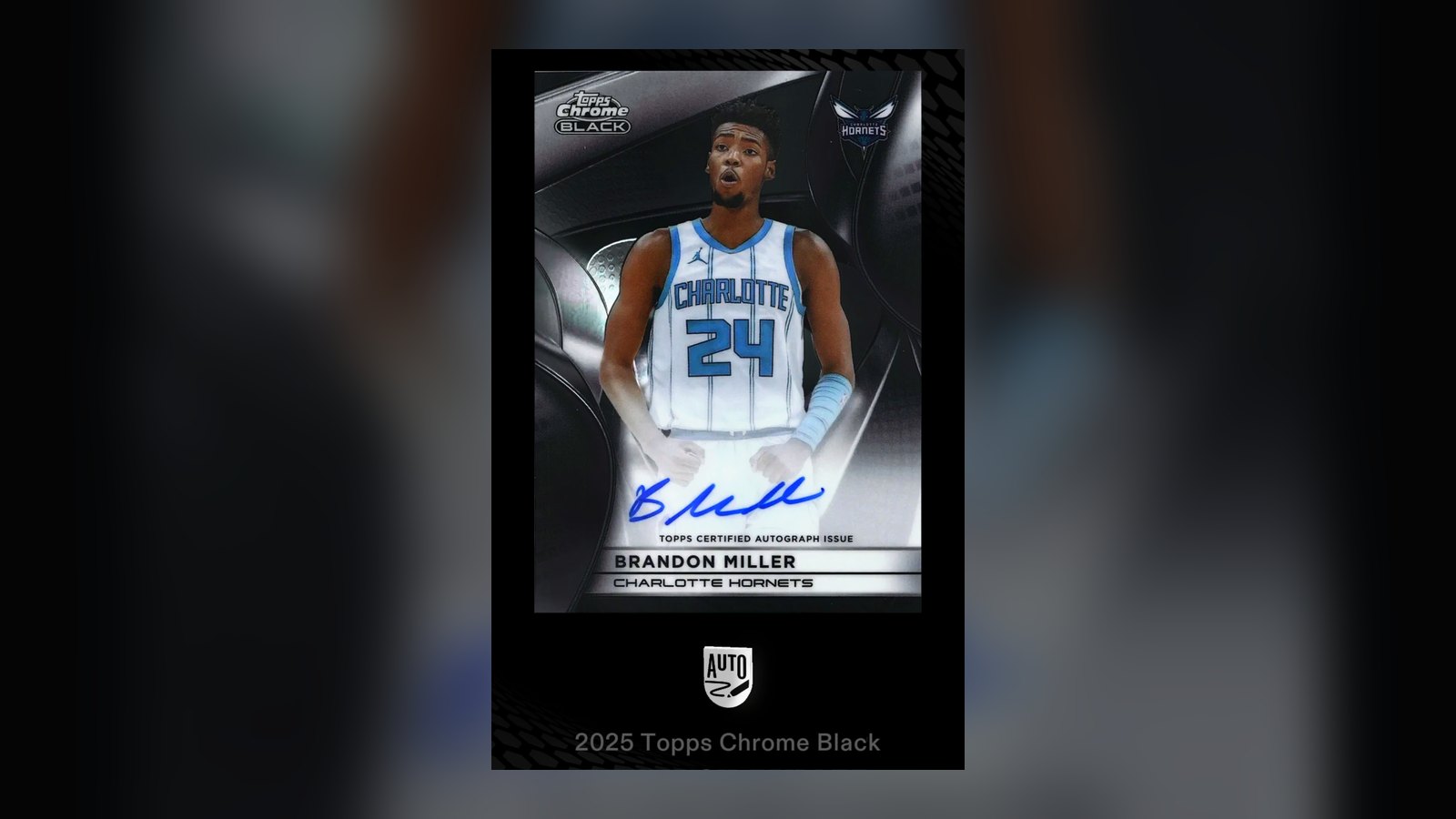
Topps Instant Packs Turned a Breaker's Best Move Into a Default Setting. Most Breakers Still Don't Make It.
A breaker's money is made before a single card is pulled. Everything that comes out belongs to somebody else. The most valuable position in this business is simply being the one holding it.
Picture the moment a break produces a monster. A card worth thousands is sitting in somebody's hands, under a camera, in a warehouse in the middle of the night. It does not belong to them. It belongs to whoever bought that spot, who is watching it happen on a screen a long way away.
The breaker has already made their money. Spots were sold on the front end at a margin that is genuinely good, and that happened before a single pack was opened. Whatever comes out after that is somebody else's.
Now look at what the person who owns that card is actually facing. Wait for shipping. Sleeve it. Decide whether to grade it and wait months if you do. List it, photograph it, answer messages, pay a fee, and carry the risk of the market moving underneath you the entire time.
The breaker can end that entire list with one sentence. Cash today, right now, nothing for you to do.
Roughly ninety five percent of breakers never make that offer. They rip it, they ship it, and they hand the best asset in the room to somebody else.
A buyback is not a courtesy. It is sourcing.
I should say plainly that I do this. In our own digital packs I buy back everything I can, and the reason is not that I am trying to take something off somebody who got lucky.
It is that if I went out to source the exact card that person just pulled, it would cost me considerably more than the offer I just made them.
Replacement cost is what makes the offer rational. Scarcity is what makes replacement expensive. Possession is what makes the offer possible at all.
Try to buy the same card the ordinary way and you are bidding against everyone else for something there are eleven of, at a price the market sets rather than one you offered. A buyback is not competing with that price. It is competing with the seller's patience, and patience is cheap to buy.
That is why buyback offers exist at all. Not as a kindness to whoever got lucky. Inventory in the best cards is limited and it is the only inventory that reliably appreciates, so an offer is the cheapest way to get some, and holding the card is what makes the offer possible.
Ninety five cents at the show, sixty in the break
For context on what sixty or seventy percent means, look at what the same cards cost in a room. The most desirable case hits are drawing offers at ninety to ninety five cents on the dollar at shows. Dealers are paying more than they ever have for inventory in the top cards, because that is the only inventory that behaves.
Against that number a buyback in the sixties is not a slightly better deal. It is a different market, and it is reachable from exactly one position.
The person making that offer did not buy the pack, did not carry the odds and did not take the chance. They were just the one holding it when it opened.
Leverage without exposure is the rarest thing in any business. You are not gambling on the rip. You are not exposed to the print run. And you still get first refusal on the best thing that comes out of it, at a price no dealer on that floor could get. There is not much else in this hobby that looks like that.
The vault makes that offer on every card, automatically
Now put that next to a format where the cards never leave the building.
Every card in a Topps Instant Pack is already in the Fanatics Collect vault the moment it is revealed. The value is computed there. The offer is generated there. The seller does not even have the shipping chore to weigh against it, because there was never going to be a package. And the offer is a standing feature of the product rather than something a person has to think to make that night.
The move that ninety five percent of breakers never make is now the default behaviour of the system, running on every card, in every pack, without anyone deciding to do it.
The rate is better than a breaker would offer. That is not the interesting part. The interesting part is that the offer is always made.
Be precise about the numbers, because the lazy version of this argument gets them wrong and the real ones are more interesting anyway. Selling a card out of the vault has an exact published schedule. Through a Weekly or Premier Auction a graded card carries no seller fee at all. Through the Buy Now marketplace it is six percent if you list under a hundred and twenty percent of market value, and twelve percent if you list at or above it. Buyers pay nothing on top. Shipping the card to yourself costs one percent, or three percent if you pull it out within ninety days of it being archived.
Those are low rates by any historical standard, and nobody is being fleeced. The instant offer that arrives at the moment of a reveal is reported at around ninety percent of market value, though I could not confirm its redemption terms from the published documentation and would want to before treating that number as cash in hand.
The rate is not the point. A fee schedule that generous is what makes the offer easy to accept, and the offer being accepted is what fills the vault.
| Moving a card out of the vault | What it costs |
|---|---|
| Weekly or Premier Auction, graded | No seller fee |
| Buy Now, listed under 120% of market | 6% seller fee |
| Buy Now, listed at or above 120% of market | 12% seller fee |
| Buying on Buy Now | No buyer fee, no premium |
| Shipping it home | 1% fulfilment fee |
| Shipping it home within 90 days | 3% |
| Leaving it in the vault | Free |
| Vaulting a card worth $50 or more | Free |
| Vaulting a card worth under $50 | $3, waived if sold in 30 days |
Checked against the Fanatics Collect help centre on 28 August 2026. Fee schedules move; confirm before acting on them.
The same structure also pays twice on the way through. A card routed into the vault sells once as a pack, and then pays again as a transaction fee whenever it changes hands, repeatedly, without ever being posted anywhere. Neither event carries a wrapper, a box, a pallet or a postage label.
That is not an accusation, it is arithmetic. Two revenue events per card and no freight against either is simply what the unit economics look like when the product never has to move. It is also why nobody should expect this to stay a one release experiment.
If you break for a living
This lesson is worth more to you than to anyone else reading it. You are already standing where the leverage is, several nights a week, and most of you are shipping it away.
Ripping and shipping is a logistics business. You buy wax in advance, you sort, you sleeve, you package, you post, and you make a thin margin on volume while the postal service takes its cut of your day. The other business available from the same chair is an inventory business, and the only thing standing between the two is whether you make the offer.
The platforms have worked this out. They built it into the product.
Follow the hobby in the app
Track the products and players you collect and get told the moment anything moves.
Open Collector Nation