EP 115·Sep 29, 2026
Are Sports Card Comps BROKEN?! Why Low-Pop Cards Are Getting Huge Premiums
ListenWatchunavailable
CALL IN TO THIS MOMENT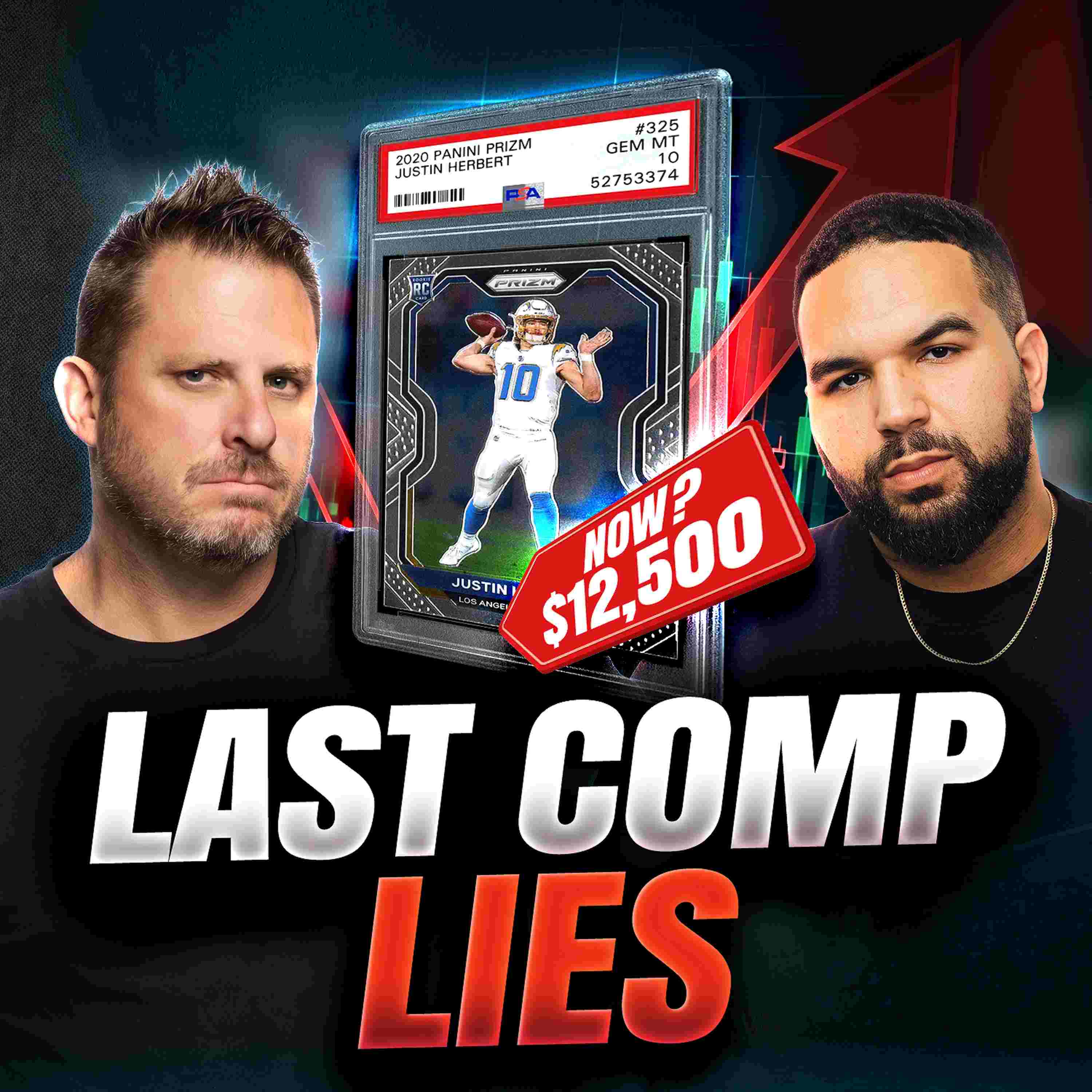
0:00
-0:00
Chapters
/ tap to jump
Searchable
Full Transcript
Every word from this episode, transcribed in full — search the page (Cmd/Ctrl+F) or let Google find the exact moment you’re looking for.
Last comp lies. And nothing lies more than a comp that's either stale or old. In a market like now, it's very wild, wild west. We're not a sports card platform, we're not a trading card platform, we're not a comic book platform. Like we are a collectibles brokerage. How do you navigate all that? We have so much data out there, we can tell people if something's too high, too low or right on the money. It's a lot of friction removal, I think, with what you guys do. I'm Ryan Alford. And I'm Bella Schaefer and this is Collector Nation. We are curating all of the content in the hobby just for you, all in one place. All the videos, all the podcasts, all the reels, all those drops you want right here, right now. Today on Collector Nation, we're going behind closed doors of the high end collectibles market with Nathan Howerton, founder of nostalgix. We're talking 2 million dollar Pokemon video game deals, extremely high end cards, why some of the biggest transactions never even hit auction, and why a PSA 10 isn't always enough anymore. Nathan sees the private deals most collectors never hear about. So we get into what's actually driving value, what serious buyers are chasing, and whether comps can even keep up with this market. Let's get into it. Nathan, what's up man? Welcome to the show. What's cooking, brother? Dude, I'm doing good. Nathan is the founder of Nostalgics. We'll get into Nostalgics, man. You had a front seat to all this stuff at one of the biggest auction houses in the world. Where did all this come from? When did you realize there was a room for something different? Yeah, absolutely, man. So, I mean, I think like everyone who starts something in this industry, it starts with just being a collector, right? So, you know, growing up in teens and twenties, I've always been a collector and eventually I get into the industry and I started my own show that we've ran for about seven years now called Collector's Summit. And I've had various projects and eventually I end up working at Heritage. And you know, I love everything about that place and the amount of education and knowledge that's in that building is just, bar none. I mean, I wish people could spend more of that inside time like I got there because I mean there's just endless and endless knowledge in that building. But you know, Heritage is a 50 year institution and they've been doing things their way and they've been doing it very well their way, but I've always been kind of an innovative mind and I've always liked doing my own thing. And I started to see some kind of holes and areas where I could do something differently. And really where it clicked for me is one night I was sitting watching our real estate show on Netflix with my wife and I sat there and I was like, why couldn't you have a brokerage but do all the same things, offer that high end service, offer the negotiation, the escrow to, you know, deal with everything for these clients, but instead of homes, it's high end collectibles. And I basically launched it the next day, spoke my people at Heritage and never looked back. And so, yeah, and so I've been just heads down going with that. We've been so blessed with success, man. And it's, it's really, you know, anytime you start something new like that, it can be a little scary. But it resonated with people very quickly and we've, we've been crushing record after record. So. Yeah, happy to kind of get into that. Yeah, man. So at its core, Nostalgix is auctioning off at a premium, you know, with a premium experience for both the buyers and the sellers. High end collectibles. Yeah. So we are private collectibles brokerage and we exclusively only deal with private fixed transactions. So no auction on our end. Got it. Purely connecting the buyers and the selling, selling with fixed, fixed agree to prices. I think I actually slipped the word action in there and I didn't mean to. No, no worries. Yeah. So we specifically deal with whether if you come to us with an item, we will basically deal with everything for you. You know, we'll go talk to potential buyers, we'll field offers, we'll bring that to you. If we end up closing, we will deal with escrow, we'll deal with transport. I mean we really take all the work out of it. So you kind of just sit back and just say yes, no, accept, and same thing on the seller side. And, and we leverage a lot of AI into our platform. So we do like to be very technology forward. And that's something I saw working with a lot of the auction houses where they are a bit more archaic, they're a bit older in the way they do things and we really leverage the technologies that we have advantage of today to speed up these transactions and to find potential pairs and to like we know, you know, generally if a price point is going to happen or not. Like. Yeah, because we have so much data out There we can tell people if something's too high, too low, or right on the money. And so we like to really leverage that data into what we do and take advantage of those things. And, you know, that's kind of the benefit of being scrappier and smaller is we can move faster and take advantage of those things. Yeah. I mean, I'm gonna oversimplify, but it's almost like you stripped, you know, stripped out the auction, and it's the, you know, buy it now somewhat. It's the buy it now for the high end, and you keep. But you keep it private. Yeah, exactly, man. I mean, that's not even. I don't mind simplifying it because I felt like that's what was needed, was a. A simplified process that was done very, very well and very efficiently, very cleanly. And that privacy aspect is there because we do deal with a lot of people who. They don't want to be out there. Like, they don't want to be out on social media, you know, trying to buy things and this and that. Like, they want to kind of stay out of it and have a private party, take care of that farm for whatever reason. And that's been a big pillar. Kind of. Of what we do is like, hey, you. You get to stay out of this. We'll. We'll deal with it for you. It's interesting. I mentioned the article and editorial I wrote on the national, and it was a concept, and you just kind of said it without saying it. There's a lot of things going on. It's. There's collecting, and then there's theater, and there's investing. There's. You know, it's. It's not binary anymore. This isn't collecting and investing. There's like seven layers to this thing, but it's. Theater is what the auctions sort of bring a little bit, especially when it's public and, you know, and look golden. He crushes it, dude. I mean, I respect. I respect him. I've had him on the show, like, but. And he's a master of it. This is the story of the one as a shipping manager, he's running the dock, stocking supplies and making sure every order goes out on time. And Granger helps him stay prepared. From shipping supplies to PPE to hand tools. He counts on Grainger to keep products moving and trucks rolling so his operation runs smoothly no matter the shift. Call 1-800-granger click grainger.com or just stop by Granger for the ones who get it done. The theater of the Story and being out there and that building, you know, value. But what you're describing is a whole nother thing, which is, you know, a true collector investor that wants to manage their business in private. Yeah, exactly, man. I mean, Ken is someone who I've never had the opportunity to meet, but from afar. Like, I come from kind of a marketing background, and, man, he is a. He's a machine. He is. And he's cool as shit. He is so, like, down to earth and so giving of, like, ideas. And, like, I didn't know him either. I feel like I do now. Anybody on my show becomes, like, even when it's remote, man, now that, you know, Nathan is my bro now, like, we know each other, we're hanging out. Like, I get to know people. Like, I'm really listening. I'm really attentive. I really care about my guests. And, like. And it. He is, man, he is a beast. And he's. But he's very down to earth. Narrative is everything. Collectibles, like, that's what drives value. That's what drives that interest, that narrative. And, like, Ken is so good at that, at, like, creating or extrapolating or bringing that narrative out there, which, I mean, we've seen it in results they've produced. I mean. Yeah. Like, I'll just give you a pride example is like, that illustrator, the PSA 10. We kind of feed off each other in different things. Yeah. Different strikes for different folks. But there's a lot of opportunities on every end. And there's a lot of people that fall on each spectrum. There's probably more people to fall on your spectrum, actually. You know, it's funny, man. It's like I always say, like, the auction houses drop the big boulder in the lake, right? Yeah. And it's like my world is to ride those waves. Like, so whenever they drop that boulder in the lake through some big sail or something happens. Like, I gotta ride that. Those high tide rises. All ships, baby. Exactly, man. And so, like, we are all in the same ecosystem. Like, you know, we all. We. The same data affects us all. Same sales affect us all and things like that. And so, yeah, like, it's. I very much look at it as an ecosystem and, you know, we're all a part of it, so we want to keep it private. Now, are we negotiating? Negotiating. So, absolutely, man. So, like, as far as nostalgics handling negotiations. Yeah. Like, I'm assuming not everything or very few. I'm sure some do are like, set price. No. My day would be so much easier. But no, it's. No man. I mean a big majority is always. You got someone, you know, they got their ass. You got someone, you know, interested at a certain number and it's finding that, finding that, that spot where both parties agree. And like that's the kind of nice thing is like what the private really takes out of is like we take the ego out of it. We take the knowledge of knowing who the other party is out of it. So like you're just, they don't know. So that you're, you're, you're the middleman, the true middleman. They have no idea who's on the other side. And I think that's better. I mean, you know, you could take that a million different ways, but I don't know. In these kind of deals, I think that's better. It just more often than not, it's more productive. You have less. Like people just get. We used to always say this in the auction world is if you're auctioning something big, don't go out there and publicly blast to everyone that it's yours. Because people just get kind of funky when they know who's selling it and this and that. Like when it's anonymous and all that, people just, they kind of do their thing differently. Yeah, it brings in variables that just don't need to be there. I mean especially the high end. Especially if you're a well known individual, people will try and price gouge you. Like. Yeah, you know, if you're someone that's kind of a name or celebrity or this or that. And if, you know, people will try and take advantage of that in scenario. So like we offer a lot of the, just kind of that anonymous aspect of it is very beneficial. I just think it helps things flow smoother. Like we just get less, less headaches in that process. Keeping everything private 100% and you know, let the, let the collectible be worth what it's truly worth versus what it worth with maybe artificial influence. I'm not, Look, I'm careful the way I say that because I'm a marketer and I believe that valuable premium marketing raises the value of things if done correctly. But there's a fine line of artificiality. I'm gonna make up that word if it doesn't exist, Nathan. But yeah, like, right. I think, yeah, it's tough man, because it's like any sort of marketing on it, like even if it's not pushy of a story necessarily or trying to like just, just exposure in general creates, you know, demand. Yeah, there's a. Yeah, man. And without that, it doesn't have value. So, like, there's a fine line, right? Like scarcity. If you don't know, it's scarce. So they don't know. Like, it's. I mean, because you can argue, like, putting features on the page of what it is is marketing, right? It is. I mean, it's best point of. I mean, merchandising, you know, like, that. Is that marketing? Well, you're just. You're, you know, if you're not using, like, hyperbole and, like, overblown statements that. That could be misconstrued. I mean, if there's only one of them. One of one marketing. Well, yeah, but it's only one. No, exactly. I mean, if it's a true fact, it's a true fact. And we. Yeah, something like we do, like, pride ourselves on is, like, especially, like, we've had this a lot with a lot of our TCG clients. We're like, these numbers are just feels like daily going up. And, like, I will try and advise people, like, hey, look, when you're buying, like, I. I'm not advising you that this is some spectacular number and it's gonna just go up and up and up and up. It's like, look, man, like, that's what the ask is today. And, you know, it is what it is. But, like, I do try and kind of advise people, like, look, you're buying a top mark. You're setting the new record. And, like, what happens beyond that is, like, no one knows for certain. So, like, we do try and keep things. We try and guide people realistically. Like, there's no sense for us in just closing a sale, to just close a sale. Like, we want you generally to be happy with your transaction and feel like you did it with as much knowledge as possible. So that's kind of a nice thing with. We do is like, there's a little bit of that advisory side where, like, hey, man, like, look, this is so far beyond the last sale. And, like, we're in no man's land on data. Like, I just want you to understand that. And, like, so that's kind of a nice thing we do. Because a big problem I had with auction was when you throw that item out there, you have no idea what's going to happen at the end of the day. And, like, I really wanted to provide a service where you knew exactly what was happening in the transaction. You know what you're getting paid, you know what the result is, and if you don't like it, don't take it like it's a risk free environment. Yeah. I mean, because let's be honest. And there's been stories already about this. I mean there's shill bidding going on, there's all kinds of shenanigans and you know, it's happening. I mean, I'm sorry, you know, it's like. Yeah, it's happening. Yeah. It's just like when you go and like look, the, the upside of auction is the chance that people get in the fight and it goes for some just unimaginable number which we see happen all the time. And so while we don't provide that wild card, like the chance that it goes just nuclear, what we try and provide is assurance and that you are getting the number you accept. And if you don't want that, you don't have to accept it. Like it's a no risk process is what we really try and provide. It's called certainty. Absolutely. And so, and people really, I mean, cause like look, for every win at auction there's the losses that don't get promoted because I mean, why, like they're not going to go out there and push that. There's the people who thought they were going to get 2000 ends it up at 500 bucks. And so there's tons and tons and tons of those. And like, so like I try to really provide like hey look, like in my ideal mind we're kind of the bottleneck before you get to the ocean of auction houses. So like if you have something special, try us first. Let's see if we can make something on a cap it on a guarantee certain level. And if it doesn't happen then, then you go out to the ocean from there and see what happens. Yeah. And it's a lot of friction removal I think with what you guys do. And I mean that's some of the biggest things. It's like they get in the way of probably these big deals. It's too much friction. And how do we get that out of the way, make it seamless for both parties. The market is so crazy and, and you just said it like I, I print. We printed some fun T shirts for collection when I'm wearing one of them graded R for raw the and one of them says last comp lies. I mean nothing lies more than a comp that's either stale or old. In a market like now, you know, and you've got so much institutional money, so much attention, so much demand. That's got to be hard. How do you navigate all that it's crazy, man. I mean, honestly, it's, it feels like it's different. Every client, every deal, like, in terms of, like, we get some clients who get real analytical with it. Like, I mean, they're looking at these things like, you know, a hedge fund would analyze, you know, opportunities in buying stocks. Like, they get real into it. And so. And then we have other clients who go a little bit more off of just their gut and they're like, hey, it's a low pop, hasn't sold in a while. I don't know, what do they think about this? And so it's totally different depending on client. But right now, on cards especially, man, I just tell people my look, it's very wild, wild west. And a lot of this is truly just like, especially for some of these low pop, no sales last year type items. It's like, look, you just. They can kind of ask what they want right now. Yeah. What are you willing to pay? Yeah, exactly. In a funny sense is like, I kind of like that because that's like, that's what collecting is like. You know, we get, we have all these cool tools now that provide us all these sales datas and comps. And. But like, at its origin, it used to just be, what's it worth to you? And like, you know, what is it? You know, what do you want to pay to have that? And so like, yes, it's insanity, but it's kind of cool at the same time. It's like, that's what it used to be. Does it work to you? And that's one of the things that drives me crazy, you know, and owning a hobby shop now and a card store, like, the comps matter. They set the market certainly, but it's what are you willing to pay and what do I want to sell it for? And you know, quite frankly, I don't give a what the comps are sometimes. Like, it doesn't mean that I can realistically, like try to get $400 for $200 comp card. No, but you know what? We sort of paint this brush that. Oh, it's a bad, you know, like either the sell, whether it's a dealer or just somebody selling something that if they set a price, well, they're the bad guy because they didn't come to the lowest comp. That may or may not be valid. That may or may not have happened. That may or may not have closed at 4am in the morning on an auction because someone mislabeled it and they thought it was 4pm and it snuck through. It's like, I don't know man. Like just crazy variables. Like yeah, especially now with how nitpicky people are getting in terms of like really specific, like eye appeal and things like that. Like there are so many variables that can wildly swing. So if you're just looking at number comp, it's taking a really high view of something that may or may not tell the story. And so yeah, I do feel like, especially with a lot of my card transactions right now, it really is just like here's what they're asking and you know, are you willing to get close enough to that or you know, this or that. And like I'm getting a lot. I feel like honestly a lot of our transactions recently are throwing data out the window because. Yeah, yeah, because it's just like it doesn't even matter anymore. And like that's what happens when you have a bull market rush like this over the last year is like the data numbers are moving faster than the comps can even tell the story. So it's like, yeah, yeah. Collector Nation is not just a podcast. We are your one stop shop for all things hobby. All the best creators, all the best reels, all the best content curated for you every day. And if you're interested in learning more, go to the collectornation.com or download our app on iOS or Android. We'll see you there. Talk to me. You know what does separate someone buying a $500 collectible from a $500,000 one besides their bank account? You know, man, it's funny, it's like I think there's, I think there's less differences than you would think. Like, I feel like for the most part we're always seeking what is the rarest, coolest thing that I can get to show off for my price range. And whether that's 500 or 500, 000, I mean, I think more or less people are just looking for something that is special they can add to their collection. You know, they're looking for something. At the end of the day it's always about having something someone else doesn't. Like that's like, like that's the core of it is like one way or up back where we were is like 5 year olds on the playground. I've got it. Look at me, look at me, look at me. And look what I have that you don't. Yeah, either I got it and you don't or I, I want it because I've seen all my friends got it. So I want it too. Like, so it's either one of those two scenarios. And so you know, man, like honestly the numbers change but the mentality is generally the same. You know, they want, they want rare, they want something special to them or they want something that they see others are chasing. And so I would say, you know, the focus over the last six months I've seen a lot is everyone is hyper focused on, you know, really low pop stuff. Like yeah, populations running everything right now. So people rare the better. Yeah, absolutely man. And like I agree with that. I'm like, hey look, I, I think that's your safest harbor is going to be rarity. Like if the supply is limited, you know, you don't need as much demand to really squeeze those numbers. So you know, I'm all for it. Like, yeah, I, I agree. I think low pop stuff should be the premium and should be where the focus is. And so that's where I'm getting a lot of my people right now is they're willing to pay excessive premiums for those really special items. The low pop type stuff. Yeah, that's the name of the game. Scarcity. I want to talk a little bit about nostalgia. So talking to Nathan Howerton, he is the founder of Nostalgix, I just like saying it, man. Nostalgics. It's a cool name. The. So if everything's about rarity, everything's about show it off. I got this. You don't. Where does nostalgia play in all this? You know, I always feel like when I, when I talk to people I'm like, there's three things like I look for in a collectible. It needs to have, it needs to have some form of nostalgia and needs to be backed by a strong IP and it needs to display. Well, if it's crosses those three things, you probably got a pretty strong collectible on your hands. And so I think at the end of the day the things that hold up the best collectible wise is like it does have to be rooted to some form of nostalgia and connection with people. Like even my clients who are big, big, big kind of industry investment type spenders, they still are going after items that they had familiarity with as a kid. Like, you know, like, yes, they are spending obscene amount of money on Pokemon, but that's because they played with Pokemon stuff when they were a kid or on the sports side, you know, they have some connection to that player or that team. And so at the end of the day I feel like there's always got to be some sort of connection. I Very rarely get people that are just buying to buy an item because they have no connection with it and they think it's, you know, a good investment. I think those people end up just buying stocks like collectibles, I feel like have some sort of some connection there. What's your opinion, Nathan? It's somewhat related to what you just said. Maybe a little bit of a leap. But digital collectibles, man, I mean, you know, it's like you, your brain went where mine kind of goes and, and the only reason I bring it up is because I have kids. And so you're dealing with the high end. You're doing more affluent people that have collect, you know. Yeah, I'm sure you have some young rich clients, but a lot of them have built wealth over time. So they're probably 50 plus, you know, so digitals doesn't mean shit to them for the most part. I'm certainly putting a lot and I think you probably say yes to that. The. But you know, kids do value digital things more than we do and where we're. My seniors do. So that's why I bring it up. It's like a hard one to get my head around completely because I see both sides of it. But I still, I don't doubt for one bit the physical collectibles will always, I mean, at least in my lifetime, be in play. But there's no denying that kids do place value in digital things more than I certainly do. No, absolutely, man. I think. I know you don't want to like, you don't want to be like the old guy that's like, oh, this new. Yeah, I know. And it'd be easy to be that guy Nathan or the guy that pans, you know, NFTs that kind of had their day and are sort of still around, but aren't. I don't. I'm not saying they aren't. They are. And there's a lot of money in them, but it's still not what it was made out. Seriously. Here's my take. And I'm not saying this is necessarily right or wrong, but like my take here. Yeah, we have David's take. That is exactly right. I want everybody to pay attention right now. We're going to put this on the record. Okay, Nathan, go ahead. I want you to make sure I didn't put that announcement on there first. Yeah, you gotta get. We should. We have to pause the clip. This will be the highlight club. This is not legal advice. I think that the physical will always reign supreme because it's finite True rarity. Like it's a physical item, especially vintage, where it's true organic rarity. Like I think that will always reign supreme. Do I think as we keep going and going that digital assets or, you know, different variations of that will have value? I mean, if that's what the youth gravitates toward and that's their thing and that's what's displayed to them and they value, then it very well could. I mean, it's hard to say. I mean if, like we do see a lot of companies are pulling back from physical media. Like you're starting to see that become a thing. So if, if physical items become more and more of a, you know, a scarce asset and digital is what's displayed in front of them. Like if all the modern things are kind of released digitally, then that's what they'll collect and that's what the, you know, so it's hard to say, man, but I think there's a place and a room for it. Not necessarily that. I don't think in my world it'll necessarily be so much a thing, but if that gets people involved in collecting and then maybe from there they gravitate towards older physical, vintage items, I'm okay with that. Like, if that's an entry point for people and they can kind of get some in the collecting bath, then great, that's cool with me. It does seem like you didn't say this. I'm gonna say it for you. Go for it. Copy and paste are really easy buttons to hit on the keyboard that you can't. And I don't care what's, oh, 3D printing. You ain't 3D printing a Pokemon Nintendo game from, you know, like, I mean you can, but it's not the same. And that packaging, maybe it will be one day. I don't know, maybe it's coming. But you know, it's, it's a lot harder than hitting copy paste. I'll give you a perfect example. I mean on the Pokemon game side is we just closed the transaction. By the time this is out there, it'll be out in the world. But we had a two million dollar transaction for three Pokemon video games. Now they were the highest grade first prints of the first Pokemon video games that came out. And like to your point, can you play that game digitally right now? Absolutely. But the value is in that first origin physical piece. And so I think digital can serve as an entry point. And you know, maybe that's what gets someone in is that. But like, I don't, I Think the value will always be in the physical. What do you think about is my last digital question. And then we're going to get into some juicy, I want to hear about like some, some juicy numbers and like, like the biggest, the most demand things. But you know, it's kind of like the metaverse, you know, that, that I pan that whole thing when it came and I still think there will a game like world that will, you know, play around it. Maybe, probably. But I'm assuming you kind of have the same feeling there. Yeah, I mean I think it's going to take a lot of attempts of throwing things out the wall and seeing if something sticks and then eventually we'll get to that point where it's like, you remember that movie Ready Player one? Yeah. Like I think eventually we'll get to something like that where it's more like the ar. I think it's the layer on top of our physical world. Right. I mean I think that's where they've pivoted to the most part is, you know, kind of like how do you layer the, the digital on top of like what you're seeing to inform and improve maybe reality. Let's, let's improve reality before we try to throw ourselves into, into a total non reality. Right? No, exactly, man. I think, yeah, you know, it's like there's been a lot of attempts at digital collectibles, digital assets. Like I mean some have crashed and burned horribly, some are still chugging along. But like at the end of the day like I still see physical winning. Like you were at the national for example. Yeah, at San Diego I saw so many of these new companies doing like these new like art cards or precious metal cards and things like that. And I just think the physical will always be where it is. Like I think digital offers something to someone and maybe in time will be a thing. But like I don't think physical is going anywhere. Like kids want to rip paths, kids want to open pocket. Kids want a tangible experience. I think grown adults do too. Like I think everyone wants a tangible real experience. I just don't think, you know, maybe 50 years from now that'll be different. But I don't see that changing right now. Yeah, I think it's the bolt on, it's the. Yeah, I think the stuff that's cool is like okay, NFC chip or whatever it is that shows you, like if it's an autograph, like it shows you where when he signed it or he, he or she and, or you know, those kind of add ons. That add to, you know, the item, the collectible, whatever it might be in some way that you can, you know, put in your library or, or own on top of the physical thing. That those are the things excite me more than you know, some notion. But let's talk about the, the real shit. Nathan, talk to me about some of the funnest things that have been bought and sold across the platform and deals you've brokered. Absolutely, man. So I think one of the things like when I came out what I really wanted nostalgics to quickly like establish ourselves as. We're not a sports card platform, we're not a trading card platform, we're not a comic book platform. Like we are a collectibles brokerage. So that means we will deal with everything from vintage wine to dinosaurs to paintings, you name. Like if it is a high value collectible asset, we will deal with it because we focus on, I understand, high value transactions. I don't need to be an expert in Renaissance paintings. I need to be an expert in placing that in a buyer's hands. So that is really what we focus on here. And that's the cool thing with that is like we are getting all kinds of stuff. So you know, right now trading cards reign supreme. You know, cards reign supreme. And that's really, that's one of our biggest drivers I would imagine for everyone. You know, that's kind of the biggest driver right now. And, and it just feels like, like we have that sale we just put up recently of the T17 Pokemon card at 750 000, I mean, which is just a monster number. And so. And that puts it in one of the highest selling single Pokemon cards of all time. So we've got that side going on. We've got huge demand right now. Like this might be funny to you be here but man, like one of the most topped items I get requested right now is Harry Potter stuff. Yeah, I'm getting so many people asking for first editions of the book or the uncorrected proofs and things like that. And like, I mean I probably get two requests a day about Harry Potter items right now. So like that's one of the interesting things we got come up. We've dealt with a lot of high end comics. Comics is an interesting one because it's a much older demographic, it's an older collectible and they haven't really found that way to gamify it the way cards has. Like you've got the pack ripping and all that kinds of stuff and card world and like, I was just talking with your producer before you got on kind of a little bit about this. It's like you go to a card show, man, you'll see kids doing deals. You'll see. You'll see kids, teenagers, things like those deal. That's not a thing in comics. So like it's an older demographic, but there is still tremendous value at the top end of it. So like, for instance, we've had a few multimillion dollar comic deals pass through and they're all focused on like those top population highest rated copies. So. Yeah, and it's. Yeah. I mean, I'm trying to think if we've had anything really peculiar outside of that. The comics and the coins people have been trying to like convince me that is going to be biggest cards. And. And I know they're big markets, I know they're already like, you know, gigantic number of markets. But I don't know, I can't quite get there mentally. Like then it will be quite what cards are. But coins, man, is. It is a monster, like in terms of the volume in it and the amount of money transaction that I just. It's such a different world like from like more of the pop culture collector type stuff. It's just a whole different world. But I mean the historian world, you know, in a lot of ways, like. But I think some of it's cool, man. Like through nostalgics we had one of those ancient Roman coins pass through that's got like Caesar on it and stuff. Yeah, it's cool seeing an item that's not ten years old. It's like thousand, twenty thousand years. Yeah, whatever it is. Yeah, yeah, man. So like that, you know, that kind of gets me fired up as a collector is, you know, seeing something more like that. Probably one of my most interesting ones I passed through is we had a magazine that was distributed to venture capital firms and apparently it's Elon Musk's Rookie magazine cover. And it's just. It was a magazine that sold for 30 grand and we're talking just straight up just like magazine with Elon Musk on it. But this individual is a huge fan of his and that's his first ever published magazine thing. And so. And you never know, man. Like that's. You never know. Yeah, you just never know. We get interesting requests all the time. Yeah, that one's fascinating. I mean, it's like that feels like a true collector on some level. I mean, I'm sure they're telling their friends and showing off and all that, but There's a definitely a level of collecting there that's a little different than your average item. We do, man. I mean, we. So like, we get all the, you know, the trendy, popular trend type stuff like cards and all that, but then we do get these kind of little oddball requests every now and then where there's just people who are really passionate about something specific and you know, whether it's an individual or older technologies, I mean, we get a lot of requests for like original iPhones or original imac computers and things like that. So, man, it's like that's the thing is like there's just. There's so much out there. There's so many collectors out there, so many. Like it goes so far beyond even the car world and things like that of. So what's the never know. Yeah. As we close out here, Nathan, what. What does sort of set the taste market? Like, you know, what, what is thriving on the broader level? You know, you, you know, we talked about the sizzle and the, you know, the guys that are out there, you know, pumping things up and doing things and marketing. But where is the. Is this just more, you know, as we get more affluent, as we get hopefully, you know, as a mankind in a better place? I don't, you know, you can always debate whether that happens every day. I don't know. But like on the fluent market level, more time, more time to think about what they collect. I mean, what, what sort of sets the taste market? I mean, at the end of the day, man, it's big transactions. Like that's all it is is like if people start seeing it's very follow the leader, right? If they start seeing. If people start seeing stuff moving or they see someone they know by it just, they just follow leader. And like, this is something I think a lot of people don't realize is whether it's a specific category of cards or comics or books, whatever. I don't think people realize how far few serious players. It takes getting into something to completely change and drive it. Like, it doesn't take thousands of serious collectors getting into something to change it. It takes 20. It takes 20 heavy bidders, buyers to get into something to completely change its trajectory. And, and people start following. And so that's the thing, man, is it doesn't take much to really change these things. The numbers make it swing. Absolutely, man. I mean, it's always like, you know, that's kind of things like when we talk about, you know, some of the great marketers that really push these things, it's like at the end of the day it's numbers is what moves stuff. And so you know, if people are seeing strong numbers, they'll run that way and if things start pulling back and those numbers are tracked and then, then people kind of, you know, they'll pull one adjust somewhere else. And so because I feel like at the end of the day that's what gives people confidence to kind of go into these things and seeing those numbers, Nathan, is to close out. Walk me through how people can leverage what you're doing in nostalgics like from beginning to end, you know, the process, what they can expect and where to learn more. Yeah, absolutely. So right now if you go to www.nostalgics with an x at the end IO, I'm sure we can add it in on here. Oh yeah, yeah. You go to our site through there that's going to cover everything we do, top to bottom process. It's going to cover some of our historic sales, let you know everything about us from there. There's a become a client button. You go ahead and fill that out, that kickstart back end and then we, once your account's approved you do get a fancy client portal where you can go in there and you can do your want list. You can manage deals will serve you matches based on like AI suggestions and things like that. So if you feel like, hey, you know, you want listed Jordan rookies, you know this just came up and feel like there's an opportunity for a match here for you. So like you have to manage all that, your client portfolio there and outside of that we're very communicative. I mean right now I'm the senior broker and you'll work with me most of the time and I keep a real open line of communication and I try and be pretty straightforward with people and just get things done smoothly and keep it moving. I mean we, we, I think a lot of people can testify that like we've had scenarios where I'll make nothing on the first transaction because it's just that thin to get it done because I want people to kind of see the process and be happy with things and that done. So we take a real long term approach to this. Like I want people to work with us for a long time. I don't want to just you know, have you in for one deal and gone. Like I want you to feel like you got a place here for the long run and that doesn't mean that, you know, if you, that's something like we would like to say if you just have a question, like maybe you want to go to the auction round. You have a question for us? You can, you know, you're happy. Go ahead and ask us questions based on what we're seeing and doing, and we'll try and steer you in the right direction because like we say, you know, it's a big ecosystem and I look at things like we all. We either all win together or we fail together. So we try and steer people along the right way. Nathan, you're gonna make it, brother, because you already figured it out. If you want to get value, you start by giving it. Absolutely, man. And so I appreciate your time as well. And, you know, I'm sure we'll go back and forth and talk on things and hopefully I'll run a show or something. Yeah, man, love to stay in contact and I'll definitely refer you and we'll have all the links to the stuff with Nostalgics and I know we can do some business and pleasure together in the future. Appreciate you for coming on. Hey, guys, you know, to find. Yeah, you know, to find us the collectornation.com. we've got articles, we've got videos. We've got the best podcast in the business. Yes, we do. Right now we have Nathan at Nostalgics who is on today. We appreciate him. We're gonna have all the links in the show, notes to highlight clips. Thanks for tuning in to the show. Be sure to follow us on your GOTO podcast platform and catch the full video episode over on YouTube. Visit us@collectornation.com and follow Ryan on Instagram at Ryan Alford. Now get out there and collect yours.
Episode summary
Nathan Howerton, founder of Nostalgix, joins Ryan Alford to go inside the high-end collectibles market and explain what he is seeing in private transactions that never reach the public auction block. Nathan discusses why buyers are increasingly focused on low-pop, high-grade and visually exceptional cards, and why collectors are sometimes willing to pay significant premiums for truly rare pieces.
Ryan and Nathan also examine the limitations of traditional card comps in a fast-moving market. Nathan explains why recent deals can move faster than available sales data, how private negotiation changes the buying process and why Nostalgix removes the identities of buyers and sellers to reduce outside influence and keep negotiations focused on the collectible itself.
They also discuss what makes collectibles endure, the role of nostalgia and scarcity, physical versus digital collecting and some of the unusual high-end transactions Nathan has handled across trading cards, video games, comics, books, coins and other collectibles.
Topics Covered
The current high-end sports card market
Low-pop cards and scarcity
Why collectors pay premiums for rarity
The limitations of last-sale comps
Eye appeal and condition
Private collectible transactions
Auctions vs. private brokerage
High-end negotiations
Buyer and seller anonymity
How Nostalgix works
Using data and AI in collectible transactions
What makes collectibles valuable long term
Nostalgia and strong intellectual property
Physical vs. digital collectibles
Pokémon video games and trading cards
Comics, coins and other high-end collectibles
How a small number of serious buyers can move a market
🔗 Links Mentioned in This Episode
Collector Nation
Website: https://thecollectornation.com
Instagram: https://www.instagram.com/thecollectornation_
TikTok: https://www.tiktok.com/@thecollectornation
YouTube: https://www.youtube.com/@thecollectornation
Collector Station
Website: https://thecollectorstation.com
Instagram: https://www.instagram.com/thecollectorstation
Nostalgix
Website: https://nostalgix.io
Ryan Alford
Website: https://www.ryanalford.com
Instagram: https://www.instagram.com/ryanalford
⭐ If you enjoyed this episode, follow Collector Nation, leave a 5-star review and share it with another collector.