EP 100·Aug 11, 2026
Should You Grade With Beckett Again? The Future of Beckett | Live at The National
CALL IN TO THIS MOMENT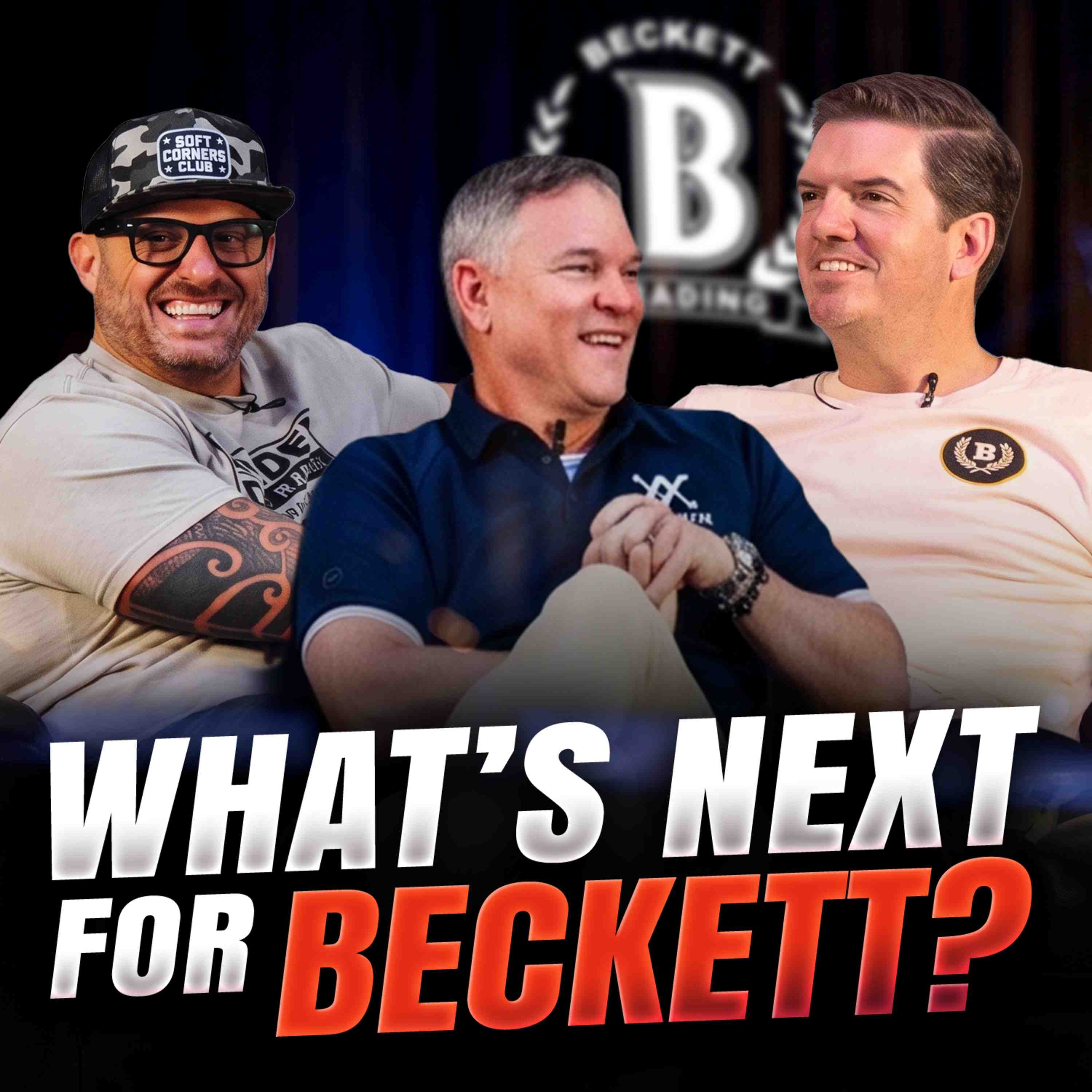
0:00
-0:00
Chapters
/ tap to jump
Searchable
Full Transcript
Every word from this episode, transcribed in full — search the page (Cmd/Ctrl+F) or let Google find the exact moment you’re looking for.
This episode sponsored by Lettuce Financial. Self employed. Congrats. You fired your boss and hired five new ones. Taxes, bookkeeping, payroll, healthcare, and retirement. That's why I use Lettuce financial. Leave a W2 job, and suddenly every back office task is your job. Lettuce Financial helps solo business owners organize spending, savings, and taxes in one place so your money finally makes sense. If you're a freelancer, creator, or consultant, Lettuce Financial helps you save time, cut stress, and get back to the work you actually want to do. Visit Lettuce now to find out how much time and tax money Lettuce Financial could help you save. Less back office, more business. Best thing that's ever happened to you, financially. Go easy. Sold my car on Carvana. Amazing offer, really. I hit 200 on a scratcher. Did the scratcher come to your house and hand you a check? No. How many scratchers did you hit to get that? I hit a button on Carvana.com once. Okay, that's fair. It's like the lottery, except you always win. Not like the lottery at all, actually. Exactly. Inexplicably good offers worth bragging about. Sell your car today on Carvana. Pick up fees may apply. What's next? What can you share publicly? I'm really excited, personally about our international ambitions and just kind of seeing where the different countries are on kind of the maturation curve of collecting. This is a brand that belongs at the pinnacle of the hobby. I'm excited that that brand is going to stand on its own and be given the opportunity to evolve and just improve like any other brand would. Welcome to the Collector Nation podcast. Here on the Collector Nation Network. Whether you're chasing grails or calling bluffs, we take you inside the hobby. Here's your host, Ryan. All furry. Today on Collector Nation, we have Colin Hudson Beckett. All things grading. That's the biggest topic in the hobby right now. We broke it down. We talked about what Beckett was, what they're going to be, and where we're headed in the future with grading, authentication. All things hobby. Right here, right now. What's up, guys? Ryan with Collector Nation. And Brian Ludden, the CEO of Ludox. Yes. Hey. The interactive map, if you're using it, that's who makes them right here. Yes, the mad scientist behind it. Exactly. But I don't know anything about tech, so I didn't do anything. Hey, we're going back here. One of the most classic, legendary brands in the hobby. Beckett. What's up, Colin? How's it going? Good to see Everyone. I remember, Colin, I told you this before as a kid getting the Beckett out. Yeah, I see all, you know, all the scanning apps, the tech came along, but man, nobody knows what it was like having to go to page 72 to find that, you know, Mark McGuire. Fingers crossed for that upward triangle about your Mark McGuire. And it was $2.47. And now it's what, two, you know, every two million dollar Ohtani cards. Well, and fortunately or unfortunately, I mean, so many of those 90s cards probably haven't moved that much due to the overprinting of that era. But I was certainly of that generation. I mean, I grew up in the Dallas suburbs and we always go up to McKin, Texas to local card shops. And my dad was very much the kid growing up the 50s and 60s who collected cards that ended up throwing away. And you know, of course those are the ones that became worth so much money that didn't let him to adopt the mentality that I'll start borrowing my kids cards, you know, this will be your insurance one day. And yeah, unfortunately those cards aren't worth the paper they're printed on. Hardly. But it is fun just to have that history with the hobby. It is one of the oldest, I mean, most recognizable brands in the hobby, especially for guys my age. Yeah. What's interesting. So Mudex has like three kind of users. When the boomerang people that come back, yeah, they ask three questions. Is Top still around? Is Flair around? Is Beckett still there? And, and it's amazing the brand carries such a legacy name here and having a new, new eyes on it and having collectors buy it and you know, you spearheading this, this operation, what is, what has been the biggest surprise to you in your six months or nine months that you bet, Becky? I would say one of the biggest surprises is just the, the market receptivity to the investments that we're making. You know, if you look at some of the publicly available data from Jim Ray for the example, just kind of seeing the cards submitted to Beckett over time, you can see there was a bit of a steady drop off. And we've just been making so much investments in growing our capacity, increasing those daily output numbers for the number of cards that we can grade. And I think the market's been responding very well. I think because there's this kind of built in nostalgia of the brand for so many people that grew up with a brand affinity for the magazines, that there's kind of this permission and this willingness to like, hey, let's give them a try. We want them to do well. And I think it is. Competition is great for the hobby. So the more grading companies, the more card companies, it's, it's better because it creates better products and kind of forces you as a competitor to just invest that much more to kind of keep that user experience up to par or kind of resetting the bar. So that's been a huge surprise and it's, it's been awesome just to see the payout as you go downstairs and see the booth. And whether it's kind of the fun marketing activations we're doing, the new merchandise, the new branding, the labels, etc. It seems that folks are responding very well. And what's exciting is just knowing that we're going to have, it's not just a one and done. We're going to continue rolling out new experiences, new products and we just have to learn to be patient and take our time. For each of these new rollouts, I just want to know we're going to get another printed Becket magazine. You know, maybe not with pricing, but beautiful brand magazine. I could see it. Yeah, I can't, I can't read the price in anymore. I had, I was like, oh man. Yes. So that's certainly a challenge. I mean our, our magazine right now it's probably 10% content, 90% pricing. And that pricing, it's not comprehensive. And so if you have the baseball magazine, maybe it's X years of pricing, but you're not coming to a show really relying on that or negotiating as you're doing your trades here. And so what we're thinking about is how can we kind of lean into the media IP and have more content. Because I think so much of the content that we do produce, the long form articles, the in depth research, the hot and cold kind of trending stuff, I want to expand and do more of that. And then price guide, I think, you know, as you know, like the app, the, the phone experience, it's all right there, already accessible. And so to try to maintain this, the legacy of the print aspect of the price guide, I just don't know if that's really the future of it. But I do want to invest in a higher quality print, just having a more fun magazine that just kind of creates more engaging opportunities for the customer. This episode is brought to you by whatnot. I opened Whatnot recently thinking I was only going to look around for a few minutes. I jumped into a live sports card show, started talking with the seller and a few collectors in the chat, and then spotted a card I'd been looking for at a much better price than I expected. What stood out to me was that it didn't feel like I was just buying something from a random listing. The seller was answering questions, showing the cards up close, and actually getting to know the people watching. I ended up staying longer than I planned because it felt like hanging out with other collectors. That experience is exactly why I think Whatnot is such a strong place to start selling. Whatnot is the largest dedicated live shopping platform with everything from collectibles and electronics to fashion and more. You can show your products in real time, tell people what makes them special, and build relationships with buyers who come back because they know and trust you. Whether you already have a business or you're starting with a few items from your own collection, anyone can sell on whatnot. I use whatnot. I've seen the kind of community sellers can build there, and if you want to turn something you already love into real income, I think you should give it a try. Search Whatnot in the app Store download and you can start selling right away. This episode is brought to you by Shopify When I first started building the Collector Station storefront, I definitely didn't have everything figured out. I knew I wanted to start a business, but there were still a lot of things I was learning along the way. That's exactly why Shopify made sense for me. Shopify is where you go to start your business with everything you need already there. From day one, I was able to launch my store and start selling in a few simple steps. Shopify's design templates and AI site builder made setting up my storefront easy, and Sidekick AI was there to help me along the way. Shop Pay also gives customers the easiest checkout on the market, which is important when you're trying to turn someone visiting your storefront into an actual customer. What I've appreciated is that Shopify helps me stay up to date with my business even when everything else gets busy. My storefront isn't something I launched and then forgot about. It's an important part of how I continue running and growing the business. If a friend asked me what I wish I had known before getting started, I would tell them that they don't need to know how to do everything on their own. They just need the right place to begin. Start your free trial@shopify.com collectornation that's shopify.com collectornation. It is an interesting balance between the old school and new school, right? It's any brand, much less one like Beckett. You know, doing you know, justice to the past and, and maintaining that true core base that you've always had with innovating and new tech and leaning into it. I mean, how do you view that through the lens for Beckett? Yeah, I mean at the end of the day we have to start and get the basics right. And the basics are if there are 10,000 cards coming our way every day and we can only process 8,000, well how do we increase our capacity 25% so we can meet demand? And so, so much of our time is spent just focused on the like basic operations which is hiring more people, expanding our real estate footprint, leveraging more machines and technology in our actual grading operations process. And so there's a lot of front end fun stuff like the label redesign, UX enhancements to the website that we're building towards. But at the same time I think it's going to have a much more bigger output if we can double our grading room than if we can enhance the click through rates on some, some aspects of our website. So I think that's the challenge with the trade off and the product itself. I'm really happy with the progress that we made. The labels, the return to like the more traditional B moral logo I think is resonating really well. One thing that we're now looking towards is if you look at the Beckett slab right now, the label, it's kind of aligned to the top of the slab and I think it would look much better if it was centered. So pulling that down a bit. It's also the material itself we're working with our suppliers to build a more durable, more scratch resistant acrylic slab. So having a little bit more of an elegant, heftier hand feel to the slab itself. So all these little tweaks where of them isn't game changing but I think it's kind of the compounding effect of okay, this kind of itself just further shows the investment that we're making. If it lands well in the market then it kind of justifies continuing to invest more and grow the business. So it is interesting on the cases. Yeah. I do get asked a lot like when are we getting better cases? Yeah. And I mean universally, I would like to say within six months. That's something that we're actively working towards. So it's just, it's a supply chain issue, it's the timing, it's trying to figure out how do we optimize based on existing inventory levels. And we have an operation in Germany for example, so trying to coordinate with them and make sure that we can all roll out the unified back experience across all of our operations. So I think within six months is reasonable. And I think it does matter. I mean, a lot of people, they say, you know, I like grading with Becket because how the cards look in there, I mean, it matters. Like you, like you said, incrementally, those are little things, but like when you add those up, like that's, that's a really rebranding is what you're doing. You're keeping the foundational name of Beckett and what you've done with the brand is, is just elevating it, I think, along all the verticals. Yeah, for sure. And there's so many different reasons why your people grade, whether it's to enhance the value of the cards, just to have a uniform presentation of your collection, etc. But I really do think that there are so many differentiators of Beckett that we're just leaning into. So, for example, the subgrades, you know, people, a lot of feedback that you hear about grading is how subjective it might be, but we're trying to be as objective as possible. Here's the four metrics that we're looking at and trying to. At the end of the day, it's still a bit of a subjective art, but we're trying to make it as objective, objectively subjective as possible. And yeah, just leaning into the black label chase, the inner sleeves, the differences of Beckett that have drawn people to the brand for so long, just really focusing on making sure that we're preserving all those pieces as much as possible, it seems, I mean, I know they came out, said it, but you know, PSA makes the purchase Beckett, but it seems clear that Beckett's staying in the lane of the Beckett brand. That true? That looks that way. Yeah, absolutely. So, I mean, that collectors now has sgc, Beckett and PSA within card grading. There's Also card ladder, PCGs and some other products and services, but really they are standalone, completely independently operated brands. Where it makes sense, where we can leverage technology, where we can leverage HR functions, for example, we're going to do that. But it's still a completely separate philosophy. It's a separate product. It just would never make sense for us to say, okay, well let's just use the same slab, the same labels, and just have it be black and gold instead of red, for example. So we're very much trying to kind of carve out our own lane. And while we're all part of the same company, at the end of the day, we're competing with each Other if there's somebody wandering around on the floor that has a big card that they want to grade, I would be just as likely to try to pull them into Beckett versus persuade them to go the psa. Right. And so I think that's kind of the dynamic where it's kind of this friendly family competition. We're kind of working together, even though we are still competing at the end of the day. So you raised them a black label to their PSA 10. It's like competition with your brother. Exactly. Growing up, competing. Speaking of big cards, any. Any big cards come your way this national. We've had a ton of big cards come. Come through the grading room, and, yeah, that's really fun just to kind of peek back there and see what's happening. Our autograph authentication team is also up here, and I just saw a really cool Pearl Jam poster, and so my inner 90s rock kid was really excited to see that. And, you know, at the end of the day, I myself am not the biggest card collector. I. I blush when I see the prices that you all are paying on some of these cards, but. But I get it, because it is such an addiction. Addictive. Chase and I have so many friends that I've gotten into ripping boxes. And. And that's kind of the new hobby where we'll just kind of, you know, each person contributes a box, and it is such a rush. And even if we don't know who these stars are, you know, for example, everyone kind of falling in love with so many of these big soccer stars. After watching the World cup the last few months, it's fun to, like, go and buy one of those boxes and kind of see, okay, can we build the collection that by the time the next World cup comes around, we have a nice little portfolio going for us here. I have four boys, and let's just say it gets pricey. We rip a lot. Yeah, it's. But it's time with my boys. I actually want to hang out. So, you know, but 100 grand later. Oh, yeah, imagine. I mean, I. I'm eyeing a $35 Michael Jordan Golf car that. I saw the table that. For me, you know, each collector kind of has their different strategy. I. I'm a little bit of a visual horror, I guess I'd say. I see things that just appeal to me for different reasons, and I think it's cool and kind of whatever the price is. I have my inner economist view, like, here's my willingness to pay per square inch of stuff, basically. So that's. That's one of the cards I'm most excited to go down and barter for. Yeah. And what's, what's next? What can you share publicly? Any initiatives that are coming out that you're excited about? Yeah. So in addition to some of the slab enhancements that I was mentioning earlier, just having that kind of more durable acrylic slab, we are overhauling our website and our app. We're targeting some point in the next two months for that. I think realistically, September, October, and that website overhaul is going to just have a much cleaner user experience, a lot more elegant way to kind of navigate through all the pages. So that's something where I think that's going to be huge. The app is just, just finally going to get to parity with the website. We're also, as part of that launch, going to allow you to send your orders to the PSA vault. You mentioned when people are looking at a card, you wonder, okay, what card is this? What's it worth? How do I sell it? And that how do I sell it Part is something that we're currently not really playing in at Becket. And so by pointing our cards to the PSA vault, we then kind of unlock the ability to sell on ebay. PSA is one of the biggest, if not the biggest consignor of cards on ebay in the future. Ultimately expose those cards to instant offers and really just allow for customers to have liquidity options. So that's something that we'll be rolling out soon. Yeah, I mean, that's the, you know, you're developing that flywheel, right? Like once you get a card, like what do you want to do with it? We can help you do A, B, C and D. And it stays in the ecosystem and you know, just adds value to, to the collector. Yeah, absolutely. And I think, you know, as part of that, what I want to do is build APIs so I can allow third party partners to pull in our population data, all of our cert data. Because it's really creating this self fulfilling cycle where the more data that you see around the Beckett slabs and can kind of see the, the prices that, in the valuations that a black label can command, for example, the more that data then kind of feeds the desire to submit to Beckett for grading and can kind of further just like drive that value prop for Beckett overall. And I'm, I'll probably be the biggest fan of the API. I, I can't, I can, I cannot wait to be able to partner with you guys and send Ludo members Immediately to the grading platform. Yeah, I can imagine the experience now. You know, you're building up your collection on Ludox, and you can see the prices. You know, if it grades is X, then here's the value of it. And therefore, let me click a few buttons. Send. Create my Beckett submission. Send it to us. We'd love to make that happen. Love it. Love it. And I will say, I mean, Beckett's always. When I'm looking for a checklist or something, I'm on beckett.com. that's. That's where I go. So if we could get that structured, it would even be better. But I do go straight to the products. Yeah, yeah, yeah. I mean, that's something I hear so often, even across collectors, you know, as we try to understand, okay, well, where can we work together as competing brands? And I think that the Becket checklists are for sure one of the most cleanly organized, like, very efficiently put together. That's feedback I've been hearing all week. So, yeah, we'll definitely continue leaning into that. You buy an Emmy cards? Are you too busy? I. I haven't been able to do my full lap around the floor yet, but excited this afternoon to do so, I saw something for the first time I didn't even know existed. So apparently late 90s, early 2000, there's a Beckett golf magazine. I'm a big golfer and saw somebody downstairs that had one of the. The Beckett golf magazines with a Tiger woods cover, of course. So really cool magazine. So I'd love to get that and then maybe send it into to get slabbed up. I mean, we have Blacko. I joked about that. I mean, it's seems like, how do you lean into that legacy and that. That's kind of the pinnacle of the grades PSA 10 and then. But, yeah, how do you lean into your strengths? Yeah, I mean, even you'll see it downstairs at the booth. I think our marketing team did an awesome job of just trying to kind of acknowledge some of the key differentiators of Beckett. So at the booth, you'll see things like, you know, the most coveted grade in collecting the most coveted grade in the hobby. And I think just kind of the rarity and the value of the black label is huge. And with card grading in general, it is challenging because right now, the dynamics are such that the market's hot. There are more people that want to grade cards than there are graders at any of the grading companies. And so what we're constantly trying to struggle is the dynamic of, okay, we only have so many cards that we can grade on a daily basis. I hate seeing turnaround time slip. And right now, just to be completely honest, we are missing our turnaround times by anywhere from two to three weeks, particularly on our lower service levels. And so the challenge for us is trying to kind of strike that balance of, okay, how do we manage demand? How do we preserve the value? Because right now, our base service level at 18 bucks. That 18 bucks. To be able to chase the black label, I think is one of the. The best deals, if not the best deal in the hobby. And so that's something I just want to preserve. And I think it's a very accessible entry point into being able to pursue that chase. And it's like the chase is like. So I mean, you chase cards, you chase players, you chase the black label. So that is interesting. Yeah, absolutely. Yeah. How does Beckett view technology in the grading process? You know, AI etc. How. I mean, how does that. What's the viewpoint? The lens? Yeah, I mean, conceptually you could imagine, okay, something like centering, for example, that should be a mathematical equation where if this is the theoretical center of the card, you could determine, okay, is it off by X degrees, millimeters, whatever. We just honestly haven't explored it. Really. There's a lot of technology on the research side. For example, okay, can you use AI to be able to tee up? We think it's one of these three cards and therefore the people that are specking the car before it gets graded. Could it help out there? For sure. But the actual grading process, you know, we've spent so much time training our graders, it's. I. I don't know, the whole apprenticeship model and educational grading graders at other grading companies. But with Beckett, it is a very long process. It's incredibly thorough. So that's one thing I'm really proud of. And at the end of the day, it works. And so I think that there's a ton of potential for AI to be able to identify. Cards tell you a lot of information about the cards, but there are things like the surface defects that just cameras in two dimensional can't yet pick up the edges, corners. I don't know how well it's doing with that, but yeah, for us right now it's more of a theoretical exercise versus anything that we're actively investing significant funds into. I think, I think we. So we need people to apply for to be graders here. That's what I'm hearing. We need people to apply to be great. Yeah, exactly. We're all inspiring graders. So if anyone's in the Dallas area and is interested in grading, let me know, do it for the hobby. Get a personal grader. I think it was, what, three or four years ago when you and I came to national and walked around and just seeing, you know, being friends with you since then and seeing the progression of where, you know, where we started and then where it is. And, you know, Ludox kind of grew also. So it was really cool and special to have this relationship and see, you know, kind of journey together. Together. Yeah, I think that was Atlantic City 2022 national, if I remember correctly. So I recently started at Collectors. I was in the corporate development team, so I was looking at partnerships, looking at, are there other breeding categories we should enter, partnerships that we should pursue? So just that, that education that first month or so that I was on the job of being Atlantic City, walking the floor was awesome. And you know, I can't imagine better crash course in the hobby than coming to a National, chatting with dealers, just kind of observing all the, the trends in the space and getting to know all the, the participants. But yeah, real excited to see all the success that Lux has had along the way. Well, thank you. Thank you. It's, I mean, look at the, look around. Like, it's, it's not even trade night yet. It's gotten big. This is, you know, and the, the great thing about this, this hobby too, is that I think there's more kids here than adults. And you see it here and you'll see it on the floor and like, this is not, this hobby is not going to stop growing. People are not going to grade less cards. I mean, the challenge is like, and I don't, I don't know the answer, but how do you manage into this growing. And it keeps massively growing everywhere. And you guys are, you have to hire people for that. Yeah, absolutely. I mean, we basically have points of view of, okay, if right now our output is 7,000 units a day, and you know, our greeting process has X, Y and Z steps, we need to determine, okay, if we're trying to grow to 10,000 daily units, if we're trying to get to 15,000 cards a day, how many people does that translate into? The shipping department, the receiving department, the invoicing, grading department, etc. So it is, it is tough to kind of like over build the capacity in some areas where, for example, with grading, it's really challenging to hire somebody off the street and train them to be a grader. So a lot of time it's internal development. So you might Start out in operations and then over time move into the research and verification role and over there, over time, grow into the grading role. So it's really thinking long term about what we're trying to build. And, and that's where it really is tough. When people see whether it's Beckett or PSA having to increase turnaround times or shut down service levels, you think, oh, just hire more graders. It shouldn't be that hard. But the reality is it is incredibly hard. And at the end of the day, you can raise prices, increase turnaround times, or shut down the service levels or any combination of those while you're in parallel trying to build out capacity as much as possible. So that's the decision that we're going to have to face soon. At some point we'll either have to increase turnaround times or potentially pause some of our service levels just because I hate having that bad of a customer experience of 3, 6 plus months to get your cards back. Especially if you're trying to sell the cards. And at some point, if you're missing entire season, you know, whoever you're betting on with those cards that you're grading in the first place, you want to be able to strike while the, you know, he's having a, an epic run or whatever it is versus, okay, seven months later. I don't know what that the market's going to look like. Yeah, I've had been down that path. Yeah. Especially for the modern cards. Yeah, yeah. Modern players get. But the. I do think we talk a lot about grading, but authenticity of the cards, autographs, I mean, that's something that's, you know, a big part of it. I don't. We always kind of a little bit under grading, but we talk about that side of the business and you know, anything that I feel like the education around that and, and doing more of that, I mean, you know, getting more of the autograph side of it because I get a lot of coming into my store. Speaking of the store owner perspective, a lot of people bring stuff in that's not, you know, been, you know, verified. And that's a big education piece. Yeah, I mean I, I could imagine an amazing Netflix series about some of the shadiness that happens with people trying to counterfeit cards. He should see the people coming. Yeah. And that's where there's the balance. Like, I would love to have more behind the scenes videos of it, but then I also don't want to educate the counterfeiters. Like, hey, here's how we're catching up to you. But you do see some really shady stuff going on with people trying. Obviously, there's a value of the rare cards where it's worth. For some people, they think taking that risk to try to. If I can sneak one by Beckett, then this was be a huge card. But that's why our grading training takes so long. Determining and getting consistent with the grades themselves, that's one thing. But knowing what to look for for counterfeits, knowing what alterations and trimming looks like, that is a skill set that does take a really long time. And you need a ton of reps and a ton of examples of what to look for to truly become an expert at that. So, yeah, that's an unfortunate reality of the business, but that's part of the value of going to a grading company is just having somebody make that determination whether or not something is authentic or not. Yeah. Brian has really good handwriting too. What's that? I'm excited to see where you. Where you take this. Obviously, you know, we'll be doing partnerships with Beckett. I love working with you guys and excited to see, you know, what the next thing, 6 to 12 to 18 months looks for you. And I. I don't think there's a better guy that could be leading it than you. I. I appreciate that, buddy. Yeah, it's. It's. It's amazing to see it. So I will be. I just dropped off my first submissions ever to Beckett, so I love it. I'm on the train. Awesome. This is a brand that belongs in the pinnacle of the hobby. It's the legacy, it's doing things the right way. Like you talked about, thoroughness. So I'm excited that that brand is going to stand on its own and be given the opportunity to, you know, both evolve and just improve like any other brand would. But, you know, it belongs in the hobby. Yeah, absolutely. And there's just so much potential. I. I'm really excited personally, about our international ambitions. You know, we have a small team in Germany that started operations last year, and just kind of seeing Europe and where the different countries are on kind of the maturation curve of collecting, you know, it's. Different markets are deeper than others into the second having secondary markets and. And grading. And so we're really investing heavily there. I'm really excited to learn more about Asia and seeing some of those markets and seeing if it makes sense for Beckett to expand into those places, because, yeah, I mean, I've met so many folks that are traveling internationally to do submissions at the show, which to me is awesome, but also kind of shows, there's a signal that maybe we could be expanding more. And then it just kind of comes back to the challenge of, okay, there's annoying projects that we can do. What's the most important thing for us to focus on? How do we prioritize everything and kind of have a roadmap so we're not just kind of trying to do everything at once and therefore not doing anything. How about obviously, where to find you anything new? Any new stuff? Sites, social media. I mean, Beckett, you know, everybody knows the brand, but is there any key details you want to drop for everybody? Yeah, I mean, I guess one thing that's newish to me is I've. I've been tweeting a bit, so. Followmcollen. I need to get better at getting out there and engaging more. But that's really fun for me just to kind of understand really what some of the successes look like. You know, it's. It's fine kind of seeing people celebrate the Beckett brand and some of their big cards that they're getting and also just the realities of some of the areas of our customer service where there is room for improvement. So I try to jump in as much as possible when I see people having a really poor customer experience and just try to figure out, okay, where did we get it wrong? What can we do to make this customer want to come back and give Becca the second shot? So I think for me, that's been the interesting lens into the hobby that it didn't have before, that this role affords me now. So that's been really fun, kind of putting myself out there. Love it, man. And really appreciate all the kind and just the vision that seems to be there for the. For the Beckett brand. Yeah, for sure. And we're always open to feedback to the extent that, yeah, you all have ideas of things that we should be doing or shouldn't be doing. Would love to hear that. Colin Hudson Beckett. Thanks for tuning in to the show. Be sure to follow us on your go to podcast platform and catch the full video episode over on YouTube. Visit us@collectornation.com and follow Ryan on Instagram. Ryan Alford. Now get out there and collect yours. This episode sponsored by Lettuce Financial. Self employed. Congrats. You fired your boss and hired five new ones. Taxes, bookkeeping, payroll, healthcare, and retirement. That's why I use Lettuce financial. Leave a W2 job and suddenly every back office task is your job. Lettuce Financial helps solo business owners organize spending, savings, and taxes in one place. So your money finally makes sense. If you're a freelancer, creator or consultant, Lettuce Financial helps you save time, cut stress and get back to the work you actually want to do. Visit Lettuce now to find out how much time and tax money Lettuce Financial could help you save. Less back office, More Business at QVC Fall shopping is more than just checking out. It's discovering the brands you love across beauty, fashion, home and culinary all in one place. Whether you're getting ready for crisp mornings, cozy nights or everyday moments, QVC has what you need for the season ahead with brands like Laura Geller, Philosophy Ninja and so many more. Shop now@qvc.com Saturday, September 262 of Combat Sports Most Dangerous Strikers Collide Bare Knuckle Liverpool's own Darren the guerrilla tale goes to war with Cuban powerhouse Yoel Soldier of God Romero. Plus, the Bare Knuckle Middleweight Championship of the World is on the line when the reigning champ Dave the Redneck Mundell defends against undefeated defeated British challenger Jack the meat cleaver colon. BKFC 94 kill versus Romero. Watch it live only on the Zone. Sign up now@thezone.com.
Episode summary
Beckett helped shape the modern sports card hobby—but what’s next for one of the industry’s most recognizable brands?
Recorded live at The National Sports Collectors Convention, Ryan Alford and Brian Ludden welcome Colin Hudson, General Manager of Beckett, for an in-depth conversation about the company’s future. Colin discusses Beckett’s investments in grading capacity, redesigned slabs and labels, website and app improvements, authentication, and how the company is balancing innovation with the legacy collectors have trusted for decades.
The group also explores the value of the Black Label, how Beckett is approaching AI and counterfeit detection, the challenges of scaling grading operations, and why international expansion is an important part of the company’s long-term vision. Whether you’re grading your first card or have been chasing Black Labels for years, this episode offers valuable insight into where Beckett—and the grading industry as a whole—is headed next.
Topics Covered
Beckett’s comeback strategy
Black Label vs. PSA
New slab and label updates
Grading capacity & turnaround times
AI in card grading
Authentication & counterfeit detection
Website and app redesign
International expansion
Building the future of Beckett
The state of the grading industry
Connect With Today’s Guests
Ryan Alford
https://www.ryanalford.com/
Brian Ludden
https://www.ludex.com/
Colin Hudson
https://x.com/BeckettGMColin
Beckett
https://www.beckett.com/
Collector Nation
https://thecollectornation.com/
Collector Station
https://thecollectorstation.com/
Ludex
https://www.ludex.com/
⭐ Enjoying Collector Nation?
Follow the show on your favorite podcast platform, leave a 5-star rating and review, and share this episode with a fellow collector. Your support helps us continue bringing you conversations with the people, companies, and innovations shaping the future of sports cards and collectibles.