Jun 1, 2026
Sports Card Hobby Fight: Data vs. Opinions: Chris McGill of Card Ladder and House of Jordans Joins
ListenWatchunavailable
CALL IN TO THIS MOMENT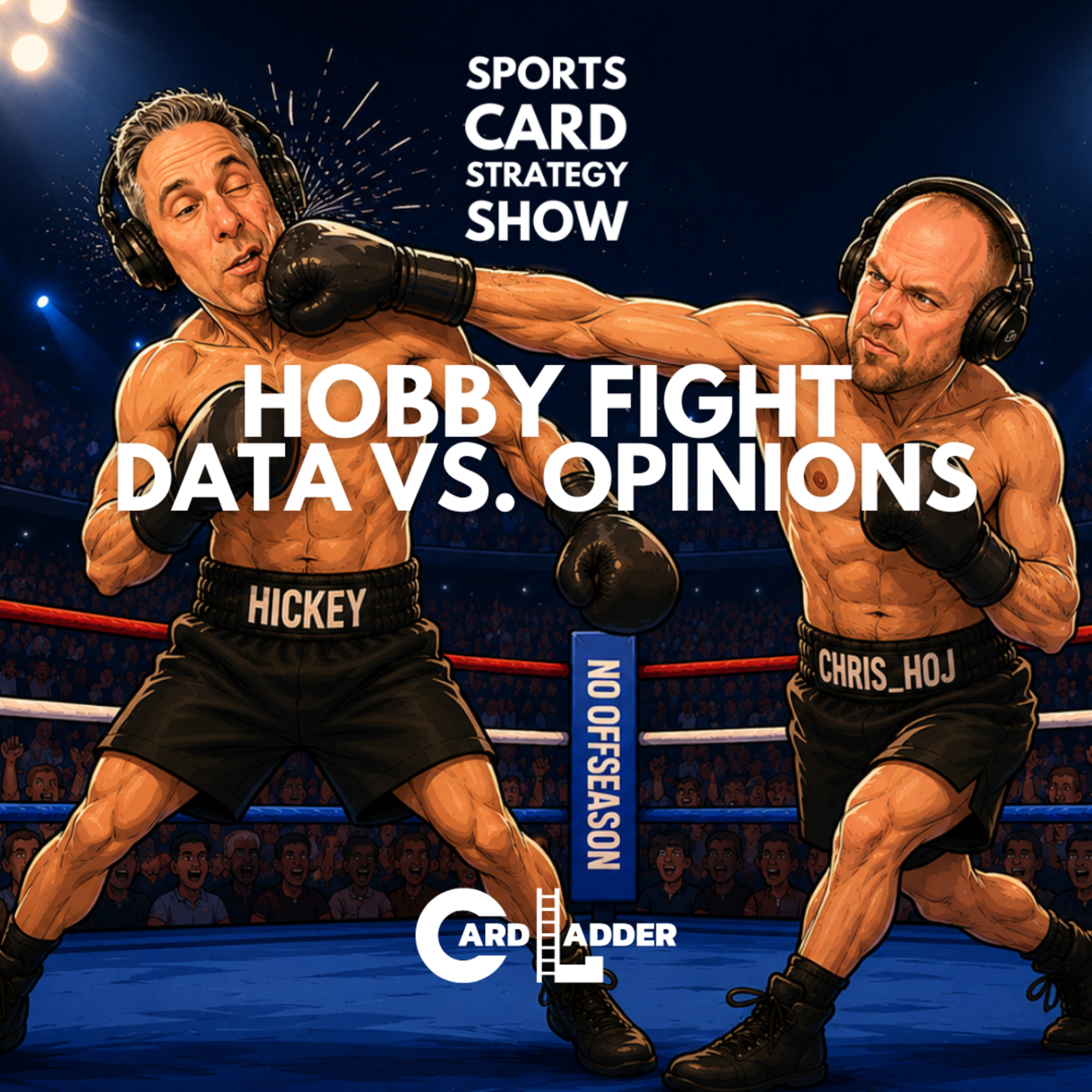
0:00
-0:00
Chapters
/ tap to jump
Searchable
Full Transcript
Every word from this episode, transcribed in full — search the page (Cmd/Ctrl+F) or let Google find the exact moment you’re looking for.
What's up everybody? It's Gary Vee and this is the Sports Card Strategy Show. Because you know this, there is no off season, no off season when you get into this game. The reason why you pay someone like Paul Hickey to get your sports card strategy together is because when you're starting out, you need perspective, you need wisdom, you need insights. And so he's been around the track enough times where he can actually coach you up and guide you. Doesn't mean he's going to take you to the promised land tomorrow. But you now have a coach by your side that can advise and kind of even create these pathways where you can get the education yourself. And that's a lot better than dugging it out on your own. What the kids better buy my rookie card now. After this year, the price ain't coming down. Welcome in everybody. I'm your host, Paul Hickey. It's time to sit back, listen, learn and earn with me on the Sports Card strategy show. No offseason.com family we're always happy to have you with us to help you make money flipping sports cards using data driven sports card investing. On today's show, we have a special guest, co host, Chris McGill, founder and leader of Card Ladder. You've heard of it, a top data app for sports card collectors. Chris is also known as Hoage, which stands for House of Jordans. On today's episode we discuss. Get ready for this. This is a lot of good stuff here. Big picture industry metrics, total sales volume on the secondary market, price index, movement for specific players, categories, approaches to collection building from Chris's vantage point, players he likes to collect, which cards of theirs he likes, approaches to collection building. From my point of view as well that Chris wants to talk to me about, we'll have some fun talking about that big picture collecting philosophy. How important is rarity? What even is rarity? Aesthetics, brand premium, what role does the history of sports cards play in collecting? What are cool ways to research and identify cards and more. And so listen, most of you have listened to the sports Card strategy show for a long time. You've thought about subscribing to no offseason.com for some reason you've been waiting. I get it. But I'm here to tell you that your wait is over. Don't let someone else grab your spot. You got to go to nooffseason.com join our wait list Today we limit the amount of members that can be in our community at any one time. But we have a wait list. So join the wait list you can get in on the next drop. Go to no offseason.com now. Also remember, sports card strategy show is now powered and sponsored by Slab Dynasty Cards, a next gen sports card platform built for collectors that includes a 2% marketplace fee and a choose your chase feature. Start your dynasty today using code no off season for 20% off your first slab dynasty purchase. So, Chris Hoage, McGill. What's up, man? How you doing? I'm doing great. Thank you so much for having me. It is. It's an honor to have you, man. You and I have crossed paths creating content at least once on Jeremy Lee's show, Sports Cards Live. You're a regular panelist there, and it's good to see. I mean, I had fun that one little time that we were. That we were with each other. And when I reached out to collab with you, you got back to me right away. I think we both. We both like to look at data. I want to talk about data over opinions. Data versus opinions with you on this episode. But first, I think it's. I think it's kind of fun paying a little tribute to our guy, Jeremy Lee. He started the Hobby spectrum dot com. How. What are you on the Hobby Spectrum? Yeah. So the hobby Spectrum spans from a purist on the one pole to a tycoon on the other. And there's like seven total profile types. Right? And so I took this on. I see my. My profile on the website says I took it on December 3, 2025. And so, gosh, that was a while ago now. And so I scored an 18, which puts me in the bracket of what the hobby Spectrum calls a nostalgic. So I'm not a purist, but I'm one step removed from a purist. And then as you keep going closer to tycoon, you get Precisionist, hybrid builder, operator, and then Tycoon. So I ended up being closer to the purist than those. But. But ultimately, the group I fell into was the nostalgic Paul. What did you get, Paul? Okay, so, well, first of all, nostalgic collects to remember. This is according to Jeremy's descriptions. Collects to remember, driven by sentiment and memory, guided by personal history rather than market trends or value. Do you feel like that's accurate for you? It's directionally accurate. I think given all the buckets, it fit the best. But. But, but. But it doesn't totally explain my motive. But. But I think it's good. Okay, we're gonna get into your. Your motive on this episode for sure. So. Okay. I know you probably don't know, like, you know a little bit about me. What do you. You asked me what I am, which I'm happy to unpack. What do you. What is. What's your guess? Okay, so I think on the surface, you would be in that builder, operator, tycoon category, sort of based on what is expected of you. And I think you probably did score in that range, but it wouldn't shock me. I would peg you as more of a hybrid. And the reason why is because you take a collector's mindset to a lot of your decisions. And so this is sort of like, what's really cool about the hobby spectrum is it's like cutting through sort of like stereotypes of what each type is and actually asking the user to complete the questions to really see where they land. And I bet you had a mix of collector mindset and from investing mindset. Yeah, man, you kind of nailed it. Like, I think most people think that I'm a tycoon and I actually scored as an operator, but I think I scored as an operator because. And I appreciate what you just said about me. That actually means a lot that you said that, because I do. In order to make money flipping sports cards, which is what I'm all about. And there's a lot underneath that line. Right. You do have to think like a collector. You have to understand what's desirable and what's not desirable. And. But you also have to have this balance between. I call it, like, if you're walking down the street, you're on, like, the desirability lane, but then you come up to Accessibility Boulevard, and so it's like this intersection of desirability and accessibility. It has to have some liquidity to it, but it still has to be desirable. So I like that you said hybrid. I scored as an operator. But the cool thing about also what you said is, like, you identified the date you took it on, which I actually think can play a role in this. Right. Because aren't we all kind of evolving in the hobby, like, with what our goals are? Right. So maybe if I took it. I think I took it shortly after you took it, but maybe if I took it now, which is only five or six months later, it might be a little bit different. I don't know. What do you think? I think that's right. I think that's right. I think you could probably. I guess the questions would be predictable, you know, like, I could remember how I answer it the first time, but, like, if. If you had, like, a replica of this that had different questions but were targeted to get the same assessments. And like, I took it. I took the two different assessments back to back. I could probably see myself scoring in different buckets if I just took them like a week apart. Even just kind of how I'm feeling on that day or sort of how I interpret the question. I love that. Okay, so getting into it a little bit more, I like to. So I have this thing@nooffseason.com called sports card School. Big on the education piece of like, you're coming in. And I kind of approach it like you're coming into the hobby. And let's like basically like middle aged men is my target demographic. So middle aged men, like they're gonna have a collection from when they were kids. And then some people who stayed in the hobby throughout all those years still, like, have experienced the evolution of the hobby to the point where the education isn't as needed as much needed. The gap, there's not a huge gap in what they need to know. But the majority of no offseason.com premium members, like the strong majority, took like a long hiatus. And during that hiatus they were fortunate enough to like meet their life partner. Some of them have kids, they've got, you know, jobs, and some of them play fantasy sports. So now they're kind of coming back into the hobby with like this fantasy sports sports betting. But like, it's got to be a side thing because I've got this successful career with disposable income. But they need this education. The Sports Card school gives that to them along with other things@nooffseason.com but the first lesson in Sports Card School is establish your hobby. Why? Why are you getting back into the hobby? Like, what is the point for you? So, Chris, what is your hobby? Why? Yeah, it's a great question. I was just listening to you and Chris Nash on the most recent episode and he gave a great answer, right? And he was just like, I just loved ripping packs back in the day. And then like it led to the, the argument stuff, which is very. Yeah, exactly. But like, I was like, man, I don't have a good. Why, that's as good as his. But like, mine is basically more like this. Mine is basically I collected as a kid and then I stopped for a long time and I went, I had a career and I went back to college and I got. Got a degree. And so when I came back to the hobby, it was actually fresh off of completing my undergraduate coursework and I was supposed to be taking A gap year to study for the LSAT and go into law school. And I did, I did, I did do those things. But really what I found out was I really needed this break from like work and school and stuff. And like the gap year really turned out to be far less about preparing for the LSAT and studying. And it just actually was like a revitalization of collecting. I just, I happened to stumble into my old carton of cards and shoeboxes. This was, this was in June of 2016. So we're almost coming up on my 10 year anniversary of returning to collecting. And so I, but yeah, I happened to stumble into that old shoebox of cards and then I just went down the rabbit hole. I started fishing out old Beckett magazines. I started going to the local card shop and getting supplies and sort of putting the cool ones, taking them out of binders and like, oh, this is a cool one. Let me put this into a penny sleeve and a top loader and just like doing stuff like that. Then I was like, oh, what? And I, I'm like, what? How do people buy and sell? And I get onto ebay and I'm like, what are these slabs that these are in? And like I learned about grading and I just, I just got completely consumed by it. And like, so I tell that story because here's my hobby. Why my hobby? Why is literally this? Ever since I discovered the hobby, it just makes my day to day, hour to hour life better. It's always fun to like have a save search, to check on ebay when I've got a spare moment, or to talk about collecting with collector friends, whether it's people nearby, whether it's a local card shop or whether it's social media and having sort of my collection to enjoy, but then also having the cards that I want to add to it next. How do I want to change and evolve and shape my collection as time goes on and then in, you know, integrating that with sports fandom and sort of watching sports as they and legacies develop and new players come up and old players solidify their place, all that stuff. Just having that as this occupying mental real estate in my mind just makes me really happy. It makes me so much happier than when, than my pre collecting era. Like if you looked at the timeline of my life, the most important milestone by far was that day that I decided to. Or not, not even I decided the day that I stumbled back into collecting cards. Like it just, I, you can, you can bisect my life into the pre unhappier time and the post happier time in terms of what, what collecting means. And that's it. My why is just the hobby makes my life better. It just makes my life happier. It's really as simple as that. You know, that resonates with me probably more now than ever what you just shared. Because when I, I found my old sports card collection at the end of 2020 and that's like when I stumbled back into it as well and like very similar to what you described happened to you in 2016. And then like very quickly it became, I've got to figure out how to make money on this because I want to do it all the time. And I'm like, I'm an entrepreneur and I love working. And so that was like my, my thing was I've got a. Which I, I know you do as well. I mean, you built card ladder, for crying out loud. So, so we're very, we're very similar in that regard where it's like, I, I love this. I know I'm going to love this so much that I need to, I need to turn it into a career was how I thought. Well then over time my wife was like, be careful because anything you've ever turned into a career, you lose love for. But to your point, it's been, it's been my full time job for the last few years and I, it still brings me joy. It's still like we talked off air about mail day, right? You know, we, like you mentioned save searches, like just those little things. I call it stinker Tinker time. When, you know, when, when you're taking a poop at a dump and you're, you get to just, I get, I look forward to just going on ebay or card ladder or wherever when I'm taking a dump. So it's like that brings me joy. Sorry to mention, but I had the same impulse you did too. And in fact I acted so rashly because when I discovered my own collection and granted I just had finished my undergraduate degree, I had no money, I had nothing going for myself other than looking forward to three years of law school after a gap year. And so when I just discovered that old collection, I was like, man, is this binder of Pokemon cards worth anything? You know, or, you know, or like what if I pulled out like the best cards from these like 93 ultra basketball box that I have? Like, you know, and so I actually like, I had some of the power in the key cards. I had a complete set of the 199596 scoring Kings Hot packs because I actually hit a hot pack of that when I was a kid and I kept it, obviously. And so I immediately started thinking like, could I sell this? And then if I did sell this, what could I buy with it? Because I. Could I get some of these cool like graded cards? What even are these? You know, like, I didn't know what any of the grading companies were. I bought a card from a total fugation crazy grading company. Like all this stuff, all the mistakes that everybody makes or most people make at the beginning, I was making those at the beginning too, but, but that was my initial thought, was like, man, I have this stuff. I don't really like having this big pile and box of stuff. I, what if I could just like start buying the stuff that I always dreamed of as a kid? Like my, my dream card was always the Michael Jordan scoring kings. I never owned it as a kid. It was always a few hundred bucks, way too expensive. So that was like one of the very first cars I went and I bought. And the rush of winning that ebay auction that night, I remember I was standing in my driveway, it was night time, and I was just waiting for that auction to end. And I won it for like 150 bucks. And just my heart was pounding and I was, I. I've always been chasing that dragon ever since. I've never had an auction win or any acquisition quite literally match that, winning that card at auction. But you know, to have all those experiences and to think to myself like, you know, and then to get active, to, to activate the entrepreneurial switch, which is, man, I have some stuff. I know it has some value. How do, how can I put together a cool ebay listing? How can I market it? How can I sell it? And then once I do sell it, how can I use those proceeds to buy more cars that I like even more than these? The only thing I regret is that I got a little carried away and I basically sold all of my old stuff. And there's a few cards that I wish I had kept that I hadn't sold, but that's how it goes. But that's a bit. That's a small piece of advice to anybody who's just stumbling back in. Maybe your later self will not want you to sell all of your childhood stuff. Maybe keep some of it. Well, a, it sounds like you had way better stuff than I did, but B, you're actually like, you just nailed the biggest advice that I would give anybody who's just coming back in, which is like, don't transact on Anything for like the first, maybe year of. Because like I would say don't buy anything for the first six to 12 months. Chris is saying may. I mean, I'm putting words in your mouth right now, Chris, but like, Chris is making me think now maybe don't even sell anything because you don't really know what you have right away. And even you can look up comps on ebay or you can go to card ladder and you can see what things are worth, but that doesn't necessarily mean that it's, that doesn't give you an indication of what you should do. Whereas, like, I think just time and experience in the hobby is the best way to give you that indicator. Are you sick and tired of getting slaughtered, ripping wax and buying into breaks? You want to actually profit flipping sports cards? We'll join NoOffSeason.com now for less than a dollar a day and make between 30% and 130% ROI consistently on flipping singles. Using our tools and advice, Nooffseason.com helps you make real profits flipping sports cards with insider data, proven strategies, and exclusive access to undervalued cards before the rest of the market catches on. Check out nooffseason.com now to see if there are any spots available in our limited member community or join the wait list to get in on our next drop. Chris, I wanted to ask you. So you come out of your gap year, I have to imagine that your sports card strategy changes, right? Because like you're in one mindset during your gap year then, but then after that you're going and you're, you're either becoming a lawyer or you're, or you're getting a job or you're, you know, you have more life responsibility then your sports card strategy has to change, right, with how your life changes. Yeah. So what is your sports card strategy and how has it changed over the years? So it's constantly evolving. But yeah, when I was in law school, my sports card strategy was just, you know, scrape together whatever pennies I can to collect cards when I can. And I even made some pretty rash decisions a couple of times about like emptying out little retirement accounts. I know that's horrible, but I don't even want to, I don't even want to say it. But a transformative moment for me was a result of preparing for a career in law school. Because when you are a law student, if you do get on the big law path, which was the path I was certainly on, then you're, during your second, during your first summer you take some sort of externship. But then during your second summer, you usually summer with a firm that's interested in you and actually trying to make an appeal to you to come join them after they've interviewed and sent out their offers to people and stuff. And so you join a firm for a summer and you work for them for like eight or 10 weeks or maybe 12, and then they pay you, they pay you basically in a, a rationed first year associate salary. So, you know, you don't, basically you get paid the same for working a week as a first year associate would. That's a lot of money, especially, you know, to a student. And so, you know, I was, I was clearing a few grand a week, I think, or something like that as a, as a, as a summer. And, and so by the end of that period, I had that money saved up. And then of course, what did I do? I immediately bought the best cards I could buy. And like the cards that I bought, this was the summer of 2019, and I bought two cards with all of my savings from the summer. And I have to give a big shout out to Christina, co founder of Card Ladder, who was paying the bills for us and working so that I could be a student and save my summer money. And so I went out and I bought two cards. I bought a Luka Doncic Prism Gold Rookie, which was around 8,500 bucks. And I bought a Michael Jordan 199899 star rubies out of 50, which was around 20 grand. So I, I took my total earnings from that whole summer and I bought those two cards. That was the summer of 2019. Okay, so this just blew my mind. And yes, shout out to Christina. This just blew my mind because what I thought you were going to say is something maybe a little bit more responsible than that, Chris. I thought you were going to kind of, you know, I, I, I transacted and then I saved up some of the money from the transactions. But no, you just took your salary, which, look, no judgment. I mean, look, I just got done telling you like Mo. Most of the members of Nooffseason.com essentially do that, right? They have disposable income and they, and they spend it on cards. And my job is to try to help them spend it responsibly so that they're ending up building portfolios that increase in value. But, but, so, so you are, but we talked about you being a nostalgic. So do you like those cards that you bought? What was your strategy buying those cards? Did you, did you Just want them. Were you having fun or was it a little bit more thoughtful than that? Like, were you, like, I'm gonna keep these forever, or is Luca gonna win an NBA championship and I'm gonna flip it? Like, what were you thinking? Yeah, no, look. So we had started the House of Jordans podcast in the winter of 2018, so I was like, really getting deep into my hobby bag. Got the podcast going, got my social media accounts going. Like, I'm really, you know, up and coming as a member of the online community, which was a lot of fun. That was a really, really fun era. And my thinking at the time, my strategy at the time really isn't any different than it is today, which is just, you know, identify what cards I think are just truly special. And then to the extent that it's possible for me, and oftentimes it's not, but. But if I do have the opportunity to get one of those really special cards, I just want to go get it. And that's. That's it. And so the. I had come. So Michael Jordan collecting has always been a through line for my collecting since from when I came back in 2016 and even when I was a kid up until now. But the Luca thing, so this was the summer of 2019. So Luca had just won rookie of the year around that time. And the only reason we were collecting Luca was just because we had been collect. We had been doing the Michael Jordan thing for like two, two and a half years, and we wanted to open some new. Some new boxes. Like that was it. And. And this time it was. It was much, much cheaper to. To rip a box every once in a while. Like, the Prism hobby boxes were 200 to 250 bucks, depending upon, you know, which shop and what time it was. So, like, we. We would spend 200 bucks, open a prison box, get nothing, obviously, but. Or, well, I guess we. We got. We had one really cool hit, actually one. And it kind of was what set us down the Luca collecting course. We hit a Luca orange out of 49 from one of those hobby boxes. And that was like a thousand dollar card at that time. So that was really exciting. And we started paying attention to Luca and we just started watching him. And then he had a really good season. Especially that back half of that season was really good. And so when that card became available, it just showed up on ebay. Both of those cars showed up on ebay. Like, this was a time when cards like that would be on ebay all the time. And so both those cards are on eBay. And it was, it was, it was a lot to get them right, like, especially for the Jordan Star rubies. I had to. The card was in Minnesota and so I had, I actually had my brother who was living in the Chicagoland area, drive six hours to the Twin Cities area to meet up with the owner of that card to actually do the deal in person. And the owner brought with him and I, this is completely fine. And I get it. He brought a police officer with him and had my brother meet him at a bank and they brought out the money counting machine so they could count the cash and everything. And then I had my brother just ship the car directly to Beckett for me and we got it graded with the pgs. And you know, it was a whole thing. But, but, but that's, but my tragedy then and now is just like, you know, what are my, what are the cards that I covet most? And is there any chance I can get them? And if there is, let's work on it. Yeah. What a great story. So do you. When did you start looking at data? Because at some point along the line, you know, you, you and Christina created, you know, started to create card ladder. And so you can feel free to tell as much of that story as you want because I think it'd be cool. But, but at some point, I mean, so you're, look, you're doing some of your biggest transactions kind of in person. Obviously, like rare enough cards probably maybe had comps, but I'm guessing probably didn't. So you're making decisions based on. It sounds like those decisions were not based on data. But I know at your core you're making decisions based on data, right? Absolutely. And that's part of that is because I fell into Michael Jordan collecting when I came back and there are some very data driven people who have, who were collecting him at that time and who still are. You know, I remember because these, these were like the blowout my, my blowout glory days when I was on there all the time, that was like one. Those forums were one of the main places I would go. And I remember during 2016, you know, the year I came back, in fact, like the summer and the fall that I came back, there was actually a big run up on like 80s and early 90s Michael Jordan cards. And so I remember seeing the 86 FLIR PSA10 was selling for like 20 grand in 2016. That's where recent comps were at. And then it shot all the way up to 40 grand and then it came all the way back down to 20 grand by the end of the year. And I remember being fascinated by that. And I remember going into Excel and like, making my own columns of data and dates and marketplaces and then throwing it up onto a graph. And I would post some of those graphs to blow out from time to time. And so I, I was always fascinated by not just the data, but also visually presenting it and finding ways to. To share it with people. And. And I started posting content like that to my Instagram too. You know, my undergraduate degree was ethics, economics and, and politics, so, you know, economics was a third of my focus. And I always, I always enjoyed economics. I always, I. I enjoyed macro and micro, but micro was. Was more applicable here. And it was. Microeconomics is extremely interesting, sort of finding the intersection of supply and demand and what shifts the curve. And so I was always trying to bring that modeling and line of thinking into card collecting. It just. It was always a natural fit. It was always. One of the reasons why I was fascinated by cards was because this market existed when I came back, and because this market was able to be documented and it produced like, a wealth of information, I just, I found that to be a really fascinating part of everything. And then like, the. The turning point was we started our podcast and like, every. Every House of Jordans episode would have, like, a market segments where we would talk about cards that had gone up or that had gone down. We. But we would also have a segment about the design of the card. Christina would do this thing where she would like, sort of break down and analyze different card designs and sort of take like an art history lens to it. And, And. But we would always be talking about the market. And then it was like a. It was. It was through Blowout that I met Josh. He is the lead and only developer on Card Ladder. He's also obviously the cto. And so, you know, he is the architect of the software and the code. And he, he, at that time also had a YouTube channel card called Cardboard Chronicles. And we met. We just like stumbled into each other on Blowout. We started talking and then he invited me to come on his channel. And so I came on his channel sometime around 2018, 19. By this time, I'd been posting graphs to Instagram all the time and, you know, just like sort of trying to chart card data, market data in particular. And he. And he brought me on and we talked about the Michael Jordan market. It was, it was an episode. Just talk, talk to me about the Michael Jordan card market. And I. And that was. Was certainly I think planting the card letter seed was us sort of collaborating and having a shared interest in all these things and him bringing a very unique stack of skills of development, of web development and, and his business acumen and his interest in passion for cards to line up sort of with this burgeoning data driven, market oriented approach to collecting. Do you need help selling your cards at the right time? Use no offseason.comsell alert feature for premium members only. Join the wait list now@nooffseason.com and get in our next drop. Definitely. And I think so like, data has always fascinated me. Like every single thing that I've done in my professional career at some level has been based on data. But the one thing that I've learned is like so okay, step number one is like getting accurate data which is kind of like what you, you're describing the phase of like you're collecting your hobby journey where you really started to, to acquire the accurate data. But then I think the bigger challenge, which I think most, most people just stop there. They just look, they're like, okay, there's data, I'm going to look at it. Majority of people probably find it boring and then the people that don't find it boring find it semi interesting but they're just, they're still just going to look at it and go, okay, cool, there's data. I like to try to understand what is the data telling you and what actions you can take based on the data. So talk about that because in preparation for this show, I mean you and I were kind of emailing back and forth and one of the things that we kind of hit on is like what data is most important. So you kind of outlined big picture industry metrics like indexes. And then one thing I always talk about is micro markets. But what like to you, what data is most important? How do you kind of break that down? I think it all matters, I think it's all interesting. But more than anything I just, I just think it's fun. I, I love, you know, I love a scientific approach to things. I love the idea of measuring and compiling and presenting and analyzing. I've, I've many times in my life I've been accused of being analytical to a fault, overly analytical. So it was just a match waiting to happen. I'm sure you've had that experience too. Probably. Yeah, for sure. I mean people, people like, people think that all I do is look at data and it's really like the only, the only reason that I am so passionate about data is because everyone has an opinion. So it's like, you have an opinion, I have an opinion. He, she have opinions. If we come together and try to make a decision and we all just throw our opinions out there, are we going to get anywhere? And so I'm like, well, screw my opinion. Here's what the data says. So that's, that's kind of the way that I got to where I am today. But yeah, I think you're right. I think you can, look, you can definitely have some analysis paralysis, you know, while you're looking at things and try to. Okay, what, what do I do here? Yeah, I love that you launched into opinion versus data, because that's a big part of this. And I, and so first of all, though, I think in sports cards there's a lot of data. Data market data is a part of it. But, but there's a lot of other data too. There's population report data, there's, you know, more anecdotal data. Like, let me just scroll, scroll social media and see what are people collecting the most? What, what do people enjoy showing off when people write their captions and, and share cards? What are the ones that, that people are really the most passionate and enthusiastic about? What are people commenting the most about? And then, then, so like there's a, there's a social data component or a community data component, and then there's. I think actually the central, the most important piece of data is the data of what cards exist, full stop, the data of what is the entire universe of cards. And I think that data is, is a little bit underrepresented. And that's fine, that's, that's, that's opportunity. But you know, the, the data of like, for example, to bring it back to a player that I've collected for a long time now. Luca. So if you look at Luca and you say, is there anybody out there who could tell me who could name for me off the top of their head all of the gold out of 10 parallels for only his rookie year? Does it, does any. Is there anybody out there who could actually give me that comprehensive list off the top of their head? Or if not off the top of their head, then they have it in a spreadsheet somewhere. They've done that work before. Maybe, maybe a few, maybe a very, very small number, but not many. And so I think that that's actually the most important piece of data that exists. And all of it matters, all of it's very important, but the data of what actually is out there to begin with, like, and I've been like, sort of developing this line of thought over the last few years and I've, and Jeremy has heard me say it. And Jeremy summed it up really nicely in a recent Sports Cards Live episode where he was sort of listening to me ramble and he goes, chris, what it sounds like you're trying to say is that when you're, when you're analyzing cards, you think the value should emanate from the card. You don't think that the card should emanate from the value. Meaning we, once we know what the cards are and we have our preferences and tastes in mind and we've actually analyzed the aesthetics, the rarity, the brand, etc, from all the, the population reports, everything from all the cards that, that are within the sandbox that we're looking at from there, the then, then that gives us the opportunity to see is the market aligned with what we like or not. And if it's not, that can be a really interesting opportunity on either side. It can be an opportunity to let something go that the market values higher than we do if we already own it. And it can be an opportunity to get something for less that we will like just as much or even more than something that costs more. So I think that's a really important part of data too. And my final part, my final point I want to make the opinions versus data is, is such an interesting contrast because I think actually it has a great analogy to sports in general. So I think a lot of sports, I'll take the NBA as an example, which is my favorite, my favorite league in the NBA. There's a constant tension between the nerds who are data driven, which is the camp I put myself in, and the eye test, which is the group of people who, you know, strongly believe that they watch the game and then they say, I know that this guy's better because he, he scores higher on my eye test. And the eye test is instructive, I think, but it's also obviously laden with bias. It's, it's biased based on what we've been taught, what we think is good and aesthetically pleasing, what the, how the game should look or what, what we think is a form of dominance. And usually it's probably pretty good, but, but sometimes it's not. Sometimes there are just sleeping giants out there who are excellent at the game, but they don't quite play it the way that we think it should be played or the way we're expecting it to look. And so those guys are buried in the data but if you are able, and there's been great strides made over the last 20 to 25 years, especially in the NBA, to develop metrics of measuring performance. And it started with looking at efficiency, but then it blossomed into very sophisticated statistical models of measuring impact using on off lineup data. Looking at plus minus modeling. First it started with just the raw on off plus minus. Then it became adjusted plus minus. Then it became regular ads adjusted plus minus. Then finally, you know, models that take large rapm samples and measure them against statistical profiles of active players. Okay, so I don't want to get totally in the weeds of that, but I love that stuff. I love the measurement of performance in ways that are objective and that like truly homes in on impact. So there's, there's a lot of good stuff happening in sports itself that lines up this battle of the eye test versus what are the metrics actually saying? And each of those things can learn from each other. They neither one has the, has the correct answer in every situation. But I think that's an, as an analogy to what happens in sports, in sports cards too, is that you do have an eye test camp that just says I see a card, I like it, that's it. And then there's a data driven approach that says but what else is out there? Have you truly seen everything? Have you, have you actually truly compared the rarity of all these things? Have you actually looked at the history of these different brands and have you really thought, looked at all the different images of the player? Maybe you like a different image of the player better on other cards. So I think it's a, I think it's a great topic that's very en vogue right now is, is data driven versus opinion. Yeah, I love, I love the comparison that you made between like sports cards and real life sports in terms of the parallels that can be drawn, the different camps that you described. And I agree with you that like certainly the, the macro data, the big picture data is sort of is necessary in order to understand what's out there so that you can make your decisions. And for me it's like, you know, we started, it's kind of funny because we started the conversation with like the why is fun. But now we're getting into some details that lead me down this path of like, of competition. Like kind of what we're talking about right now is competition. And so for me it's like how can I be the best at the hobby? And that's going to depend on what my goals are. If my goals at some level are making money and turning a profit, then I need data to understand what the market is doing so that I can kind of be a surfer on the wave that is the market and not necessarily try to figure out what's next based on, like, what, what I think that where I think there's opportunity. So like, so for me, when I first started trying to make money, I would, I would use some information and some data to say, okay, well, there might be an opportunity here where there's a little bit more rarity. Not as much sales volume, but like some similar, some similar aesthetics, some similar brands and potential opportunity that can grow in this area. I was far less successful with that approach than I've been over the last, probably three or four years where I've taken the approach of let's look at what's most liquid. Let's look at the patterns that it has throughout the years. And that's where like, I'm kind of going competition in context. It's like, what's the context around why there is that pattern? So, yes, the data is saying there's a pattern. Maybe you buy this card in the off season and you sell it during the season for these particular athletes, these particular exact cards for these athletes. And I call that the buying and selling the right card for the right player at the right time. But you have to understand why that exists for that individual player, which is where the knowledge of this, of the sports comes in and the knowledge of the athletes comes in. And so that's kind of where I get into more of like micro markets where, okay, the macro market might say that Michael Jordan's cards are up and up or down, and it includes this amount of cards from this time period to this time period. But then you dig into that and you might see patterns in some cards that you don't see in other cards. And then of course, with, with active athletes, you're going to see a lot more patterns than you are with retired athletes. So I think, like, okay, so let's go in this direction, right? You two players, you've mentioned, Michael Jordan and Luca. Luca being an active player, there's different factors that are happening in his world. You know, had he played in this, this NBA playoffs, his val. His card values would be different. And for his base prison PSA 10 probably wouldn't be as different as it would be for his silver prism PSA 10. As you're looking at Luca and as you're looking at Jordan, how do you approach each of those collections differently based on one being active and one being retired. And I'm specifically more interested in Jordan because that's the one I don't understand as well as, as, as the active player. Yeah. So, okay, amazing comments there because you immediately put your finger on the tension that was like underlying in my, sort of like the explanation I gave and sort of I think attention in, in our two different approaches, which is completely fine. But, but you know, you, I think you nailed it. And you, you started off the show with a comment sort of about the walking down the street of desirability, but then intersecting with the boulevard of liquidity or something along those lines, sort of that, that liquidity is a, is a factor. And I've reached a point and it's taken 10 years, but I've really reached a point where, you know, the thing that, that my taste fancies right now is, is, is not really liquid cards necessarily. I mean the definition of liquidity can be, can be loose. Like, because, you know, is, is. Is a beautiful beachfront property. Is that liquid? Like, I, I don't know. It could be if you have a, if you have the right market. Even though, you know that's, that's a very small buyer pool. It could be liquid if there's a few buyers or it could take years to sell something like that if it's not a good market. But I'm very much in the camp right now as a, As a collector where I've found myself in the, in the state of mind where like I'm looking for the thing that just maybe has never sold ever or like something that is. That doesn't have liquidity and that doesn't, that's not to take away from the other approach at all. And I, I think you actually nailed it that, that, that the, the opportunity to, to understand and navigate the market is A, enriched by data and B, because that's true. That's probably where most opportunity lives and certainly the most predictable opportunity lives. Whereas, like, when you sort of start going down some of the paths that I've gone down, you know, you're taking a giant swing. You're. You're not trying to hit singles and doubles or get on base. You're either going to hit a home run or you're going to strike out embarrassingly. And so, and, but that's, that's where I've come to occupy as a collector is like I, I do. That's kind of where, where I'm living right now, it's. And so the difference between. So I thought that was a really astute observation you made. But the difference between Luca versus mj. So MJ is. It's like, I. I used to know somebody who would tell me, like, why do Michael Jordan's prices ever change? His career is done, and the cards they made of him are done, too. So they're out there. This is the price that they go for. Why would people pay more or less? This is just. The market is established. I kind of like that guy. Yeah. Okay. Okay. So. And that look, to that guy's credit, he was a very smart and successful person in this industry. And. And he, like. And he. He would sort of push back to me, you know, and I would say, I get it. He's like, I want to focus more on things that are more explainable in. In very direct terms, which is like, dude, Victor Wembanyama is on an incredible tear right now, and people are suddenly starting to forecast what his legacy might be, and they're. And that they're baking in those expectations into his prices, and maybe they have even driven him to a speculative bubble or maybe not. We'll see Ohtani much further along in that development, but similar. So there's something very intuitive about the idea that players who are forging their legacy right now, who are making moments right now, who are making history right now, they're doing it in front of audiences of millions of people that. That will move a market that's based on consumer demand, like the sports card market is. I get it. I agree with that. And the Luca point that you made is spot on, that, like, he's out of sight and he's out of mind. There still are going to be some people out there who are kind of like, well, just wait until he gets back, you know, or there's other people are like, oh, this is a good opportunity to buy him. And then there's going to be other people who are, like, out of sight, out of mind, or I want to focus on these other guys. This is what's interesting right now, that with Jordan, it is very true that he's. He's obviously not doing anything to shape his on court legacy. And it's also. But. But the. But there's. There's a flip side to that coin, which is his legacy is brought into focus every time somebody else builds theirs because he's the measuring stick. So, like, that's. That's one thing. And, like, we see that happen, like, anytime there's a Super bowl and, like, the 49ers are in the super bowl, you know, they're going to trot out Steve Young and Joe Montana and Jerry Rice and all those guys are going to have these. This moment, this two weeks of visibility in the. In the lead up to the Super Bowl. It's like those things can definitely implant the idea of these athletes in our minds and can drive us to want to, in the short term, sort of ramp up our collecting of them. And then once we have larger collections of them, then we pay more attention to their markets going forward. So maybe it can even forge something that's more durable and long term. But the bigger point is this. The point that I think sometimes isn't there on the surface is that the thing that can change and shape a Jordan, a Michael Jordan market in cards is not that his legacy is changing or even that his legacy is being brought back up in. In the news. The thing that can change his pricing is that the number of participants who are in his market can change. And I used to watch that happen. So, like I said, I came back in 2016, and at that time, there were maybe one or two Facebook groups of people who were collecting Michael Jordan. And maybe they had a few hundred, maybe up to a thousand people. But over time, you know, you would watch and they would sometimes even run polls in these Facebook groups once a year or so, and it would say, when did you come back? That the whole poll would be, when did you come back to the hobby? And, you know, they would send it back to, like, 2010 or 2011, and a few people would say, 2011. And then the bar for the number of people who came back in 2012 was larger. And then the bar of people who came back in 2013 was even larger than that. And then the bar of people who came back in 2014 was even larger than that. And it just continued in that fashion that more. What was becoming clear is that more and more people in our age bracket were. Had established careers, they established families, they found this. They stumbled into their old collection, found some nostalgia, whatever, and then they started pouring back into the hobby. And so I watched as those Facebook groups grew, and they were in 2016, there was like a thousand, maybe one or two groups. Today, these groups have tens of thousands of people, and there's dozens of them. And they specialize. Some are only looking at star cards, some are only looking at 90s cards. Some are only high end, some are only low end. And so you can see that if the number of people competing for Michael Jordan cards was, say, a few thousand in 2016, and it's a few hundred thousand today, that's enough to change a market. That's enough to add enough competition and buyers into a space that they're going to start competing against each other, driving up prices. And then it can have nothing to do with Michael George's legacy. It has to do with market dynamics. It has to do simply with the number of participants. Man, I love what you just did there. You just took data and applied it to a retired athlete, and that's phenomenal, man. And, and so there's a couple things I want to unpack from the last few minutes of our discussion. So one is, is you made me think of all these different ideas are sports card strategies. So whether you. Whether you like to use your opinion, your educated opinion to take a little bit of a risk, or whether you like to just say, okay, this is what the market is doing, and I see this pattern in the market, and if I do this, I'm gonna make X amount of profit, most likely, so I'm gonna do more of that. Whether you like to play it safe or play it risky, you can build a sports card portfolio, collection, portfolio, whatever you want to call it. It's all kind of the same thing. And you can allocate different percentages of it to, you know, based on your risk tolerance. And so one thing, and kind of another. Another thought I had is like, you probably played some sports growing up. I played. I like to still try to play sports. And when I. What I notice is, like, when I go play golf, for example, like if I play two or three days in a row, I'm much better on day two and day three than. Than I was on day one. If I go play basketball and I play once or twice a week with some friends, I'm much better after five or six weeks than I am in week one. And I think that that speaks to the same thing within sports cards. So what I mean specifically is when I make one play, when I say I'm only going to buy in grade raw 2018, Shohei Otani tops opening day base cards for the next two months, that's all I'm going to do. I'm much better at making money flipping sports cards when I'm only focused on that one thing because, yes, I might lose because it's from 2018, there's going to be a lot of copies that have been, you know, roughly handled, and they're not going to grade very well. And I'm going to deal with that situation. But I'm also going to find enough PSA10s out there to make my Profit now when I. When I split things up, and I think, oh, I think Connor Griffin's gonna have a big year this year. So I'm gonna go buy some Connor Griffin's. I think now's a good time to buy Luca. So I'm gonna go buy a bunch of Lucas, and I'm gonna do the Shohei Ohtani thing, and I'm gonna buy 1996 Kobe Bryant tops base PSA 9s, and I'm gonna crack them and try to get BGS 9 fives. When I try to do all those things, I'm much more likely to break even than I am to make money. And so I think that the beautiful thing about this hobby is that you can decide to do all of that and so many more things. And as long as you. As long as you learn from all these different things that you're doing and then create that. That right mix for you, that's kind of what I want to try to have everybody do. Right? So, like you, your example of that was like, look, I'm at. I'm at a point in my life where I'm trying to maybe go buy something that has never sold before, you know, and that's your. That's part of your sports card strategy, right? Now, remember that no offseason.com is the only place on the planet with sports card rankings updated every Friday, sorted by the ROI percentage you're likely to make in the future your competitive advantage in the sports card market. No offseason.com gives you the data, tools, and insider insights to flip sports cards for profit faster and smarter. Check no offseason.com now to see if there are any spots available in our limited premium member community or join the waitlist to get in on our next drop. So one of the things you kind of wanted to talk about is rarity. So, like, back to that conversation. How do you, like, how important is rarity? And how do you even define rarity? Yeah, great question. Great question. Because it's such a big one, and I want to. We could. We could talk about rarity for hours. So let's not do that. Let's just say rarity. That the initial appeal of rarity to me is that it is measurable and it is a fact of the world, and it's a fact in the way that beauty or aesthetic appeal isn't quite or even brand premium. So, you know, I could show my card and you could show your card, and I'll say, mine looks better, and you'll say yours looks better, and there's really no way to adjudicate that. And even if we put it up to a vote, people might vote one way today, but next year they might have a totally different preference. And there is a whimsical nature, a fickleness to public opinion like you can see it with, regarding professional players, how they fall in and out of favor constantly. So, and, and I love having preference. I love taste. I love preference. I love. I think this looks better. You think that that looks better. I like this brand better. You like that brand better? I love that, that there's a. There's a great place for taste and taste making in the hobby along things that are very subjective. But rarity is a little bit less subjective. Rarity is quite simply, you know, you can put your card up on the screen and say, mine has 199 copies. I can put mine up on the screen and say mine has 500 copies and there's nothing to debate after that. Yours has fewer copies than mine does. Now, there are wrinkles to that because I could come back and say, well, yeah, mine has 500 copies, but there's no other versions. Yours is 199 copies, but there's a 100, there's a 75, there's a 50, there's a 10, there's a 5, there's a 1. So there's. There's always wrinkles to this. And there's always the question of how do we build our sandbox of the things that matter. And then once we're in the sandbox, then we can start comparing. We have to sort of set the terms and stuff. And there's always. So there's always going to be room for preference. Even in discussing rarity, there's always going to be room for preference. And then what if you actually even get two perfectly equal things lined up, which that can happen too. Like if we're talking about, you know, Luca rookie year stuff, like if, if I have a one of one of him from his rookie year and it's the only one of one parallel to that card. And then you have one too of the same thing, which is from a different brand, from a different set. Now it's a tie. So how do we break that tie? And then there are ways to break that tie. You could say, well, your brand has a longer lineage. It's been running for 10 plus seasons and the one that I am looking at, it just started this season. So your brand has more history behind it. So sort of there's a rarity component to brand legacy because it's more difficult for a brand to have been around for a long time than it is for a brand to be a startup. So there's a certain rarity in durable brands that have been around for a long time. But there's a flip side to that, which is, but if my brand is a startup, then it has fewer instances. So in circulation, there's fewer examples of it in total. So there's a certain rarity to that too. So anyway, the point of that is that rarity still is subjective. Like we still have to make choices about which rarities we like and how we think about them. But the thing that I've always liked about rarity is that it's a, it's just a bit more scientific, it's something that's a bit more concrete, it's a bit more measurable, is something that we can actually know. So rarity in some is just the number of copies of a thing that exist. That's. That's sort of the rarity and that's the appeal of it. Now's a great time to quickly hit pause on this episode so that I can tell you about a solution to all the issues that you guys have been having with your PSA vault. We've heard some horror stories from Lefty and from a lot of our premium members who use the PSA Vault. Many of them have said, look, PSA has lost my cards. They're not offering me good solutions. Their customer service doesn't get back to me for months. I can't see the cards that are in my vault, so I can't list them. When I list them, there's a glitch in the listing. There's all these nightmarish stories that keep coming in from the PSA vault. We have a solution. It is our end to end solution for premium members@noallseason.com what do I mean? This is not only a great solution for domestic people in the United States of America, but for people who live abroad as well and want to do business from other countries with American ebay buyers and sellers. Okay? All you need to do is instead of using the PSA vault, you can drop ship your cards to no offseason.com you can use our shipping address with our grading services as your address in whatever marketplace that you're buying your cards from. Whether it's ebay, what's your my slabs, whether it's Facebook, whether it's Instagram, whether it's X, whether it's discord channels, wherever you buy Your cards, you can use our shipping address as your shipping address. All you need to do is include your name on the name line with our address and we will receive your cards for you. We will grade them at the grading company of your choice. When we get them back, we will consign them for you in a strategic way. Way more strategic than any other consigner out there. So consider nooffseason.com's end to end solution. This is a great solution for any of you that are struggling using the PSA vault due to their customer service, due to their technology glitches, whatever it may be due to the fact that they've lost your cards, which has happened a lot. So consider using our nooffseason.com solution for this. I think it's best for people who live abroad. Okay. Because these people want to do business with American ebay accounts. They want to buy from American sellers. They want to list their cards to American sellers. Because for many, many sports, the market is stronger in the United States of America, helping out the international market through our end to end solutions and the domestic market, the United States of America residents who are just simply struggling with the PSA vault, consider the end to end solutions@nooffseason.com. all right, let's get back to this episode of the Sports Card Strategy Show. Yeah, that's really cool because like you, just the way that you articulated that makes me think like you can manipulate rarity the same way that you can manipulate data like people. Like, it's, if you know data, you can manipulate the data any way you want to manipulate the data, good or bad or whatever. It's just, it's, it's up to you. And it, and you can kind of do the same thing with rarity as well. Like, and you gave really good examples of that. So, so I think I definitely agree with, with the conclusion, which is like, it is what it is. Like, it's, it's, it exists. It's a, it's a factor. But you have to, it's almost like to make, to truly make a decision that's right for you in the hobby. It, you have to treat it as only one of the factors. And so, okay, so some of the other factors you kind of mentioned them. Aesthetics, brand premium. When you're looking at, when you're looking at making a big purchase now obviously you're looking at, you kind of mentioned, you mentioned something like potentially not having ever been sold before. You mentioned rarity, which is part of that. You mentioned aesthetics and brand premium. So all of those fact kind of, how do you, how do you look at all of those factors? How does everything play into your kind of holistic hobby decisions, transacting in any way or any you can even like when I say transacting, I think holding is also included in that because it's a decision you're making a decision not to transact at that point. Great point. Yeah. When I have a card sitting in my collection and I don't sell it and it has a market value of $100, that in some ways is the equivalent of me buying it for $100. And then if it's worth $110 tomorrow, I'm. If I'm not selling at that price, then that's tantamount to me buying it at that price. I think that can be helpful, a helpful framing to think about when a card in my collection ends up being overvalued relative to what I think it's worth or relative to how much I enjoy it. So. Yeah, but I look at all those things. I, I'm, I very much care about the aesthetic of cards. I'm, I'm very aesthet. Think like the fact that collecting cards, while it can be incredibly invigorating as a research project and as something that is highly data driven and I, you and I clearly love that side of things. There's another side of cards that's just totally vibey and just total vibes and just like aesthetics and tangible, you know, enjoyments of just like. I just like the way a card feels. I just like the way a slab feels. I just like the way a slab looks. I love how it sort of just the basic presentation of just. You have this taxonomical information up top that identifies the card and then it presents underneath and it's in this cool little holder and the holder just happens to be roughly the size of a phone. So I'm very acclimated to holding things of that, of that size and texture. And I just love card designs. I love the, the, the use of foil and shiny factors and the integration of relics and player assets, autographs and so forth. The selection of the photograph, you know, what jersey the player's wearing, you know, what's the backdrop or things in focus or is the background blurry? And just what is the brand logo look like? What is the legacy of that brand? There's so much to dissect and process about a card, but also there's just like a general vibe test too. Like if when the card just comes across my screen, do I like it or not? Do I like what it looks like or not? And that's never the final factor for me because I sort of understand that, like, a lot of social conditioning goes into influencing whether I like something or not when I first see it, and that sometimes maybe I just need a little extra exposure to something and then all of a sudden I like it a lot more than I did. Kind of to your point about getting better something over time or more exposure to something over time can, can definitely evolve us. And so I try, I try not to just make like, gut check, shoot from the hip decisions, but I do take that initial first impression into account. But yeah, it's all that stuff, man. It's the vibe. But, but, you know, rarity for me definitely is a North Star, and it's become more and more of a North Star as more and more time has gone on. But, you know, rarity is a huge factor for me. Sports Card History where this card sits in the canon of sports card history matters a lot to me. Aesthetics matter a ton to me. All of it, man. It's just, you know, we could, we could talk for a long time about all the different facets of a card. Do you like the content on this show? Do you want more? Go premium@noofseason.com now to get unlimited advice answered on our Friday podcast for Premium members called the premium pod. Check out no offseason.com now to see if there are any spots available. Join the wait list to get in on our next drop. Talk about the history a little bit more because I so. And here's why I say that. So when I. When I think about all the factors we've talked about so far, I come back to. For me, the biggest factor in whether or not I like a card is whether or not it sells and how often it sells. There's like this per. It's that perfect intersection for me. It's that desirability and accessibility intersection. So, for example, like, I'm trying to think of, like, a, a real example. And I, I think, I think I have a couple like Michael Jordan's 2001 tops chrome with the Wizards. Like, I can think of that card as, like, cool photo. Means something to me because that was the year I started working in the NBA. And I was like, at his first, I was at his first game. It was a preseason game against the Pistons. The first preseason game he came back and played for the Wizard. So it was like a big deal. It's Jordan, obviously, but. But then you look at Some of the things that are sort of wrong with that card, it's like, it's for the Wizards, not for the Bulls. It's probably more mass produced than some of his other car. So, like. But then you start to look at what's the opportunity? What's the opportunity based on how often it sells raw, how often it sells in a PSA 9, a PSA 10. And then I start to become conditioned. Maybe it is. Maybe there's an opportunity there for me to make some money on it based on these other factors. And then I start to like it more. There's one other card I can think of off the top of my head. Kobe Bryant, the 1996 Skybox. I think it's an ugly card. I don't like the aesthetic of it. But again, you look at what it sells for raw, you start to see, okay, it's like a 30 to $40 card. There's some opportunity within those two cards when you start to dig into it. And so based on the data, based on the sales price, the achievability, but also the fact that those cards aren't transacted as often as you would think would be transacted based on how many of them there are. So they start to become a little bit more interesting to me from the data standpoint. And then. And that's when I start to fall in love with them. And that's personal preference. The one thing that I don't really have never really gotten into, especially on on this podcast, is like the history of a card. Like the. The. Like the history, but like the history behind the player, yes, but the history behind the card, no. So maybe you can kind of add. Add to that from your perspective. Totally. I. I completely resonate too with that sort of. When you sort of say, man, there's more copies of this Kobe in existence than the sales record would indicate, why is that? Why do people hang on to this card? Why isn't anybody selling this? What's special about this? Especially if it's like sort of a puzzle? Because, like, I don't. I don't like the way this looks. So why is this? What. What are people saying this that I don't see? And then, you know, it's just so much fun because, like, it's a great research project, there's entrepreneurial opportunity, and you also learn about yourself and learn about your community too. So I love that. But. But card history, great topic. Card history. The. One of the reasons why I gravitate to it is because it is one of the greatest intellectual tools that can empower me to tell a story about a card. I just love that. So you know one of the cards I recently my most recent card post and it was the. One of the subjects of my. One of my most recent podcast episodes was the 199899 card number 174 from the upper deck base set. It's a Michael Jordan card and it's a checklist. And that particular base set has a base version, a bronze out of 100 and a gold one of one. And it was last fall I had the opportunity to get the gold one of one of that card and I did. But I didn't know the whole story behind the card. I just knew that it was a cool card. It was a Michael Jordan one of one from the 90s and that was enough. But as I started to learn more about the history of that card and I started to research it more, here's what I found out. That card is the first one of one checklist ever issued in basketball. That's a cool story. And but in order to know that I had to research the history of checklist. So I had to spend hours going through sets on trading card database. Next, next, next to this have a checklist to this have a checklist. And then I'm reaching out to people. I'm asking people questions too. And I ended up discovering that the first basketball checklist was in 1969-70 tops. And then. But that checklist didn't show any players. That checklist was just a checklist with like a generic photo of a basketball player. The first single player checklist card was from 79.80 tops. And it actually was Dr. J. But that those are three panel cards. So that card has Bird Magic and Dr. J. And so it was just the Dr. J panel, the mini that was a checklist. The first standard size single player checklist was from 1983 Star All Star Game. That, that like that set, that's that near that specific set had the first ever standard size two and a half by three and a half single player checklist card. And it was again Dr. J which is really cool. And then fast forward. The first one of one checklist within the basketball category was that card that 98.99 upper deck gold one of one Michael Jordan card 174. And so what a cool story. Like any. And I could tell that story to any fellow collector. Like if somebody comes up at the national and like I have a card with me, I say hey, look at this. What do you think about this? Like, oh, that's a cool design. I was like, well, let me tell you about it here. That's the first one of one basketball checklist ever made. That's sports card history. And that's a really, really great story. Cars don't need to have that great of a story. It can. It gets a cool enough story for me, for me to be able to say, this is Luka Doncic's, you know, third Optic Gold. This is the third one of his and he has eight total. That's card history too. You know, card history is just. It's a really fun way to. For me to tell the story of a card is to connect with another collector. Man, what a great example of card history. I mean, that's what I'm talking about when I asked the question. So that. That's really cool, Chris. In terms of, you know, those examples and specifically the one with the Jordan checklist. And what I love about that, like, what resonates with me about that is like, you did the work yourself to figure that out. I like originality. I value doing the hard work. To have like that firsthand account of something versus just kind of regurgitating other people's information and stuff. I mean, that's fine. Like, we can all share. Share other people's stories secondhand and all that. Like, there's nothing against that, but I just think it's really cool that you came with that example where you did the work on that. So let's do this. Let me say thanks to Chris McGill of Card Ladder House of Jordan's podcast for being on the Sports Card strategy show today. Chris Hoage. As our. Our friend Jeremy Lee likes to refer to him as Chris. I'm going to hand it over to you for the wrap up. Any. Anything else you want to add or any shout outs you want to give other than Christina before we let you go? Dude. Yep. Eternal shout outs to Christina and. And Jeremy and Josh. Josh. Also. Josh. I was gonna say Josh. Josh from Card Ladder. The. The. The architect of. Of everything. So, yeah, great team love the team. Love Jeremy. It was a great pleasure to be on this show. I. I feel like we've only scratched the surface of. Of all the things, all the conversations we could have and how much fun we could have with them. So, you know, I'm a listener. I. Before this episode, I was listening to you and Chris from Nash Cards and I was just chuckling the whole time. He's a funny dude. Dude. He's. It was very good. It was totally different flavor in this show, which is really cool. It's just you have a wide range of styles in the catalog and, and man, you know, hope hopefully the final note is to be continued until next time. Absolutely. I can't wait till next time, man. I can't wait. Appreciate your time so much more. I want to ask you about data card ladder flipping, collecting, getting into, you know, so many other hobby fights. The hobby fight today was data versus opinions, but we got to get into more. So thanks everybody for, for being here with us. Chris, we'll see you again soon, man. Have a good one. Sounds good. Thanks so much for being here with us on the sports card strategy show. If you enjoyed the content on on today's show, there's plenty more waiting for you@nooffseason.com just go to nooffseason.com right now. You get our formula based sports card rankings, sports card school inventory tracker, the ability to grade with us and the premium podcast where we answer an unlimited amount of your questions. Check it out right now@nooffseason.com for everyone@nooffseason.com I'm Paul Hickey. Thanks again for being here with us on the sports card Strategy show. We'll see you again soon. Have a great day.
Episode summary
<p>Welcome NoOffseason.com Family! We are so happy to have you with us to help you make money flipping sports cards using Data Driven Sports Card Investing.On today’s show we have a special guest co-host - Chris McGill, founder and leader of Card Ladder - a top data app for sports card collectors - and collector known as “HoJ” - which stands for House of Jordans.We discuss…Big picture industry metrics (total sales volumes on the secondary market, price index movement for specific players/categories, stuff like that).Approaches to collection building from my vantage point — which players I like to collect, which cards of theirs I like to collect, things in that realm.Approaches to collection building from your POV — riffing on what you like to collect, why it appeals to you.Big picture collecting philosophy stuff — for example, how important is rarity? What even is rarity? How much does aesthetics matter? How about brand premium? What role does the history of sports cards play in collecting? What are ways to research and identify cool cards?How can anthropology, sociology, psychology, economics, evolutionary biology, and other fields explain how and why we behave the way we do as collectors?</p>
From the original show
This episode is published by Sports Card Strategy Show.