EP 991·Jun 18, 2026
The John Cena Superfractor and the Difference Between Conviction and Impulse
ListenWatchunavailable
CALL IN TO THIS MOMENT
0:00
-0:00
Chapters
/ tap to jump
Searchable
Full Transcript
Every word from this episode, transcribed in full — search the page (Cmd/Ctrl+F) or let Google find the exact moment you’re looking for.
Foreign. What's going on everybody? Welcome back to another episode of Stacking Slabs, your Hobby content Alternative. I am Brett fired up to be here. Thank you so much for being a part of the conversation today. You know, last Thursday I talked about a double bin smash story that started off my week and it was fun. It was fun to talk about some of my pickups and share the reason why I made the move that I did and take several steps back to dig into the topic of how do we know when it's a card that we deeply need? Or why do we decide to pull the trigger on some cards instantly but let other cards sit on our watch list? And I think the buying mechanics, the psychology and everything that goes into building out our collections is a very deep topic and it is complicated and it has many layers and those layers aren't the same for me as they are for you. And I am finding by sharing my perspective on the way I think about building out a collection, it starts some really cool conversations. And those conversations lead to moments of insight for me as not only a collector but a creator here. And I want to just take the opportunity when I can, to take several steps back and and spend some time to talk about different purchases that I have made and talk specifically around cards and give you all my mindset and mentality around those purchases. It is not to say I'm saying you have to go or you should go buy these cards. It more or less is an opportunity for me to share with you how I draw and how I come to some of the conclusions I make when I am buying cards in the hobby. So we have a free space here in the Stacking Slabs calendar and we're going to do that today. Want to shout out everybody for hitting the follow button, telling a damn friend, running on over to the Patreon group doing all of those things. There is a lot of momentum behind the scenes for Stacking Slabs right now and I'm going to continue to share and I'm hopefully going to continue to be helpful and we're going to dig into a specific pickup that I've been sitting on for a while and I guess now it's time to share. So this week I want to talk about a card I picked up on May 15 that I genuine, genuinely believe is one of the best purchases I've made in a long time. Not because of what it is, but because of what it forced me to think as a collector. I acquired the 2025 Topps Chrome WWE John Cena Super Fractor, one of one card, number 16, it was listed on eBay for $10,000. I use the Wharf sports cards to help make a $5,000 offer on my behalf, and that offer was accepted. Now, the easy version of this episode is for me to sit here and say, look at this big card. Look how cool this is. Look at this score. But that's not the point. The point is that this card forced me to go through a very specific process about conviction, long term, holds, pricing, discipline, side collections, and how I want to use equity in my collection. That's what I want to get into today. Because I really think there is a lesson in here that applies way beyond wrestling cards, way beyond John Cena, and way beyond me, quite frankly. I think there are some purchases in this hobby that are exciting in the moment, and then there are some purchases that tell you something about who you are as a collector. This one is the second kind of. The first thing I want to say right out of the gates is I did not want to pay ten grand for this card. That is a lot of money. That would take significant sacrifice for me. And I think that matters because one of the biggest mistakes I think collectors make, especially when we get into rare cards and grails and one of ones and cards we may never see again, is we let the sticker price make the decision for us. We see the number, we react emotionally, and we either panic, buy, or we walk away from doing any actual thinking. And I want to challenge that mindset because the ask is not the market. The ask is the seller's opening position. There is a ton of behavioral research, and we've talked a lot about it around the endowment effect, which is just a fancy way of saying that once people own something, they tend to value it highly than they would before they owned it. And we've talked about the endowment effect a lot. Sellers look at a card and they're not just pricing the object, they're pricing the pain of losing it. They're pricing the dream of what it could be. They're pricing the fact that they have it and you do not. And that's why willingness to accept is so often higher than willingness to pay for the same asset. So if offers are turned on and you believe in the card and you understand the card, and you have a discipline around where you want to be, then offering is not offensive. It is not weakness. It is not lowballing for the sake of low balling. It is participating in real price discovery. That. That participation in real price discovery was the first lesson of this card. I saw 10 grand and I knew immediately I did not want to be there. But I also knew that $10,000 did did not did not scare me off the card entirely because my opinion of the card itself was much stronger than the reaction to the opening number. And sure enough, the real market on that listing was much closer to 5 than 10. And I think that matters. And I think if you're a collector listening, that is one of the cleanest takeaways from this episode. Do not let the sticker price make the decision for you on a card that you deeply understand. Now I think it's important in these types of episodes to talk about why I understood this card the way that I did. First product context matters. This is not just a random one of one from a random product. 2025 Topps Chrome WWE was a major release. It was marked by Topps Chrome's WWE's return two wrestling cards 2,200 card base set there were championship variation cards, a hobby format with 8 cards per pack, 12 packs per box, 2 autographs per box and if you go to the official tops odds base card super fractures in the hobby fall 1 in 2,387 packs the base image variations fall 1 in 123 packs in the image various variation super fractures fall in 13 3,819 hobby packs. When you convert that to hobby cases, you're Looking at roughly 16.6 hobby cases in expectation for a specific base super factor. So right away this card lives in the lane of true scarcity. Not fake scarcity, not they put a print run on it and made it look special real scarcity and that alone does not make the card great. But it is table stakes for a card like this. The second thing that matters is this is the true base set super fracture and I want to spend a minute there because I I've actually evolved on this. When the product first dropped, I wasn't crazy about it because of the variation structure. I wasn't crazy about all the ways they were trying to theme cena in the title count story and all of it. I felt like the product was trying a little too hard for me, but my perspective changed once I got the base because the base is the cleanest expression of the card in the product and I think for long term holds that matters a lot. And a lot of times in this hobby we get extracted by we get distracted by garnish, we get distracted by novelty, by weird parallel, by a side road, by the thing that is more visually loud or more gimmicky or more immediately, look at me. But If I'm thinking 10 years out, 15 years out, 20 years out, I always want to ask, what is the first card a future collector is going to search when they think of this product and the subject? And for me, the answer here was easy. It wasn't complicated. It is the 2025 Topps Chrome WWE John Cena Bass Super Fractor. Not the version with the extra flourish, not the versions with the extra wink, the bass, the anchor, the canonical expression. That distinction is huge for me, and I think one of the best habits a collector can build is learning how to separate the cantal card from the decorative card. It's because both can be valuable, both can be fun, but they are not the same thing. Now we get into the third layer, which is the layer that really pushed me into action. The card sits inside a product that tops very cleanly, treated as a John Cena farewell Tourier product. In official Topps coverage they highlighted Cena's best 2025 Chrome cards in the context of his retirement tour, referred to him as a 16 time champion, built a this time is now insert around his career, and even produced a Celebrating John Cena short print that carried the the last time is now retirement tour branding. That's not a small detail that tells you the licenser, the card company and the broader WWE content machine all understood the same thing. If you are buying Cena in 2025 you are buying into final active run narrative and those narrative windows matter. They really matter. Because scarcity by itself is not enough. You need scarcity plus moments scarcity plus memory scarcity plus story scarcity plus a reason people will care later and 2025 had this in a major way. Cena announced that in 2025 would be his WWE farewell year from active in ring action. He kicked off the tour at the Royal Rumble period, which I was at the Royal Rumble in IndianAP which adds a layer of connection. Then In April of 2025 he defeated Cody Rhodes at WrestleMania 41 to win a record breaking 17 world championship. I was there at WrestleMania 41 when John Cena broke the record, moving past Ric Flair's long held mark. Later top itself published a respective retrospective marking his in ring retirement in December of 2025. Let that sink in. If you zoom out, the 2025 Chrome based Super Fracture is not just a rare Cena card, it is a card that now sits next to an unbelievable late career narrative arc, farewell tour record title retirement year packaging final year at final active era feeling and then you look at the 2026 Topps Chrome. WWE Topps is already presenting Cena and explicit legend framing inside the product ecosystem. That doesn't make the 2026 cards bad. It just reinforces the way I look at 2025 as the last active era Chrome anchor before the whole thing shifts more fully into legacy mode. That distinction matters to me a lot. I know there are a lot of collectors who hear that and say that's like splitting hairs. I don't think it is. I think there are the hairs that separate good buys from cornerstone buys. Now let's talk about the subject itself itself. Because if this were some random wrestler or a very good wrestler, I probably don't do this. But John Cena is different for me. And I'm not just saying that because he is one of my favorites. I'm saying it because I think the long term collectibility case is overwhelming. He is one of the defining faces of WWE's modern era. He announced a farewell tour that the company clearly treated as a major, major event. They pretty much stopped all creative plans and focused all of their attention on the year of his farewell tour. He then went out and won the record setting 17th world title at WrestleMania 41. Pops kept building product around him. WWE keeps using him as a central figure in storytelling history and beyond the ring. He has crossover entertainment relevance and an unusual amount of public goodwill. And including the Guinness world record for 650 make a wishes granted. That's not normal, that's not replaceable. That is the profile of someone whose best cards should continue to matter. And by the way, the company around him is not shrinking. TKO says its properties reach more than 1 billion households across 210 countries and territories. And TKO is reporting around 2025 showed growth in WWE's revenue associated with live events, partnerships, media rights, Netflix and WrestleMania period momentum. So again, I'm not buying a rare card tied to dead a dead property. I'm buying one of the rarest possible expressions of one of the most culturally durable figures in a still growing global entertainment machine. That's a very different position to be in now. I want to go one level more personal because I think this is where conviction really came from. And I actually think this is where a lot of collectors get uncomfortable because we've all been conditioned to talk about cards like we're, we're mini hedge funds. We want to sound rational, we want to sound detached, we want to sound like every decision in some spreadsheet is a result. But that is not actually how the best long term Personal collection decisions get made. At least not for me. For me, the emotional piece is not noise, it's part of the signal. There's a, there's real research on nostalgia and collecting that says meaningful keepsakes can anchor identity, memory, continuity and belonging. Collecting is not just accumulation, it's self story. It is curation. It's identity. And when I look at this Cena card, I don't just see John Cena, I see being in San Antonio in 2017 and watching him tie the record with his 16th world title match win against AJ Styles at the Royal Rumble. I still say to this day, and I've been attending wrestling events my entire life, that match with AJ Styles in 2017 at San Antonio is my favorite match I've ever seen live. And I see being in Las Vegas at WrestleMania 1 and watching him break the 17th record against Cody Rhodes. Those aren't fake details, those aren't marketing details. Those are my details, my memory, my connection, my lived experience. And I think one of the most important things collectors can learn is that the most powerful long term holds are usually the ones where the market case in the personal case overlap. And if you only have the market case, you're renting conviction. If you only have the personal case, you may be overpaying for a memory with no broader support. But when the market case and the personal case overlap, that is where some of the best PC decisions live. That's exactly what this card is for me. So let's talk about the real, real important theme of this episode, which I think is important, and that is the side collection. Because this card is not a Colts card. It is not part of the primary lane that I have and maybe a lot of listeners know about me. And that's exactly why I think this conversation matters. I love the Colts. It'll never change. That's the core. That's the home base. But I also think there's a lot of joy and a ton of edge in building a side collection around all time greats and around purchases that make deep emotional and intellectual sense to you. Not random detours, not hobby tourism, not I got bored and wanted something shiny. I'm talking about a side lane with its own thesis. And the thesis here is simple. If I care deeply about a subject and I believe the subject has a historical permanence and that card is canticle within its product context and the timing is right, then yes, I am absolutely willing to step outside a primary PC. And, and, and by all means, my primary PC is my Colt's Prism collection. I have other stuff, but this, I'm, I have another lane and this is the lane and so I'll make the move. I think some collectors are too rigid here. They act like discipline means never leaving the lane. And I don't think that is discipline. I think real discipline is knowing why you are leaving the lane and knowing what qualifies. For me, John Cena qualifies. He's an all time great. Got a personal connection, mainstream recognition, narrative, relevance, canticle card structure, scarcity, long term hold confidence and that's enough for me. And frankly, I think building a side collection of all time greats is one of the most fun thing you can do in this hobby if you do it with intention. Now we've got to talk about the funding piece because I know there probably would be a lot of people being like, well why'd you use funding? What's the reason? My mindset on using a funding service is very straightforward. If it is a card I plan to stash away. If it is a card I view as a long term hold. If it is a card I want to take all the way to judgment day, then I'm comfortable using the equity in my collection to make that happen, even if I could technically come out of pocket for it. And the reason is because I want my money doing the hardest work possible. And sometimes the hardest work possible is not sitting in cash while a higher conviction asset is available. Sometimes the hardest work possible is consolidating. Sometimes it's purging. Sometimes it is taking five or 10 pieces that I like and converting them down into one piece that I love and believe in more. There are now a bunch of businesses in this space built around exactly that. I. I've used Nick in the past at the worst sports car. And I always have a great experience and Nick is a great friend. But I want to be crystal clear here. It's a tool, not a toy. And if you are using funding to buy nonsense, then you're in trouble. If you are using funding because you have no thesis, no discipline, no purge strategy, no time horizon, no willingness to say no, you're setting yourself to get smoked. That was not me. This was my mid year PC purge environment. Well, I where I already felt the need to clean up, tighten the collection and use the market from a seller side where appropriate. The market itself has become more diversified in liquid in recent years. The market is really hot and so I feel obligated at times if there are cards within my collections that aren't connecting back to a broader picture it makes sense to consolidate down into something bigger. I want to take advantage of the market, I want to take advantage of that and, and stash away some key pieces while I'm doing so. The timing mattered, my philosophy mattered, and the target matter. If this had been a could be hot and hot for six months card, I wouldn't have done it. If this had been, maybe someone else will like this card too. I wouldn't have done it. If this had been a card where I was trying to talk myself into a story after the fact, I wouldn't have done it. But this one was obvious to me. Not easy, not cheap, not. But obvious in that distinction is really important because long term holds often feel obvious once you've done the work. They don't feel obvious to everybody. They feel obvious to the collector who has done the reading, thought through the product construction, thought through the subject, thought through the time horizon and knows exactly why the card matters. That's the whole game. Now I want to come back to something I've talked about out before on stacking slabs. It's the idea of discovery and inevitability. One of the reasons I love seeing the old stacking slabs call back to other cards and what I've talked about is because sometimes I buy cards that aren't inevitable and I make the mistake. And if you make the mistake and you end up getting rid of those cards, you can get a good lesson. And I think that's what serious collecting is. It's not passive. It's not just scrolling until the algorithm blesses you. It's having a view and it's being ready. It is staying liquid enough or connected enough or informed enough to strike when the card appears. And I think that matters more than ever right now because so many people in the hobby are out there just reacting, reacting to hype, comps, influencers, whatever gets posted. I would rather be the collector who is prepared for the inevitable moment. Moment when a card I have already thought deeply about finally surfaces. I think that is the edge. And I think one of the reasons that I like talking about this so much is because the card lets me talk about how decisions actually get made when I care, not when you speculate when I care. And one more big thing before I close this out. I think this conversation is already a reminder that sometimes a card can change in your mind over time. I said that earlier and I didn't not initially love the title win variation concept. So Cena's got the card that I have and then he's got 16 variations to match his 16 title wins. And I didn't like that. But I think that's okay. I think collectors sometimes feel like if their take evolves, they're wrong. I don't see it that way, I think. And maybe I like those variations now because I have the anchor. I don't know. I'm still trying to figure that out. But I think your job, our job as a collector is to keep looking, keep thinking, keep comparing, and keep refining. My opinion changed because I got clear on what mattered most to me based on the structure of the release. Also, what became very, very important to me is understanding that Cena had a super fracture in 14, seen had a super fracture in 15, Cena had a super fracture in 20, and then in the return he had a super fracture in 25. So this is the fourth base set super. Fourth base set super fracture. Think about that. So I bought this card because it was scarce. I bought it because it was canticle. I bought it because it sits inside a product year that tops clearly framed around John Cena's farewell run. I bought it because I believe 25.5is going to read historically as the last true active era chrome anchor before the market fully settles into Cena as a legend packaging. I bought it because John Cena is an all time great, maybe the greatest ever with mainstream crossover record setting accomplishment and cultural durability. I bought it because I have a personal connection to his biggest light career moments. I bought it because I think future collectors will understand exactly what it is in one sentence. And I bought it because $5,000 felt much closer to the real opportunity than $10,000. I think the last part matters because the whole thing started with not being intimidated by the sticker price. And I think that is where I want to end this. If you are listening to this and you collect seriously, I want you to ask yourself a few things the next time a big card shows up. Do I understand why this card matters? Do I care about the subject deeply enough to weather time with it? Is this mechanical version or just an interesting version? Am I reacting to the ask or do I actually have an opinion on the card? If I bought this, would I feel peace in stashing it away for a very long time? And if I need to use collection equity to make it happen, am I doing that to increase conviction or just to feed impulse? If you answer those questions honestly, you will make better decisions. And if you cannot answer them honestly, then maybe the card isn't for you. For me, this one was so yes, I am own I'm I I'm thrilled to own the 25 Topps, Chrome, WWE, John Cena, Super Fracture. But more than that, I'm thrilled because this card reminded me what I actually want out of collecting at this stage. I want fewer cards that say, look at me. I want more cards that say, this is exactly who you are as a collector. This one does that. And I think years from now, when I look back at what I bought during this period, this is going to be one of those cards that tells the story best. I appreciate all of you for tuning in and listening to stacking slides. I hope this episode hits home. I love hearing from you. Make sure you you continue to tell a damn friend. Appreciate all the support. You all take care. Talk to you soon.
Episode summary
<p>What makes a card worth chasing?</p><p>In this episode, Brett breaks down the purchase of one of the most important cards to enter his collection in years: the 2025 Topps Chrome WWE John Cena Superfractor 1/1. But this isn't a story about a big card. It's a story about the process behind the decision.</p><p>From negotiating against a $10,000 asking price to identifying what makes a card canonical, Brett explores the factors that create conviction in collecting. He discusses scarcity versus significance, the power of personal connection, the role of side collections, using collection equity with intention, and why the best long-term purchases often sit at the intersection of market understanding and lived experience.</p><p>If you've ever wondered how to separate impulse from conviction when a big card surfaces, this episode is for you.</p><p><br>Sign up for <a href="https://stackingslabs.substack.com/p/coming-soon?r=hjr6d&utm_campaign=post&utm_medium=web&utm_source=copy">Hobby Jobs and The Weekly Rip</a> for free</p><p>Get your free copy of <a href="https://subscribepage.io/CollectingForKeeps">Collecting For Keeps: Finding Meaning In A Hobby Built On Hype</a></p><p>Start your <a href="https://patreon.com/StackingSlabs?utm_medium=unknown&utm_source=join_link&utm_campaign=creatorshare_creator&utm_content=copyLink">7 day free trial of Stacking Slabs Patreon Today</a></p><p>[<strong>Distributed on Sunday</strong>] Sign up for the Stacking Slabs Weekly Rip Newsletter using this <a href="https://stackingslabs.substack.com/p/coming-soon?r=hjr6d&utm_campaign=post&utm_medium=web&utm_source=copy">link</a></p><p>Follow Stacking Slabs: | <a href="https://twitter.com/stackingslabs">Twitter </a>| <a href="https://www.instagram.com/stackingslabs">Instagram </a>| <a href="https://www.facebook.com/StackingSlabs/">Facebook</a> | <a href="https://vm.tiktok.com/cvNbNG/">Tiktok</a></p>
<strong>
<a href="https://www.patreon.com/c/StackingSlabs" rel="payment" title="★ Support this podcast on Patreon ★">★ Support this podcast on Patreon ★</a>
</strong>
Sponsored·From eBay
Cards mentioned in this conversation
 eBay
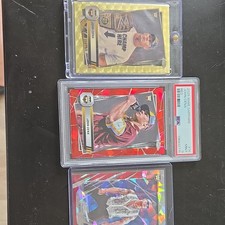
eBayjohn cena superfractor, a #2 out of 5, and a #5 out of 5 rock all topps chrome
$6,500.00
Used eBay
eBayJohn Cena 2021 Topps Finest WWE Rumble Pops SUPERFRACTOR 1/1 PSA 9
$3,220.00
Graded eBay
eBay2026 Topps Chrome WWE John Cena Viral Shock 1/1 Gold Vinyl Superfractor
$3,499.99
Ungraded eBay
eBay2025 Topps Chrome WWE SuperFractor #245 John Cena 1/1 One Of One PSA
$15,000.00
GradedFrom the original show
This episode is published by Stacking Slabs.